Skip to content
TheBench

HUB 05 · Prep Tools

Alternatives to a Potato Ricer

A ricer does one thing that nothing else here does: it pushes cooked potato through holes exactly once. Four tools ranked by how much of its work they genuinely take over, and an honest list of what they cannot.

By Stephen V.Updated How we pick
#ad

We earn a commission if you buy through our links. It does not change the price you pay, and it does not decide our picks — our selection criteria are published in full. How this works.

The short answer

Quick picks

#ProductBest forScorePrice
01
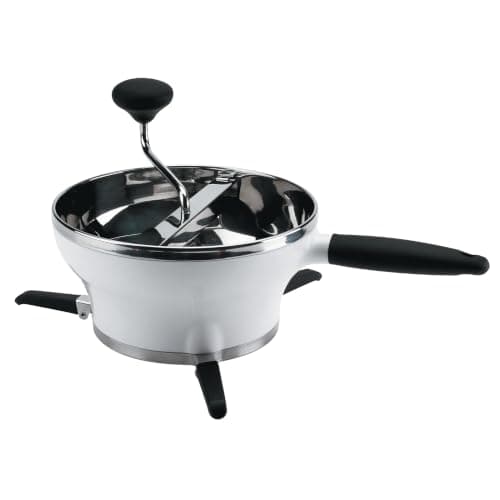
OXO OXO Good Grips Food Mill
OXO Good Grips Food Mill

The food mill to buy: three discs, a stable pot-straddling design and comfy handles for smooth sauces and purees.

Sauces and purees
8.5
$63.99Amazon
02
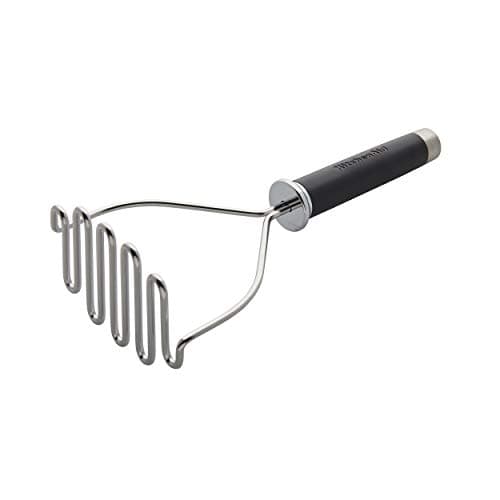
KitchenAid KitchenAid Gourmet Stainless Steel Wire Masher
KitchenAid Gourmet Stainless Steel Wire Masher

The only masher here that publishes a wire gauge, on a wide head and a weighted handle — and it costs less than the obvious alternative.

Most kitchens
8.8
$10.99Amazon
03
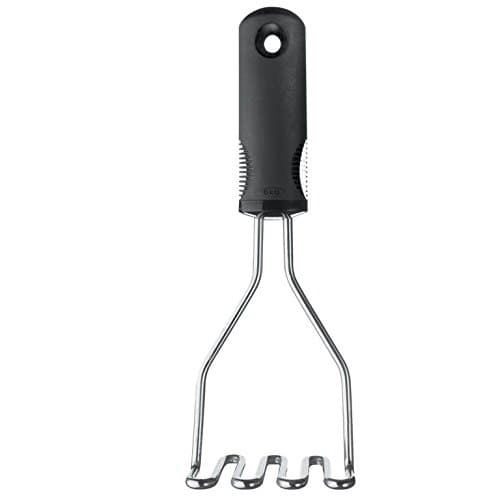
OXO OXO Good Grips Stainless Steel Potato Masher
OXO Good Grips Stainless Steel Potato Masher

The cushioned handle is the whole argument: a masher is a tool you push through with your palm, and this is the one that does not punish it.

Anyone who mashes a big pot
8.6
$21.75Amazon
04
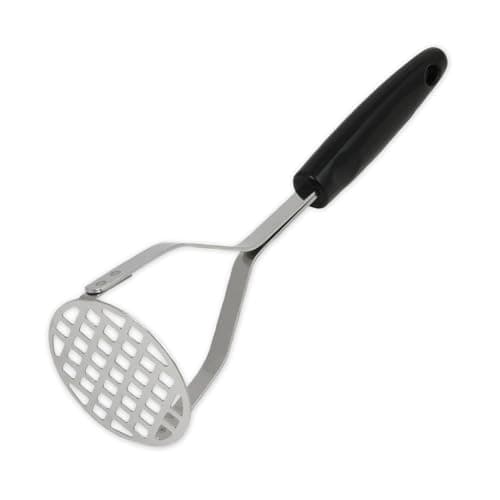
Chef Craft Chef Craft Select Sturdy Masher
Chef Craft Select Sturdy Masher

The one that costs about the same as the potatoes: stainless, dishwasher safe, and explicitly aimed at beans and smaller foods.

Spending as little as possible
8.0
$7.53Amazon

#ad · Prices pulled live from the Amazon Product API, last checked November 23, 2026. Where we have no verified live price we show none — we would rather leave a gap than print a number that has gone stale. Scores are our own, compiled from published specs; they are not test results.

The closest substitute is the OXO Good Grips Food Mill, because it is the only tool here that works the same way a ricer does — cooked food pressed through a perforated plate in one direction — and it separates skins and seeds while it does it. For most kitchens, though, the honest answer is the KitchenAid Gourmet Stainless Steel Wire Masher: a wire head is a different mechanism with a different result, and it is the result most mashed potato actually wants. The budget pick is the Chef Craft Select Sturdy Masher, the cheapest tool on the page that will mash a pot of potatoes without bending.

Prices above come live from Amazon with the date they were last checked. Where we have no verified live price we show none rather than printing a number that has gone stale.

First, what a ricer actually does

It is worth being precise about this before substituting anything, because the mechanism is the whole argument. A ricer is a hopper with a perforated plate and a lever. Cooked potato goes in, you squeeze, and the potato is extruded through the holes exactly once, in one direction. It never gets worked twice. That single pass is why riced mash is light and fluffy rather than sticky: the usual explanation is that repeated crushing and folding ruptures more starch cells and releases more free starch, which is what makes overworked mash gluey. Extrusion does the shaping in one movement and then stops.

A ricer has two other things to itself. It handles hot potato without your hands in it, which matters because potato for mash should be riced hot, straight out of the pan. And its output is uniform: strands of the same thickness every time, which is what gnocchi dough and a piped duchesse potato depend on.

Everything below is ranked on how much of that it takes over. Not on which tool is “best” — they are not interchangeable, and a page that pretended otherwise would be useless.

The ranking, and why it is in this order

1. OXO Good Grips Food Mill — the same mechanism, plus a job the ricer cannot do. A mill is a crank and a perforated disc: you turn the handle, a blade sweeps food across the plate, and it is extruded through the holes in one direction. That is a ricer with a crank instead of a lever. Three discs cover fine purees to coarse textures, so it has texture choice a single-plate ricer does not, and because the skins and seeds stay behind on the plate it is also the right tool for tomato sauce and applesauce. Legs and a hook hold it over a pot or bowl. The costs: it is the most expensive tool on this page by a distance, it is substantially bigger to store, and there are more parts to wash. If you would use it for sauce as well as potato, that cost is easy to justify; if it is purely a mash tool, it is not. The full case is on our food mill ranking, and how to use a food mill covers the technique.

2. KitchenAid Gourmet Stainless Steel Wire Masher— the everyday answer, and the one most people should buy.A wire masher crushes rather than extrudes, which means the potato gets worked more than once and the result is rustic rather than silky. For most mashed potato that is not a defect, it is the point: you want some texture, and you want it in two minutes in the pan you cooked in. This is the only masher in our catalog with a published wire thickness — 4.5 mm, which is the figure that stops a head splaying under load — and the open wire head has no underside for potato to pack into, so it rinses clean. What it will not give you is lump-free. A wire head finds lumps; it does not eliminate them.

3. OXO Good Grips Stainless Steel Potato Masher — for a big pot, and for hands that hurt. Same wire-head mechanism, with the handle doing the work: OXO states the handle absorbs pressure, and on a pot of potatoes for eight people that is the difference between a job and an ordeal. The large handle opening means it hangs on a rail rather than taking a drawer. It is dearer than the KitchenAid and publishes no wire gauge, which is why it is ranked below it on specification while being the better tool for volume. If pressure on your hands is the reason you are reading this page at all, our prep tools for arthritis page is the more useful one.

4. Chef Craft Select Sturdy Masher — the budget pick, and genuinely enough. The cheapest tool on this page, and for an occasional pot of mash it does the job. What you are giving up is the handle: there is no pressure-absorbing grip and no published wire gauge, so you supply the comfort and you find out about the head stiffness on the first big batch. Buy it if mash happens three times a year, or as the second masher that lives in a holiday box.

Three jobs that go back to the ricer. First, gnocchi: the dough needs dry, uniform, unworked potato and a masher will not give you that — it is the single strongest argument for owning a ricer at all. Second, genuinely lump-free mash, the kind that goes through a piping bag. Third, pressing water outrather than folding it in, which is what decides whether cauliflower mash, tots or fritters hold together — the full version of that argument is on our ricer for cauliflower page. If any of those three is why you came here, buy the ricer: our ricer ranking has two, and one of them costs less than the mill above.

The substitutes we did not rank, and why

A food processor.Do not. A spinning blade in a bowl of cooked potato whips the starch into a glue that is closer to wallpaper paste than mash. This is the one substitution that fails outright, and it fails fast — within about ten seconds. The detail is in processors for baby food, where the same starch behavior decides which purees work.

An immersion blender. Same problem, same reason, slightly slower. It is a superb tool for soup and a bad one for potato; our immersion blender alternatives page runs the equivalent argument from the other direction.

A box grater. Grating cooked potato on the coarse side is a real improvisation and it does produce strands. It also means handling hot potato against a blade with your fingertips, which is why we are not ranking it as a purchase: if you already own one, it will get you through tonight. The graters themselves are on our box grater page.

A fork. Honestly, for one or two potatoes, a fork works. It is slow, the texture is uneven, and it is still the correct answer when the alternative is buying a tool you will use twice.

Which to buy, in one paragraph

If you make sauce or applesauce as well as mash, buy the mill: it covers the ricer’s mechanism and adds the one thing a ricer cannot do. If you want mashed potato on a Tuesday and you are not making gnocchi, buy the wire masher and stop reading — the KitchenAid for the published gauge, the OXO if the pot is big or your hands object. If money is the whole constraint, the Chef Craft is the floor and it is not a trap. And if the reason you searched for an alternative was price rather than mechanism, note that the cheaper of the two ricers we rank sits inside our prep tools under $25 band, which may make this entire question moot.
In detail

The picks, in full

01
OXO OXO Good Grips Food Mill

Sauces and purees

OXO Good Grips Food Mill

3 discs includedStraddles the pot
8.5/10

The food mill to buy: three discs, a stable pot-straddling design and comfy handles for smooth sauces and purees.

Milling ease
8.5
Disc options
9
Capacity
8.3
Build
8.5
Value
8

What it gets right

  • Milling separates skins and seeds — ideal for tomato sauce and applesauce
  • Three discs cover fine purees to coarse textures
  • Legs and hook hold it steady over a pot or bowl

What it doesn't

  • Bulky to store
  • More parts to wash than a ricer

What it costs to run

OXO publishes no usable wattage for this machine, so we do not show a running-cost figure for it. Here is the method we would have used.

Skip this if…

…You only mash potatoes — a ricer is simpler and cheaper; a food mill earns its keep on sauces and skin-on purees.

$63.99on Amazon

Price last checked November 23, 2026. Prices move constantly — Amazon's at checkout is the one that counts.

#ad · we may earn a commission from this link to OXO Good Grips Food Mill

02
KitchenAid KitchenAid Gourmet Stainless Steel Wire Masher

Most kitchens

KitchenAid Gourmet Stainless Steel Wire Masher

Publishes its wire gauge
8.8/10

The only masher here that publishes a wire gauge, on a wide head and a weighted handle — and it costs less than the obvious alternative.

Mashing efficiency
8.5
Handle comfort
8.5
Cleaning
9
Build
9
Value
8.8

What it gets right

  • The only masher here with a published wire thickness — 4.5 mm, which is what stops a head splaying under load
  • Handle is weighted and shaped for heavy use rather than just padded
  • Wire head has no underside for potato to pack into, so it rinses clean

What it doesn't

  • A wire head leaves more texture than a perforated plate — this is not the tool for silky mash
  • Stainless wire will mark a nonstick pan

What it costs to run

KitchenAid publishes no usable wattage for this machine, so we do not show a running-cost figure for it. Here is the method we would have used.

Skip this if…

…You mash in a nonstick pan — stainless wire scratches the coating, and the nylon OXO below is the tool for that pan.

$10.99on Amazon

$14.9927% off

Price last checked November 23, 2026. Prices move constantly — Amazon's at checkout is the one that counts.

#ad · we may earn a commission from this link to KitchenAid Gourmet Stainless Steel Wire Masher

03
OXO OXO Good Grips Stainless Steel Potato Masher

Anyone who mashes a big pot

OXO Good Grips Stainless Steel Potato Masher

Cushioned handle
8.6/10

The cushioned handle is the whole argument: a masher is a tool you push through with your palm, and this is the one that does not punish it.

Mashing efficiency
8.5
Handle comfort
9.2
Cleaning
9
Build
8.5
Value
8

What it gets right

  • OXO declares the handle absorbs pressure, which is the fatigue point on a big pot of potatoes
  • Large handle opening, so it hangs on a rail instead of eating drawer space
  • Same wire-head cleaning advantage, and dishwasher safe

What it doesn't

  • OXO publishes no wire thickness, so the head cannot be compared on paper with the KitchenAid
  • Costs more than the KitchenAid while publishing less about itself

What it costs to run

OXO publishes no usable wattage for this machine, so we do not show a running-cost figure for it. Here is the method we would have used.

Skip this if…

…You want to compare build on published numbers before you buy — OXO states no gauge for this head, and the KitchenAid does.

$21.75on Amazon

Price last checked November 23, 2026. Prices move constantly — Amazon's at checkout is the one that counts.

#ad · we may earn a commission from this link to OXO Good Grips Stainless Steel Potato Masher

04
Chef Craft Chef Craft Select Sturdy Masher

Spending as little as possible

Chef Craft Select Sturdy Masher

Cheapest here
8.0/10

The one that costs about the same as the potatoes: stainless, dishwasher safe, and explicitly aimed at beans and smaller foods.

Mashing efficiency
7.8
Handle comfort
7
Cleaning
8.5
Build
7.5
Value
9.2

What it gets right

  • A fraction of the price of the branded mashers and still stainless and dishwasher safe
  • Chef Craft calls out beans and smaller foods specifically, which is where a fine head earns its keep
  • Rated by the maker for stainless and cast iron pans

What it doesn't

  • The handle is plastic with a comfort grip rather than a cushioned or weighted design
  • No published wire gauge, head footprint or warranty term to compare against the others

What it costs to run

Chef Craft publishes no usable wattage for this machine, so we do not show a running-cost figure for it. Here is the method we would have used.

Skip this if…

…You mash often or in quantity — at this price the handle is the compromise, and it is the part your palm meets.

$7.53on Amazon

$8.9916% off

Price last checked November 23, 2026. Prices move constantly — Amazon's at checkout is the one that counts.

#ad · we may earn a commission from this link to Chef Craft Select Sturdy Masher

How we picked

Tools we claim to have lab-tested: 0

Every site in this category tells you they ran twenty machines through a lab. We have not, and we say so. Here is what we do instead: read the manufacturer's manual and spec sheet, record the published bowl capacity, motor rating, blade and disc counts and materials, cross-check the warranty against the manufacturer's own warranty document, and cite all of it so you can check the work. Prices come live from Amazon's API and disappear rather than go stale.

The scores above are judgments from that documented research — not test results. The full rubric, including what disqualifies a product, is published in full.

Questions

Frequently asked

What can I use instead of a potato ricer?
A food mill is the closest substitute, because it extrudes cooked food through a perforated plate in one direction exactly as a ricer does. For everyday mash a wire masher is the practical answer, accepting a more rustic texture. A box grater on the coarse side works in a pinch. A food processor or immersion blender does not — both turn cooked potato gluey.
Is a masher as good as a ricer?
For most mashed potato, yes, and it is faster and easier to wash. For lump-free, silky mash and for gnocchi dough, no: a masher works the potato repeatedly where a ricer passes it through once, and that single pass is what keeps the texture light. The full side-by-side is in ricer vs masher.
Can I use a food processor instead of a potato ricer?
No. Blades spinning in cooked potato rupture starch cells and release free starch, and within seconds you have a sticky, elastic paste rather than mash. It is the one substitution on this page that fails outright, and no setting or speed changes it.
Do I need a ricer to make gnocchi?
Practically, yes. Gnocchi dough needs dry, uniform, barely-worked potato, and it is the one job on this page where no substitute is close — a masher leaves lumps and adds working, both of which mean more flour and heavier dumplings. A food mill is the only alternative here that gets you most of the way.
What is the difference between a food mill and a potato ricer?
Mechanically very little: both press cooked food through a perforated plate. A ricer uses a lever and a single plate and is faster for a pot of potatoes; a mill uses a crank and interchangeable discs, holds more, and leaves skins and seeds behind on the plate, which makes it a tomato and apple tool as well. The mill costs more and stores like a small appliance. Our three-way comparison works through it properly.

Keep reading