If you want to beat a Cuisinart rather than merely replace it, the Breville Sous Chef 16 (BFP810) is the pick, and it is for the serious, frequent cook who will actually use an adjustable slicing dial with a published millimeter range. If you want the straight size-for-size swap at similar money, it is the KitchenAid 13-Cup Food Processor (KFP1318). And the budget pick — the cheapest machine here that still does the same full-size work — is the Hamilton Beach Big Mouth Duo Plus 12-Cup. Live prices for all four are in the table above with the date they were last checked.
What Cuisinart is actually known for
Worth being precise, because the substitute you want depends on which of these you are giving up. Cuisinart’s own published specifications across its full-size range come down to three things: a very short parts list — the 14-cup DFP-14 is a bowl, a lid and a blade, with nothing to interlock or lose; a long stated motor warranty, printed in the spec rows of our individual reviews; and continuity— models stay in the catalog for years, so bowls, blades and discs remain buyable long after purchase. Those are real, documented strengths and we are not going to pretend otherwise.
What the brand does not lead on is equally documented. The simple bowl means no dicing kit and, on most models, no adjustable slicing thickness. And the full-size machines sit at the top of the market on price, which is the reason most people search for an alternative in the first place.
Four alternatives, and the strength each one matches
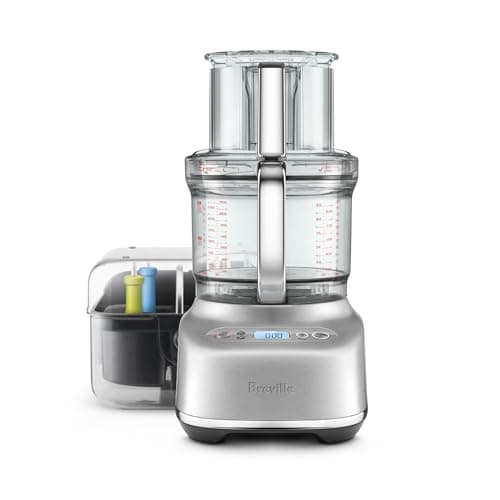
Beat it on capability: Breville Sous Chef 16 (BFP810).This is the one machine here that is unambiguously more capable than a full-size Cuisinart, and the specific reason is the adjustable slicing disc with a millimeter range published in Breville’s own instruction book rather than described in adjectives. It costs more, not less. Buy it if capability was the point.
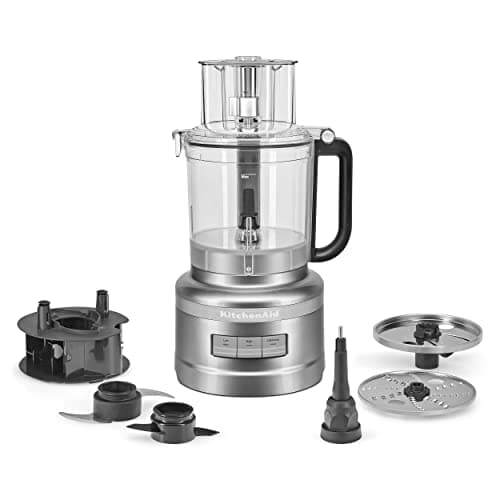
Match it size for size: KitchenAid 13-Cup Food Processor (KFP1318).A 13-cup bowl against Cuisinart’s 13 and 14-cup machines, at comparable money, with a dicing kit Cuisinart does not offer at this level. This is the swap for someone who likes the class of machine and wants a wider cut range. It is also our top pick in the under-$200 band.
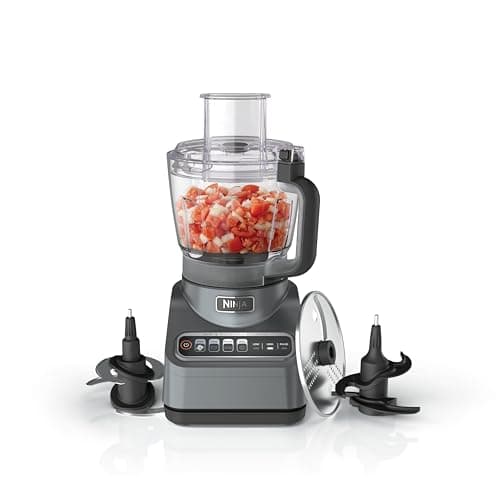
Match the power for less: Ninja Professional Plus Food Processor (BN601). A published 1,000-peak-watt motor and a dough blade in the box, for well under half what a premium full-size Cuisinart costs. You give up the long warranty and the parts continuity. If dough and value are the brief this is the honest answer, and our head-to-head on Ninja against Cuisinart works through the trade on published figures.
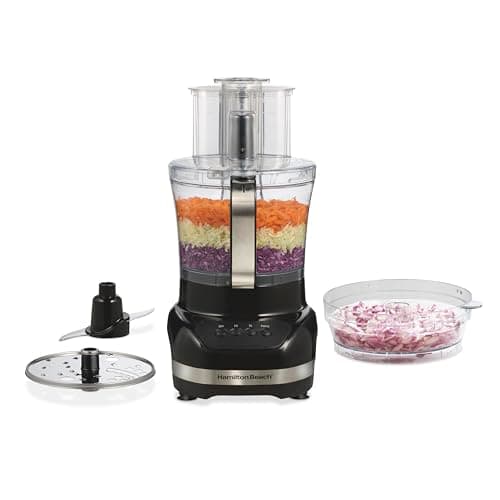
Undercut it on price: Hamilton Beach Big Mouth Duo Plus 12-Cup.The budget pick. Twelve cups, a nested 4-cup chopper bowl and a published 500-watt motor for a fraction of the money. The build is lighter and there is one reversible disc rather than a set — and for chopping, slicing and shredding that is genuinely enough for most households.
If the real question is “do I need a food processor at all?” A manual chopper or a mini chopper does a surprising share of the work for a tenth of the price. Start with do I need a food processor, or go straight to the food chopper roundup.
What you give up leaving the brand
Two things, both practical. The first is parts: Cuisinart’s long model runs mean a replacement bowl for a ten-year-old machine is usually still a catalog item, and that is not true of every brand here. The second is the three-part wash-up — a machine with a dicing kit and four discs has more pieces to clean and store, and that is the quiet cost of the versatility the alternatives sell you. Decide which of those you are buying before you compare the headline specs, because neither shows up on a spec sheet.
A fair comparison also needs the brands set directly against each other, which is what our Cuisinart against KitchenAid and Cuisinart against Breville comparisons do on published specifications alone.
Ninja is the other brand people arrive here from, and the substitute question runs the opposite way: Cuisinart sells simplicity and parts continuity, Ninja sells motor and one-press programs, so the thing you are replacing is different. Alternatives to a Ninja food processor is that page.