HUB 06 · Guides
How to Rice Cauliflower
The tool named 'ricer' is the one tool that cannot do this. Here is why, which three tools actually work, and the drying step that decides whether it fries or steams.
We earn a commission if you buy through our links. It does not change the price you pay, and it does not decide our picks — our selection criteria are published in full. How this works.
“Riced cauliflower” is a name borrowed from what the finished thing looks like, not from the tool that makes it — and that mismatch sends a lot of people to buy a potato ricer, which is the one tool on this page that will not do the job. It is worth explaining why, because the reason also tells you what will work.
Why a potato ricer cannot do it
A potato ricer extrudes. You squeeze soft, cooked food through small holes and it comes out as strands. It has no cutting edge at all, because it does not need one: cooked potato is soft enough to be pressed through.
Raw cauliflower is not soft. It is firm and fibrous, and pressing it against a plate of holes just crushes the floret against the plate. You cannot force it through, and the harder you try the more likely you are to bend the tool. Cook the cauliflower first and it goes the other way — it turns to a wet puree, which is a legitimate thing to make and is not rice.
What cauliflower rice actually needs is cutting: thousands of small cuts that reduce florets to grain-sized pieces while they are still raw and firm. That is a blade job, not a press job.
The three tools that do work
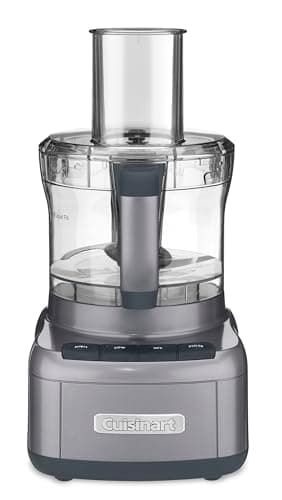
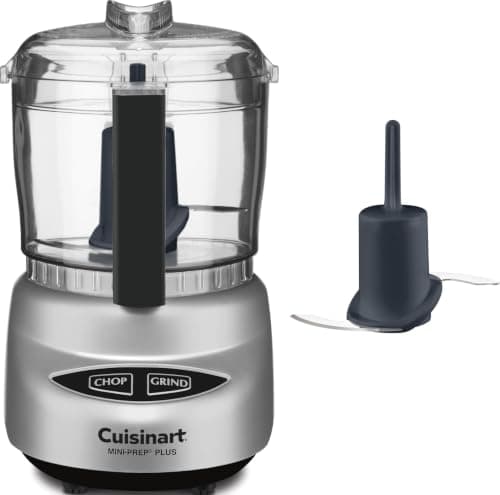
A food processor with the S-blade — the fastest. Florets in, short pulses, done in about fifteen seconds. Bowl size matters more than power: the Cuisinart Elemental 8-Cup Food Processor (FP-8SV) at 8 cups is the right shape for one head, and the Cuisinart Mini-Prep Plus (DLC-2ABC) handles half a head at a time perfectly well. A 14-cup bowl is worse here, not better, for the same reason it is worse for pesto: the blade needs food in its reach.
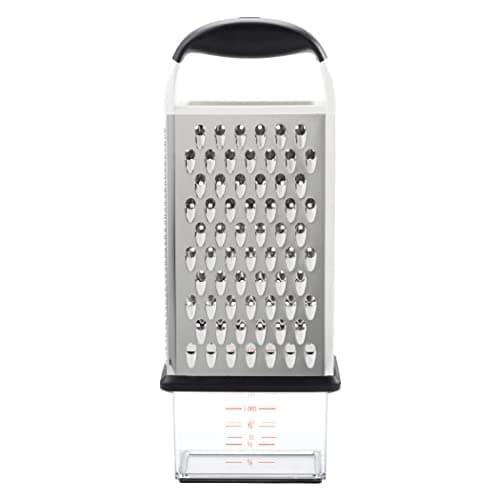
A box grater — the no-machine option. The coarse side of the OXO Good Grips Box Grater produces excellent cauliflower rice, arguably with better texture than a processor because every piece is cut the same way. It is slower and messier, and it is the right answer for one portion or a kitchen without a processor. Hold the floret by its stem and grate the crown.
A knife — the underrated one. Quarter the head, then chop across the florets on a board. It takes a few minutes and produces the driest result of the three, because nothing is being bruised in a spinning bowl. For a small amount, this beats washing a processor.
Pulse. Do not run.This is the single rule that decides the outcome. A processor left running turns cauliflower to wet mush in about four seconds, and it does not come back. Use one-second pulses and stop the moment the pieces look like couscous — slightly under is fine, past it is not.
Preparation that changes the result
Break the head into florets and keep them roughly the same size, because a processor works on whatever is nearest the blade — a mix of big and small chunks gives you paste and gravel in the same bowl. Cut the thick core out and dice it separately; it is denser than the florets and it will not break down at the same rate.
Do not fill the bowl. Half full is the working limit, and two batches take less time than fixing one bad one.
The cauliflower should be dry going in. A wet head steams itself in the bowl and the pieces clump together instead of separating.
The step everyone skips: getting the water out
Cauliflower is mostly water, and cutting it releases a lot of that. Riced cauliflower thrown straight into a hot pan steams in its own liquid and comes out soft and gray, which is the reason most people who try it once decide they do not like it.
Spread it on a clean tea towel, roll it up and wring it out, or press it firmly in a salad spinner and then in a sieve. You will be surprised how much comes out. Then cook it hot and fast in a wide pan, in one layer, and leave it alone for the first minute so it can color.
Which tool for which job
| Tool | Speed | Texture | Best for |
|---|---|---|---|
| Food processor, S-blade | Seconds | Good, if pulsed | A whole head, or batching for the freezer |
| Box grater, coarse side | Minutes | Very even | One or two portions, no machine |
| Chef’s knife | Minutes | Driest result | Small amounts; nothing to wash |
| Potato ricer | — | — | Does not work on raw cauliflower |
What about a mandoline or a spiralizer?
Neither. A mandolinemakes slices, and cauliflower florets have no flat face to present to the blade — you get shards and a genuine safety problem. A spiralizer needs a solid cylinder of vegetable to hold, which a cauliflower head is not.
Riced cauliflower also freezes well, raw, in a bag — which is the real argument for doing a whole head at once with a processor. Cook it from frozen straight into a hot pan; thawing it first just releases the water you worked to remove.
The hardware
The hardware this guide is about
The products this guide refers to, with prices pulled live from Amazon and dated on every card. Full rankings live in the roundups linked above.
Small households
Cuisinart Elemental 8-Cup Food Processor (FP-8SV)
The right-size middle option: a 350-watt 8-cup that fits smaller kitchens and everyday jobs without going mini.
Everyday grating
OXO Good Grips Box Grater
The box grater that gets it right: four sharp sides, a soft non-slip base and a container that catches and measures.
Small daily chopping
Cuisinart Mini-Prep Plus (DLC-2ABC)
The 3-cup workhorse for small jobs: chopping herbs, an onion, a bit of dressing — without hauling out a big bowl.
#ad · As an Amazon Associate we earn from qualifying purchases.
Questions
Frequently asked
Can you use a potato ricer for cauliflower?
What is the best tool for ricing cauliflower?
Why is my cauliflower rice mushy?
Can you freeze riced cauliflower?
Keep reading