HUB 01 · Food Processors
How Much Does a Food Processor Cost?
Four price bands, and a straight answer about what each one buys. Most kitchens do not need the top band, and the step that matters is not the one the marketing points at.
We earn a commission if you buy through our links. It does not change the price you pay, and it does not decide our picks — our selection criteria are published in full. How this works.
A food processor that does real work starts at roughly $40, and the serious machines run to around $400. Most kitchens are best served between about $80 and $200. The useful thing to understand is that this price ladder is not a quality ladder — past a point it is a capability ladder, and it only pays if you do the capability.
Prices move constantly, so this page never quotes a figure for an individual machine. Every product card on this site carries a live price pulled from Amazon, and when that data is more than 48 hours old the number disappears rather than going stale. The bands below describe the shape of the market, not a quote.
The four bands
Roughly $40–$70 — the entry band. An 8-cup bowl, a chopping blade, one slicing/shredding disc and a modest motor. The BLACK+DECKER 8-Cup Food Processor (FP1600B)is the archetype. Everything works; nothing is heavy-duty. It will chop an onion, shred a block of cheese and slice a cucumber perfectly well. What you give up is mass — a light base walks on the counter under a hard load — and it is not a machine for dough or nut butter. For someone who will use it twice a month, this band is genuinely enough.
Roughly $80–$130 — the sensible band. Where most people should shop. The Cuisinart Elemental 8-Cup Food Processor (FP-8SV)sits here: a real brand’s 8-cup machine with a sealed bowl, a sane control layout and enough build to live on a counter rather than in a cupboard. Over the entry band you are buying rigidity and longevity, not new functions.
Roughly $150–$250 — the full-size band. Twelve to fourteen cups, a motor with real headroom, and usually a dough blade or an adjustable slicing disc. The Cuisinart 14-Cup Food Processor (DFP-14BCNY) is the long-running default at 720 published watts. This is the first band where a machine will knead a stiff dough without complaint and grind nut butter without stalling, and those two jobs are the honest reason to step up.
Roughly $300–$450 — the enthusiast band. The Breville Sous Chef 16 (BFP810)is the example: 16 cups, 1,450 watts, and a micro-adjustable slicing dial spanning 0.3–8.0 mm. Nothing here does a job the band below cannot do. It does them faster, with finer control, and it is built to take daily use for years. Buy it because you cook a lot, not because it is top of the list.
What the extra money does not buy
It does not buy a better chop. An onion pulsed in a cheap machine and an expensive one looks the same. It does not buy dicing — almost no home processor dices without a separate kit, which is why a push-dicer is the cheap answer to that particular want. And it does not buy an easier clean: more capable machines usually have more parts, so the cheapest processor in the kitchen is often the fastest to wash.
What it costs to run
Almost nothing, and it is worth putting numbers on that because wattage is the figure the marketing leans on hardest. At 17.45¢ per kWh (US EIA, Electric Power Monthly — average residential price, US total, retrieved July 2026), assuming a deliberately generous 3 minutes a day, 365 days a year:
| Machine | Published motor | Est. cost / year |
|---|---|---|
| BLACK+DECKER 8-Cup Food Processor (FP1600B) | Not published | not published |
| Cuisinart Elemental 8-Cup Food Processor (FP-8SV) | 350 W | $1.11 |
| Cuisinart 14-Cup Food Processor (DFP-14BCNY) | 720 W | $2.29 |
| Breville Sous Chef 16 (BFP810) | 1,450 W | $4.62 |
The gap between the least and most powerful machine on that table is a few dollars a year. Electricity is not a factor in this purchase, and any page implying otherwise is padding.
The cost nobody mentions: parts
Work bowls crack, lids get dropped, and blades dull after years of hard cheese. A replacement work bowl for a full-size processor typically costs a meaningful fraction of a cheap machine’s entire price, and a full disc set can too. That is the quiet argument for buying a long-running model from a brand that still sells parts for it — a discontinued machine with a cracked bowl is scrap.
It is also an argument against machines that arrive with a large accessory kit you did not ask for. Every extra disc is another thing to store, another thing to lose, and another thing you paid for.
How to decide what to spend
Answer one question honestly: do you make dough or nut butter? If yes, the $150–$250 band is your floor, because those two jobs are what punish a small motor. If no, the $80–$130 band will do everything you ever ask of it, and the difference is better spent on a good knife and a decent board.
If you are not sure you will use one at all, read do I need a food processorfirst — for a lot of kitchens the honest answer is a chopper at a quarter of the price. And if you have already decided and want the cheapest thing that works properly, the budget roundup is the shortlist.
The hardware
The hardware this guide is about
The products this guide refers to, with prices pulled live from Amazon and dated on every card. Full rankings live in the roundups linked above.
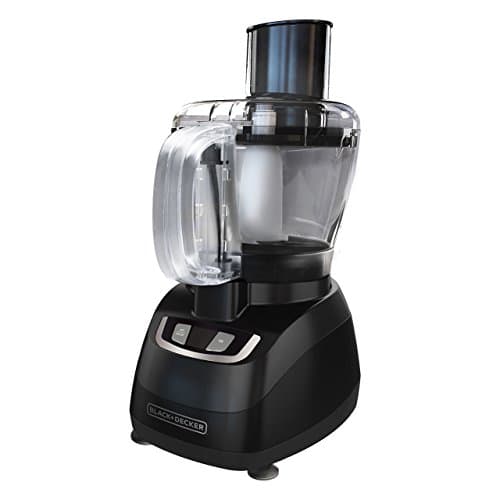
The tightest budget
BLACK+DECKER 8-Cup Food Processor (FP1600B)
The cheapest way into a real food processor: an 8-cup bowl and two-speed motor for basic chopping and slicing.
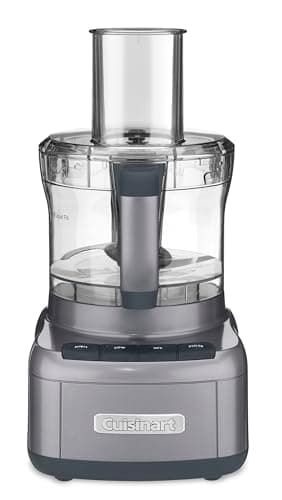
Small households
Cuisinart Elemental 8-Cup Food Processor (FP-8SV)
The right-size middle option: a 350-watt 8-cup that fits smaller kitchens and everyday jobs without going mini.
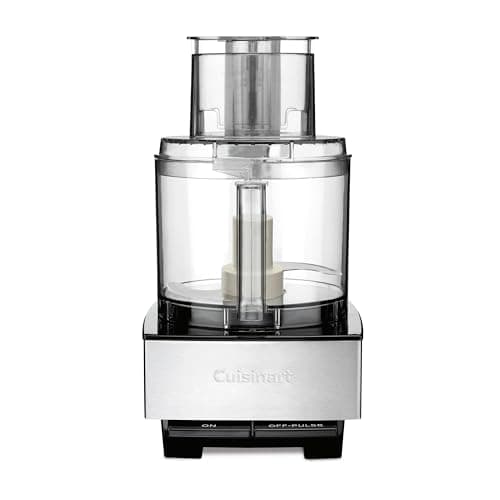
Most full-size kitchens
Cuisinart 14-Cup Food Processor (DFP-14BCNY)
The default full-size processor for a reason: a big, simple, 720-watt workhorse with the shortest parts list to go wrong.
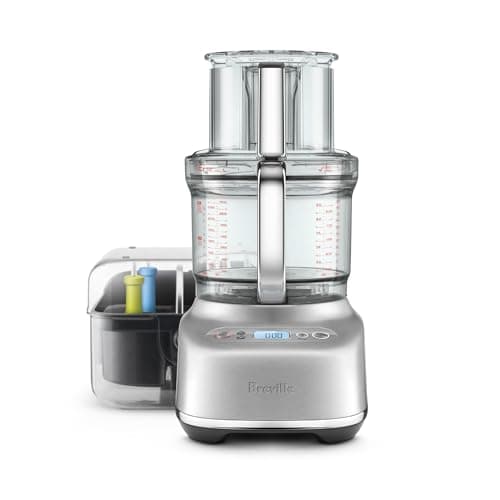
Serious, frequent cooks
Breville Sous Chef 16 (BFP810)
The one to buy if you actually use a processor daily: an adjustable slicing dial and a 1,450-watt motor that never flinches.
#ad · As an Amazon Associate we earn from qualifying purchases.
Questions
Frequently asked
How much should I spend on a food processor?
Are cheap food processors any good?
Does a food processor cost much to run?
Is a more expensive food processor easier to clean?
Keep reading
Related
Receipts
Sources
We do not run a testing lab and we do not pretend to. Specifications come from the manufacturer's own published documents and from published standards; prices come from the live Amazon API. Where a figure is not published, the page says “not published” rather than guessing. Read the full method.