Skip to content
TheBench

HUB 01 · Food Processors

The Best Food Processor for Shredding

Cheese, cabbage, carrots and potatoes for hash — shredding is the job that most justifies owning a processor, and it turns on two parts of the machine that nobody puts on the box.

By Stephen V.Updated How we pick
#ad

We earn a commission if you buy through our links. It does not change the price you pay, and it does not decide our picks — our selection criteria are published in full. How this works.

The short answer

Quick picks

#ProductBest forScorePrice
01
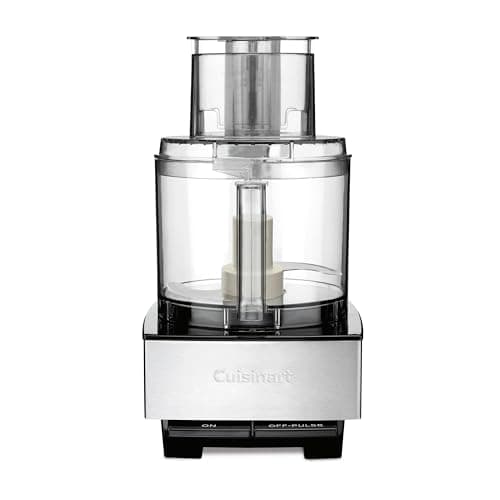
Cuisinart Cuisinart 14-Cup Food Processor (DFP-14BCNY)
Cuisinart 14-Cup Food Processor (DFP-14BCNY)

The default full-size processor for a reason: a big, simple, 720-watt workhorse with the shortest parts list to go wrong.

Most full-size kitchens
8.7
$259.95Amazon
02
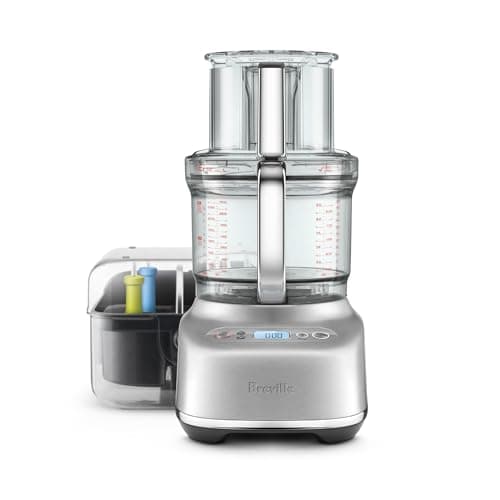
Breville Breville Sous Chef 16 Pro (BFP810)
Breville Sous Chef 16 Pro (BFP810)

The one to buy if you actually use a processor daily: an adjustable slicing dial and a 1,200-watt motor that never flinches.

Serious, frequent cooks
9.1
$499.95Amazon
03
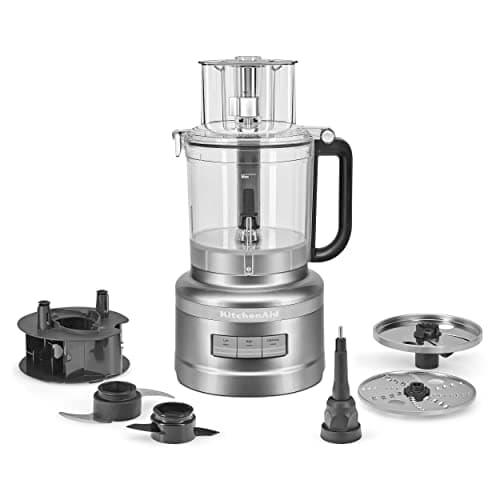
KitchenAid KitchenAid 13-Cup Food Processor (KFP1318)
KitchenAid 13-Cup Food Processor (KFP1318)

A 13-cup KitchenAid with a 3-in-1 feed tube and an included dicing kit — the widest job range in the roundup.

Dicing and prep variety
8.4
Check priceAmazon
04
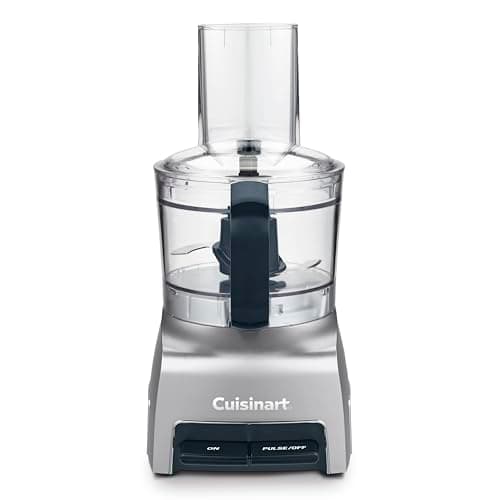
Cuisinart Cuisinart 5-Cup Chop & Shred Food Processor (FP-5)
Cuisinart 5-Cup Chop & Shred Food Processor (FP-5)

The smallest machine here that still shreds: a 5-cup bowl with a real reversible disc, so it slots between a chopper and a full-size processor.

Small kitchens that still shred
7.4
$69.95Amazon

#ad · Prices pulled live from the Amazon Product API, last checked Aug 30, 2026. Where we have no verified live price we show none — we would rather leave a gap than print a number that has gone stale. Scores are our own, compiled from published specs; they are not test results.

Shredding is the job that pays for a food processor. A block of cheddar takes about eight seconds instead of four minutes of knuckle-risking work on a box grater, and shredding your own cheese avoids the anti-caking starch that stops bagged cheese melting smoothly. The two specs that decide how well a machine does it are the disc and the feed tube— not the motor.

Why wattage is nearly irrelevant here

A shredding disc is a cutting surface, not a crushing one. The food is pressed against a spinning plate and sliced through perforations; the motor only has to keep the plate turning at a constant speed. Even the modest Cuisinart 5-Cup Chop & Shred Food Processor (FP-5) manages cheese and carrots without complaint. Contrast that with nut butter or dough, where the load is genuinely sustained and wattage decides the outcome.

The feed tube is the spec nobody checks

Whatever will not fit down the chute has to be cut down first, and cutting things down by hand is the work you bought the machine to avoid. A narrow tube means halving every potato and quartering every block of cheese. A wide one takes a whole tomato or a whole potato as it comes.

The KitchenAid 13-Cup Food Processor (KFP1318) is the standout on this point, with a 3-in-1 feed tube that reconfigures for a single carrot or a whole potato, plus an external ExactSlice lever that changes slicing thickness without opening the bowl. The Breville Sous Chef 16 Pro (BFP810) pairs a wide chute with a slicing dial that runs from 0.3 to 8.0 mm, which is the widest genuine range here.

Freeze the cheese for fifteen minutes.This is the single fix for the most common shredding complaint. Soft and semi-soft cheeses — mozzarella, young cheddar, Monterey Jack — smear rather than shred at room temperature, gumming the disc and coming out as a paste. Fifteen to twenty minutes in the freezer firms the fat enough to cut cleanly, and it makes no difference to how it melts afterwards.

Which machine for which shredding job

MachineDiscsFeed tubeBest shredding job
Cuisinart 14-Cup Food Processor (DFP-14BCNY)Fixed shredding + slicing discsStandard, wide bowlVolume: a whole cabbage or a pound of cheese
Breville Sous Chef 16 Pro (BFP810)Adjustable dial, 0.3–8.0 mmWide — whole potato or tomatoAnything where thickness matters
KitchenAid 13-Cup Food Processor (KFP1318)Adjustable slicing/shredding + dicing kit3-in-1, reconfigurableMixed prep without pre-cutting
Cuisinart 5-Cup Chop & Shred Food Processor (FP-5)Reversible fine/medium shredding discWide mouth for the sizeA block of cheese in a small kitchen

Fine or coarse, and how to get long shreds

A reversible disc gives you two shred sizes from one part, which covers most needs: coarse for cheese that has to melt into a bake, fine for a garnish or for carrot in a salad. The shape of the shred, though, is decided by how you load the chute, not by the disc. Stand carrots or courgettes upright and you get short discs of shred; lay them on their side and you get long strands. For cheese, load the block on its longest face.

Pack the tube reasonably full, too. A single carrot rattling in a wide chute wanders and gives ragged shreds; three or four filling the space hold each other steady. Use light, even pressure on the pusher — leaning on it does not shred faster, it just bends the food away from the disc.

Where a box grater still wins

For a handful of parmesan over a plate of pasta, a box grater or a rotary grater is faster, because the processor only becomes worthwhile once the assembling and washing is amortized over a real quantity. The rough threshold is about a cup of shredded cheese: below it, grate by hand; above it, use the machine. And for very hard cheeses like parmesan, a rotary grater gives a finer, fluffier result than any shredding disc.

A mandolinewith a julienne blade is the other alternative, and it produces a cleaner matchstick than a shredding disc does — at the cost of an exposed blade. Our mandoline vs food processor comparison sets out that trade in full.

In detail

The picks, in full

01
Cuisinart Cuisinart 14-Cup Food Processor (DFP-14BCNY)

Most full-size kitchens

Cuisinart 14-Cup Food Processor (DFP-14BCNY)

Big-batch capacityOnly 3 parts to wash
8.7/10

The default full-size processor for a reason: a big, simple, 720-watt workhorse with the shortest parts list to go wrong.

Capacity
9.5
Power
8.5
Versatility
8
Ease of clean
9
Build & warranty
8.5

What it gets right

  • Genuinely large 14-cup bowl handles a whole batch of dough or a full head of cabbage without stopping to empty it
  • Only three washable parts — no fiddly interlocking accessories to store or lose
  • 720-watt motor pushes through pie dough and hard cheese without bogging down

What it doesn't

  • No smaller nested bowl — dicing a single shallot in a 14-cup bowl is wasteful and messy
  • Tall footprint does not fit under most upper cabinets when assembled

What it costs to run

About $2.29 a year in electricity, at 3 minutes a day, 365 days a year and 17.45¢ per kWh.

720 W, the figure Cuisinart publishes for the DFP-14 series and shown on the listing. The full arithmetic is published.

Skip this if…

You cook for one or two and mostly do small jobs — a 14-cup bowl is a chore to wash for half an onion, and a mini processor will serve you better and cost a third as much.

$259.95on Amazon

$299.9513% off

Price last checked Aug 30, 2026. Prices move constantly — Amazon's at checkout is the one that counts.

#ad · we may earn a commission from this link to Cuisinart 14-Cup Food Processor (DFP-14BCNY)

02
Breville Breville Sous Chef 16 Pro (BFP810)

Serious, frequent cooks

Breville Sous Chef 16 Pro (BFP810)

Micro-adjustable slicing1,200 W motor
9.1/10

The one to buy if you actually use a processor daily: an adjustable slicing dial and a 1,200-watt motor that never flinches.

Capacity
9.6
Power
9.6
Versatility
9.5
Ease of clean
8
Build & warranty
8.8

What it gets right

  • External slicing dial gives you 24 thickness settings without swapping discs
  • 1,200-watt motor is the strongest here and handles nut butter and stiff dough easily
  • Wide feed chute takes a whole tomato or potato without pre-cutting

What it doesn't

  • The most expensive food processor on this page by a wide margin
  • Large storage box of discs and accessories takes real cabinet space

What it costs to run

About $3.82 a year in electricity, at 3 minutes a day, 365 days a year and 17.45¢ per kWh.

1,200 W, the figure Breville lists for the Sous Chef and shown on the listing. The full arithmetic is published.

Skip this if…

You reach for a processor a few times a month — you will not use the adjustable dial enough to justify paying two to three times what a very good Cuisinart costs.

$499.95on Amazon

Price last checked Aug 30, 2026. Prices move constantly — Amazon's at checkout is the one that counts.

#ad · we may earn a commission from this link to Breville Sous Chef 16 Pro (BFP810)

03
KitchenAid KitchenAid 13-Cup Food Processor (KFP1318)

Dicing and prep variety

KitchenAid 13-Cup Food Processor (KFP1318)

Dicing kit included
8.4/10

A 13-cup KitchenAid with a 3-in-1 feed tube and an included dicing kit — the widest job range in the roundup.

Capacity
9
Power
8
Versatility
9.2
Ease of clean
7.5
Build & warranty
8.2

What it gets right

  • One of the few processors here that actually dices, thanks to the included dicing kit
  • ExactSlice external lever adjusts thickness without opening the bowl
  • 3-in-1 feed tube handles anything from a single carrot to a whole potato

What it doesn't

  • The dicing kit is fiddly to assemble and clean — plan on rinsing several parts
  • KitchenAid does not headline a wattage, so raw power is harder to compare

What it costs to run

KitchenAid publishes no usable wattage for this machine, so we do not show a running-cost figure for it. Here is the method we would have used.

Skip this if…

You never dice and just want to chop and slice — the dicing kit is the main reason to pay for this one, and without it a simpler Cuisinart does the rest for less.

Check price on Amazon →

No buyable offer at the last price check (Aug 30, 2026). We show nothing rather than a stale number.

#ad · we may earn a commission from this link to KitchenAid 13-Cup Food Processor (KFP1318)

04
Cuisinart Cuisinart 5-Cup Chop & Shred Food Processor (FP-5)

Small kitchens that still shred

Cuisinart 5-Cup Chop & Shred Food Processor (FP-5)

Shreds, not just chopsNests for storage
7.4/10

The smallest machine here that still shreds: a 5-cup bowl with a real reversible disc, so it slots between a chopper and a full-size processor.

Capacity
6
Power
6.5
Versatility
7.5
Ease of clean
8.8
Build & warranty
8

What it gets right

  • The rare small processor that still carries a shredding disc, so cheese and carrots are on the menu
  • Wide-mouth feed tube takes more food than the bowl size suggests
  • Everything nests inside the bowl and the cord tucks into the base, so it stores like a chopper

What it doesn't

  • Cuisinart publishes no wattage for it, so there is no motor figure to compare against bigger machines
  • One reversible disc only — no adjustable slicing thickness and no dough blade

What it costs to run

Cuisinart publishes no usable wattage for this machine, so we do not show a running-cost figure for it. Here is the method we would have used.

Skip this if…

You make dough or process in batches — 5 cups fills up fast and there is no dough blade, so a 9-cup machine or bigger is the honest floor for that work.

$69.95on Amazon

Price last checked Aug 30, 2026. Prices move constantly — Amazon's at checkout is the one that counts.

#ad · we may earn a commission from this link to Cuisinart 5-Cup Chop & Shred Food Processor (FP-5)

How we picked

Tools we claim to have lab-tested: 0

Every site in this category tells you they ran twenty machines through a lab. We have not, and we say so. Here is what we do instead: read the manufacturer's manual and spec sheet, record the published bowl capacity, motor rating, blade and disc counts and materials, cross-check the warranty against the manufacturer's own warranty document, and cite all of it so you can check the work. Prices come live from Amazon's API and disappear rather than go stale.

The scores above are judgments from that documented research — not test results. The full rubric, including what disqualifies a product, is published in full.
Questions

Frequently asked

What is the best food processor for shredding cheese?
Any of these will shred cheese well, because shredding is a disc job rather than a motor job. The Cuisinart 14-Cup Food Processor (DFP-14BCNY) is the pick for volume, the KitchenAid 13-Cup Food Processor (KFP1318) for its reconfigurable feed tube, and the Cuisinart 5-Cup Chop & Shred Food Processor (FP-5) if you want the smallest machine that still carries a real shredding disc.
Why does my cheese turn to paste in the food processor?
It is too warm. Soft and semi-soft cheeses smear against the disc instead of cutting. Freeze the block for fifteen to twenty minutes first — firm enough to cut cleanly, not frozen solid — and it will shred properly. It makes no difference to how the cheese melts afterwards.
Do you need a special disc to shred in a food processor?
You need the shredding disc, which almost every full-size processor includes — it is a separate part from the S-shaped chopping blade that sits in the bottom of the bowl. Some machines ship a reversible disc with a fine side and a coarse side, which covers most jobs without buying anything extra.
Is it worth shredding your own cheese?
For anything above about a cup, yes. Bagged shredded cheese is coated with anti-caking starch that stops it melting smoothly, and block cheese is usually cheaper per pound. Below a cup, the assembly and washing outweigh the eight seconds of shredding — use a box grater.

Keep reading