HUB 06 · Guides
How to Use a Food Processor
Most food processors live in a cupboard because nobody showed the owner what they are genuinely good at. Here are the jobs it does brilliantly, the ones it does badly, and how to clean it fast.
We earn a commission if you buy through our links. It does not change the price you pay, and it does not decide our picks — our selection criteria are published in full. How this works.
A food processor is really four tools in one bowl: a chopper (the S-blade), a slicer and a shredder (the discs), and a dough mixer. The reason so many sit unused is that owners only ever use the S-blade to chop, and never fit the discs. Here is how to get the whole machine working for you.
The jobs it does brilliantly
- Shred cheese and vegetables.Fit the shredding disc and feed a block of cheese or whole carrots through the chute — a pound of cheese in seconds, and it never sticks to your knuckles like a box grater.
- Slice evenly.Fit the slicing disc for uniform potato, cucumber or onion slices — faster than a knife and, for large volumes, safer than a mandoline.
- Make dough. With the S-blade or a dough blade, pizza and pie dough come together in under a minute. Pulse the dry ingredients, then add liquid through the chute with the motor running.
- Grind nut butter and hummus. Run the S-blade for a couple of minutes, scraping down once or twice, and roasted peanuts become butter. A capable motor matters here.
The jobs it does badly
It does not make smoothies (that is a blender job — a processor leaves them lumpy and can leak liquid from the bowl), it does not whip cream well, and it will not produce a neat cube dice unless it came with a dicing kit. Know the limits and you will not be disappointed.
The cleanup shortcut
The number-one complaint about processors is washing up. Two habits fix most of it: prep dry ingredients before wet, so you can wipe and reuse the bowl instead of washing between steps; and rinse the bowl and blade immediately after use, before food dries onto them. Most bowls, lids and discs are dishwasher-safe on the top rack, but check your manual.
The hardware
The hardware this guide is about
The products this guide refers to, with prices pulled live from Amazon and dated on every card. Full rankings live in the roundups linked above.
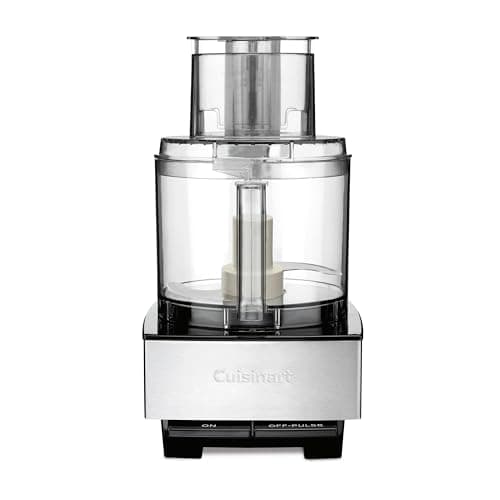
Most full-size kitchens
Cuisinart 14-Cup Food Processor (DFP-14BCNY)
The default full-size processor for a reason: a big, simple, 720-watt workhorse with the shortest parts list to go wrong.
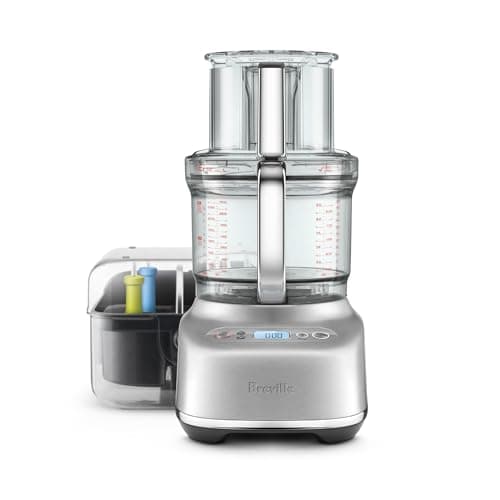
Serious, frequent cooks
Breville Sous Chef 16 (BFP810)
The one to buy if you actually use a processor daily: an adjustable slicing dial and a 1,450-watt motor that never flinches.
#ad · As an Amazon Associate we earn from qualifying purchases.
Questions
Frequently asked
How do you shred cheese in a food processor?
Why is my food processor leaking?
Keep reading
Related
- Food processor will not turn onThe lid interlock, and the three things to check first.
- The best food processorsPick the right machine first.
- What can you make in one?The twelve jobs, and the five to avoid.
- Do I need a food processor?If you're still deciding.
- Best mandolines & gratersThe manual slicing and grating tools.
- Best food processor for shreddingDiscs, feed tubes and the frozen-cheese trick.