HUB 06 · Guides
What Can You Grind in a Mortar and Pestle?
A pestle does one thing: it crushes something between its face and the bowl wall. Whatever benefits from being ruptured rather than cut belongs in a mortar, and whatever needs a uniform particle size does not. Here is the list, both ways.
We earn a commission if you buy through our links. It does not change the price you pay, and it does not decide our picks — our selection criteria are published in full. How this works.
A mortar and pestle is for anything that gets better when its cells are ruptured rather than cut: whole spices, peppercorns, garlic, soft herbs, saffron, cardamom, nuts for a rough paste, and wet mixtures like pesto, curry paste and guacamole. It is the wrong tool for anything where you need a uniform particle size — coffee, flour, wheat, icing sugar — and for hard things in volume. That is the whole answer; the rest of this page is the mechanism behind it and the specific cases people ask about.
Crushing and cutting are not the same operation. A blade slices a peppercorn into fragments and the aromatic oil stays inside those fragments. A pestle ruptures the cell walls and the oil comes out, into whatever else is in the bowl. That is why hand-crushed garlic tastes stronger than chopped garlic from the same clove, and it is the only reason to own a mortar in a kitchen that already has an electric chopper. We argue it out in full in mortar and pestle vs food processor.
What a mortar is genuinely good at
Whole dry spices
Cumin, coriander seed, fennel, mustard seed, cardamom pods, cloves, star anise, dried chillies and black peppercorns are the mortar’s home ground. Toast them dry in a pan first, cool them, and work a quarter of a bowl at a time. Crack with two or three taps, then switch to a pressing rotation — the grind happens on the twist, not the pound. For this job specifically a small deep bowl beats a big one, which is why our spice mortar ranking reverses our general one.
Garlic, ginger and anything fibrous and wet
A clove of garlic with a pinch of coarse salt becomes a smooth paste in about fifteen seconds — the salt is the abrasive, and a mortar is the only common kitchen tool that uses it properly. A garlic press is faster for volume and gives you a different texture; the mortar gives you paste, which is what a dressing or a marinade wants.
Soft herbs and leaf pastes
Basil for pesto, coriander for chutney, mint for a sauce. Bruising releases the oils; a spinning blade chops the leaf and oxidises the cut edges, which is why machine pesto goes darker than hand pesto. This is a job where bowl width matters, so the bigger granite sets earn their size.
Saffron
Threads with a pinch of sugar or salt, ground to a powder, then steeped. Nothing else in a kitchen will do this — the quantity is far too small for any machine to engage with.
Nuts, for a rough paste
Pine nuts for pesto, walnuts for a sauce, almonds for a romesco. The mortar gets you to a coarse, oily paste. It will not get you to smooth nut butter — that needs sustained mechanical work and a food processor, and the difference is minutes against half an hour of arm.
Wet mixtures you want to serve from the bowl
Guacamole and roasted salsa, in a wide porous bowl. That is a molcajete’s specific job and the reason the catalog stocks one — see molcajete vs mortar and pestle.
What it is wrong for, and why
Coffee
Technically possible, practically poor. Espresso and pour-over both depend on a uniform particle size, and a hand grind produces everything from dust to half-beans in the same bowl — which over-extracts the fines and under-extracts the chunks. It is fine for a few beans going into a spice rub. For a cup of coffee, use a grinder. (Worth noting: this is the same limitation Cuisinart publishes on its own Mini-Prep, whose listing says it is not recommended for beans because it chops rather than grinds.)
Flour, wheat and grain
A mortar cracks grain; it does not mill it. Flour needs a shearing action between two surfaces moving past each other, repeated thousands of times. You would be at it for an hour and get coarse meal.
Anything you need in volume
A quarter-bowl at a time is the working limit for a decent grind. A cup of spice means many batches and a tired arm. Volume is what machines are for, and there is no shame in it.
Ice, bone and anything that can chip the bowl
Ice is doable in a granite bowl and pointless; bone is a genuine risk to the stone. If a listing does not say a bowl is rated for something, assume it is not.
Pills, in a kitchen mortar
A very common search and worth answering plainly: do not crush medication in the bowl you cook with, and do not take any of these for a pharmacy mortar. Porous stone absorbs, and crushing some medications changes how they release. That is a question for a pharmacist, not for a kitchen site.
The two bowl properties that decide what yours can handle
Surface finish. An unpolished, rough interior grinds; a polished one slides. Every mortar in our catalog states a rough or unpolished interior — Kota Japan states solid unpolished granite, Fox Run states an unpolished rough interior, ChefSofistates unpolished granite — and that is the single most predictive line on any mortar listing.
Bowl geometry. Small and deep traps dry seed under the pestle. Wide and shallow lets you work a volume of soft material. The Kota Japanset is the only one in the catalog that publishes its interior dimensions — 3-3/4 by 2-3/4 inches — which is why we keep pointing at it; a stated cup capacity tells you nothing about shape. The arithmetic is in our size guide.
One thing that is not on that list: stone type, mostly. An unpolished marble bowl out-grinds a polished granite one. Marble does have a real limit — it is softer and it reacts with acid — which is laid out with sourced figures in granite vs marble.
The quick reference
| Ingredient | Mortar? | Why |
|---|---|---|
| Whole spices, peppercorns | Yes — best in class | Crushing releases oil a blade leaves inside the fragment |
| Garlic, ginger | Yes, with coarse salt | Salt is the abrasive; you get paste, not pieces |
| Soft herbs, pesto, chutney | Yes, in a wide bowl | Bruising beats cutting; less oxidation than a blade |
| Saffron | Yes — nothing else will | Quantity too small for any machine |
| Nuts, rough paste | Yes, to coarse only | Smooth nut butter needs sustained machine work |
| Guacamole, roasted salsa | Yes, in a molcajete | Porous, wide bowl grips soft ingredients |
| Coffee beans | No, practically | Hand grind cannot be uniform; extraction suffers |
| Flour, wheat, grain | No | Milling needs repeated shear, not crushing |
| Large volumes of anything | No | A quarter bowl is the working batch |
| Bone, ice, medication | No | Risk to the stone, or not a kitchen question at all |
Five habits that change the result
Toast dry spice first. Warm, dry seed is brittle and grinds faster. Let it cool before it goes in the bowl, or it steams and clumps.
Add coarse salt to anything oily. Nutmeg, fennel, cardamom, garlic. The crystals give the pestle something to work against. It is the oldest trick in the category.
Crack, then grind. Two or three taps to break the shell, then switch to a pressing rotation. Pounding all the way through throws seed out of the bowl.
Season a new bowl before the first real job. Unpolished stone sheds grit until broken in — the methods the makers publish are in how to season a mortar and pestle.
No soap. Porous stone absorbs it. Rinse with water, scrub with dry rice or salt, dry fully.
What we are not claiming
We have not ground anything in any of these bowls. The stone, finish and dimension facts above come from each maker’s published listing, cited below. The grind-vs-cut argument is a mechanism argument, not a test result: crushing ruptures cell walls and a blade does not, and the consequences follow from that. Prices come live from Amazon with the date attached.
The hardware
The hardware this guide is about
The products this guide refers to, with prices pulled live from Amazon and dated on every card. Full rankings live in the roundups linked above.
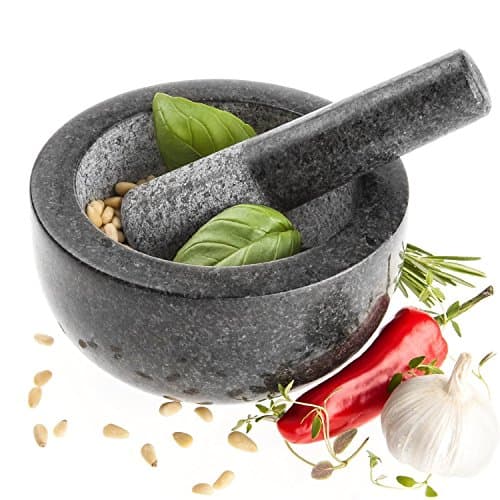
Most kitchens
Kota Japan Large Black Granite Mortar & Pestle
The set that publishes the number nobody else does: the interior bowl size, in unpolished granite, so you know what actually fits before it arrives.
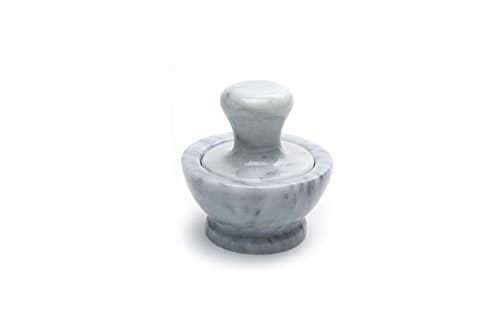
Dry spices, smallest budget
Fox Run Marble Mortar and Pestle Set (4 in)
The cheap, small one that still gets the important part right: a rough, unpolished interior, in a 4-inch bowl that lives in a drawer.
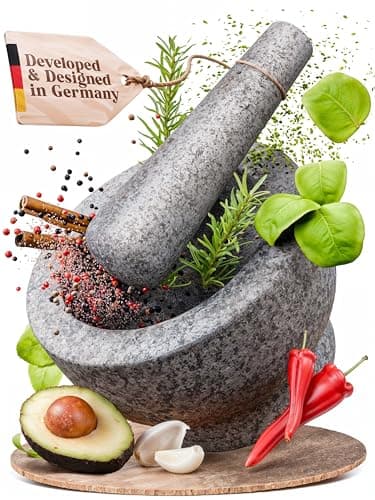
A first granite mortar
ChefSofi Granite Mortar and Pestle Set (2 cups)
The same unpolished granite and the same 2-cup bowl as our top pick, for a little less — bought on the stone rather than on the spec sheet.
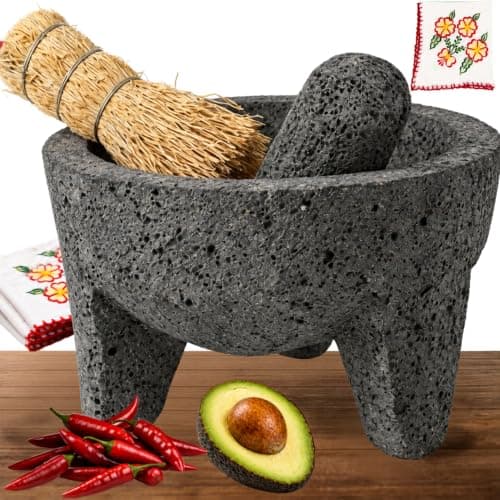
Guacamole and salsa
Cuitaxi 8-inch Molcajete, Mexican Lava Rock
The specialist: a hand-made 8-inch lava-rock molcajete from Puebla, which is the traditional tool for guacamole and roasted salsa rather than a general spice grinder.
#ad · As an Amazon Associate we earn from qualifying purchases.
Questions
Frequently asked
What is a mortar and pestle used for?
Can you grind coffee in a mortar and pestle?
Can you grind flour or wheat in a mortar and pestle?
Can you grind salt and sugar in a mortar and pestle?
Can you grind flaxseed in a mortar and pestle?
Is a mortar and pestle better than an electric grinder?
Keep reading
Related
Receipts
Sources
- Amazon listing - Kota Japan Large Black Granite Mortar & Pestle (solid unpolished granite; interior bowl 3-3/4 x 2-3/4 in; 2 cups; 8 lb; seasoning instructions in the box)
- Amazon listing - Fox Run Marble Mortar and Pestle Set, 4 in (unpolished rough interior; 4 x 4 x 4.25 in; 1.9 lb)
- Amazon listing - ChefSofi Granite Mortar and Pestle Set (unpolished granite; 500 ml / about 2 cups; about 7 lb)
- Amazon listing - Cuitaxi 8-inch Molcajete, Mexican lava rock (lava rock from Puebla; 8 in diameter; curing required before use)
- Amazon listing - Cuisinart Mini Food Processor, 3-cup (DLC-2ABC) - manufacturer states it is not recommended to grind beans as it chops
We do not run a testing lab and we do not pretend to. Specifications come from the manufacturer's own published documents and from published standards; prices come from the live Amazon API. Where a figure is not published, the page says “not published” rather than guessing. Read the full method.