HUB 03 · Mandolines & Graters
How to Use a Mandoline Slicer Safely
A mandoline is the most dangerous tool in a home kitchen and one of the most useful. The gap between those two facts is a short list of habits. Here they are, in order.
We earn a commission if you buy through our links. It does not change the price you pay, and it does not decide our picks — our selection criteria are published in full. How this works.
A mandoline slices vegetables into fast, even, glass-thin pieces that a knife cannot match — and it injures more home cooks than any other single tool. The blade is fixed and brutally sharp; your hand is what moves. That design is the reason it works and the reason it bites. The good news is that mandoline injuries are almost entirely preventable, and the precautions are not fussy. They come down to a handful of habits you do every time, without exception. Here they are, in the order they matter.
One rule above all others:never run food across a mandoline with a bare hand. If the food is too small or awkward for the hand guard to hold, you are done — finish that last piece with a knife. The nub of a potato is not worth a trip to the emergency room, and “just the last few” is exactly how nearly every serious mandoline cut happens.
The method, step by step
- Set it on a stable, dry surface.Put the mandoline on a flat counter with its feet or legs locked, or brace a handheld model firmly over a bowl. A slicer that skates or wobbles mid-stroke is how the stroke goes wrong. Wipe up any water first — a wet counter lets the whole tool slide.
- Put on a cut-resistant glove.This is the single cheapest piece of safety equipment in the kitchen and the one professionals actually wear. A cut-resistant glove on your guiding hand turns most mandoline accidents into a harmless bump against the blade. Wear it even when you are also using the guard — the two are belt and suspenders, not either/or.
- Use the hand guard or food holder for every single slice. Seat the vegetable in the included holder so its prongs grip the food and your fingers stay above the handle, not the blade. Yes, from the very first slice, not just once the piece gets small. The habit only protects you if it is automatic.
- Slice with a steady, full-length stroke. Push the food smoothly along the runway across the blade and lift it back for the next pass. Do not saw, do not rush, and keep your eyes on the work. Even, unhurried strokes give you better slices and keep the guard seated.
- Stop before the piece gets too small.When the vegetable shrinks to where the guard can no longer grip it — usually the last inch or so — stop. Set the stub aside for the stock pot, dice it by knife, or drop it in the food processor. This is the moment the tool is most dangerous, and quitting here prevents the injury outright.
- Mind the runway and the blade below. Keep your off hand away from the far end of the slicer where cut pieces fall, and never reach under or across the blade to clear a jam while the food is still on the runway. Clear stuck slices only from the underside, with the food removed.
- Keep the blade sharp, and store it guarded.A dull mandoline blade is more dangerous, not less — it forces you to push harder, and hard pushing is when hands slip. Replace or sharpen blades per the manufacturer, and store the mandoline with its blade covered or folded so it cannot catch a hand reaching into a drawer.
Why the guard is non-negotiable
Every mandoline worth buying ships with a food holder, and the temptation is always to skip it — it feels slower, it does not grip an odd shape perfectly, and the blade is right there and so is your hand. Resist it. The guard exists precisely because the blade cannot distinguish a carrot from a fingertip, and it removes the one variable you cannot control: the moment of inattention. If your mandoline’s guard is genuinely awkward to use, that is a reason to buy a mandoline with a better one, such as the OXO Good Grips Chef's Mandoline Slicer 2.0, not a reason to go without.
A note on very sharp blades
The sharpest mandolines cut the best and punish carelessness the hardest. A Japanese slicer like the Benriner Super Slicer (Japanese Mandoline)gives a cleaner, thinner cut than almost anything else, and its guard is deliberately minimal — which makes the cut-resistant glove essential rather than optional. Sharper is safer only for the food; for your hands, a sharper blade raises the stakes on every one of the habits above. Match the tool to how careful you are willing to be, every time you use it.
If you have not bought one yet, that last sentence is a buying criterion rather than a warning. Our best mandoline for beginners page ranks on it directly: which slicer asks you to touch a bare blade least often, which one folds closed in a drawer, and why the glove belongs in the same order as the mandoline.
It is also worth knowing what the makers themselves promise, because the wording varies more than you would expect: some list a food holder, one lists a separate runway guard for the blade bed, and one describes its own guard as minimal. Mandolines with a hand guard ranks the field on the protection each listing actually states, and on the two moments no food holder covers.
Two companion pages exist for the questions this guide raises and does not answer. The glove ratings are decoded in cut-resistant glove levels explained, and the maintenance question — what to do when a slicer stops cutting — is in how to sharpen a mandoline blade, whose short answer is that you should not try, because honing a captured blade with your fingers an inch away is the single worst way to get hurt by one of these.
The hardware
The hardware this guide is about
The products this guide refers to, with prices pulled live from Amazon and dated on every card. Full rankings live in the roundups linked above.
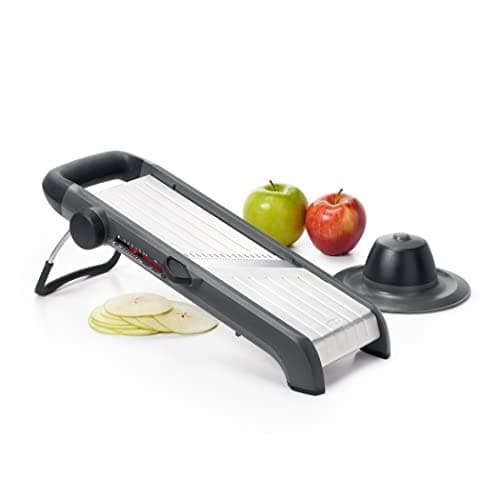
Most home cooks
OXO Good Grips Chef's Mandoline Slicer 2.0
The mandoline to buy: a solid, foldable slicer with a runway of thickness settings and a genuinely usable hand guard.
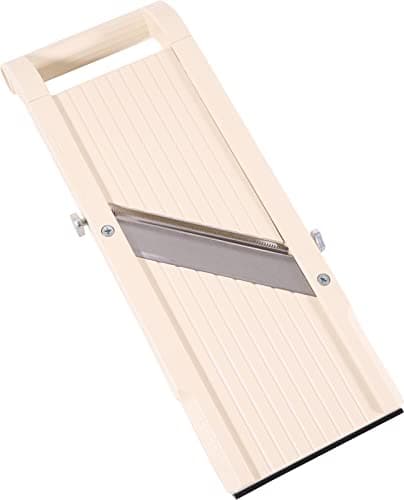
Sharpest slices
Benriner Super Slicer (Japanese Mandoline)
The professional's mandoline: a wide Japanese slicer whose razor-sharp blades chefs quietly rely on.
#ad · As an Amazon Associate we earn from qualifying purchases.
Questions
Frequently asked
What is the most common mandoline injury and how do I avoid it?
Do I still need the guard if I wear a cut-resistant glove?
Should a mandoline blade be sharp or is a duller blade safer?
Keep reading
Related
- Best mandoline for beginnersWhich one to buy if these habits are new to you.
- The best mandoline slicersRanked picks, safety weighted heavily.
- The best box gratersA lower-risk tool when you need shreds, not slices.
- Best kitchen prep gadgetsThe rest of the safe, useful prep drawer.
- OXO Chef's Mandoline reviewThe guard design that works.
- Mandoline vs food processorThe enclosed-blade alternative.
- Best cut-resistant glovesWhich glove, and what its rating means.
- Best mandoline for cabbageThe job this method matters most for.
- Best cutting boardsA board that does not move is half of it.