Skip to content
TheBench

HUB 01 · Food Processors

The Best Food Processor for Pesto

A batch of pesto is two packed cups of leaves that collapse to half a cup of paste. Put that in a 14-cup bowl and the blade spins over the top of it. Bowl size is the whole decision.

By Stephen V.Updated How we pick
#ad

We earn a commission if you buy through our links. It does not change the price you pay, and it does not decide our picks — our selection criteria are published in full. How this works.

The short answer

Quick picks

#ProductBest forScorePrice
01
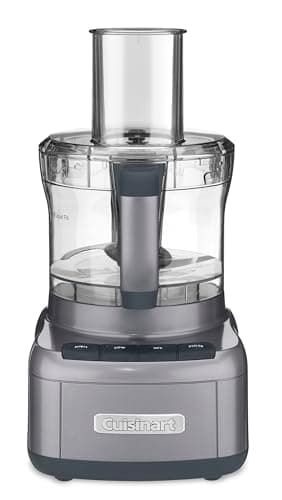
Cuisinart Cuisinart Elemental 8-Cup Food Processor (FP-8SV)
Cuisinart Elemental 8-Cup Food Processor (FP-8SV)

The right-size middle option: a 350-watt 8-cup that fits smaller kitchens and everyday jobs without going mini.

Small households
7.6
$124.95Amazon
02
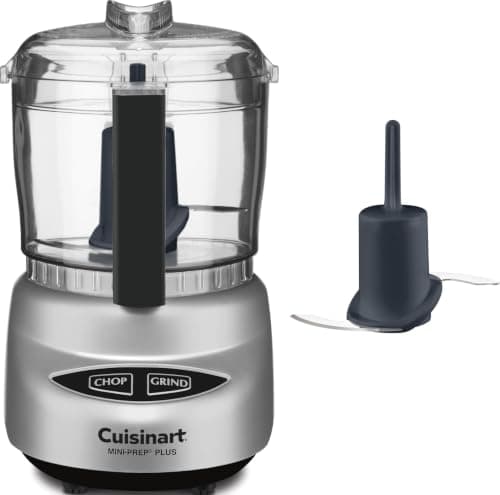
Cuisinart Cuisinart Mini-Prep Plus (DLC-2ABC)
Cuisinart Mini-Prep Plus (DLC-2ABC)

The 3-cup workhorse for small jobs: chopping herbs, an onion, a bit of dressing — without hauling out a big bowl.

Small daily chopping
7.1
$39.95Amazon
03
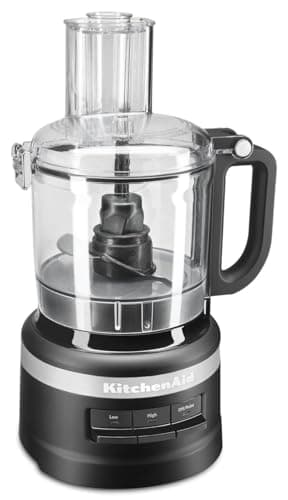
KitchenAid KitchenAid 7-Cup Food Processor (KFP0718)
KitchenAid 7-Cup Food Processor (KFP0718)

A compact 7-cup KitchenAid with a 2-in-1 feed tube — the tidy middle size, built a step above the budget machines.

Compact everyday prep
7.8
Check priceAmazon
04
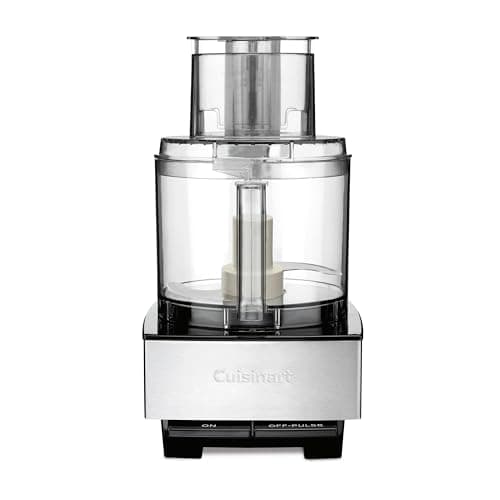
Cuisinart Cuisinart 14-Cup Food Processor (DFP-14BCNY)
Cuisinart 14-Cup Food Processor (DFP-14BCNY)

The default full-size processor for a reason: a big, simple, 720-watt workhorse with the shortest parts list to go wrong.

Most full-size kitchens
8.7
$259.95Amazon

#ad · Prices pulled live from the Amazon Product API, last checked Aug 30, 2026. Where we have no verified live price we show none — we would rather leave a gap than print a number that has gone stale. Scores are our own, compiled from published specs; they are not test results.

Classic basil pesto starts as two packed cups of leaves and finishes as roughly half a cup of paste. That collapse is the number that should decide which machine you use, and it is why the most expensive processor in the kitchen is usually the wrong one for the job: a blade at the bottom of a 14-cup bowl has nothing left to grab once the leaves have wilted down, so it spins while a ring of half-chopped basil sits up the sides.

Why bowl size is the whole decision

A food-processor blade only works on food it can reach. As volume drops, food climbs the walls and the blade cuts air. In a small bowl the walls are close enough that the vortex keeps pushing food back down; in a large bowl it is not, and you spend the batch stopping to scrape.

For a standard single batch the Cuisinart Elemental 8-Cup Food Processor (FP-8SV)is the best fit here: 8 cups is big enough to hold the leaves before they wilt and small enough that the finished paste stays in the blade’s reach. For a half batch — what most people actually make on a weeknight — the Cuisinart Mini-Prep Plus (DLC-2ABC) at roughly three cups genuinely beats any large machine, and it washes in seconds.

The Cuisinart 14-Cup Food Processor (DFP-14BCNY) is on this list for one reason: doubling or tripling a batch for the freezer. If you are working through a whole plant at the end of summer, 14 cups is the right answer and none of the above applies. For one dinner it is the wrong tool.

The oil opening is the detail that changes the texture

Pesto is an emulsion held together by cheese and by the way the oil goes in. Dumping the oil in at the start coats the leaves and stops them chopping; pouring it in a thin, steady stream while the blade runs gives you a paste that stays together rather than separating into a green layer and an oil slick.

That is why a drizzle route matters more than the spec sheet suggests. The KitchenAid 7-Cup Food Processor (KFP0718)and the full-size Cuisinarts all have feed tubes you can pour through while the motor runs. If your machine has no drizzle route, stop the motor, add a third of the oil, run five seconds, and repeat — slower, same result.

Pulse the basil, do not run it. A continuously running blade bruises basil and warms it, and warm bruised basil goes from bright green to dull olive within minutes. Short one-second pulses, with the nuts and garlic in first and the leaves last, keeps the color. Cheese goes in at the very end, two pulses, no more.

The order that works

Garlic and nuts first, pulsed to a coarse rubble — they are the hardest things in the bowl and need the most work. Then the leaves, pulsed short. Then the oil in a stream. Then the cheese, pulsed twice. Doing it in that order means nothing is over-processed while it waits for something else to catch up, which is the most common reason home pesto turns to sludge.

Salt at the end rather than the start: salt draws water out of basil and darkens it if it sits.

How they compare for this job

MachineBowlBest pesto batchTrade-off
Cuisinart Elemental 8-Cup Food Processor (FP-8SV)8 cupsOne full batchWeakest motor here for everything else
Cuisinart Mini-Prep Plus (DLC-2ABC)~3 cupsHalf batch, weeknightCannot slice or shred at all
KitchenAid 7-Cup Food Processor (KFP0718)7 cupsOne batch, sturdier buildCosts more per cup of bowl
Cuisinart 14-Cup Food Processor (DFP-14BCNY)14 cupsDouble or triple, for freezingBlade cuts air on a single batch

What about a blender, or a mortar?

A blender is the wrong shape. Its narrow jar and vortex are built to make things smooth, and pesto is supposed to have texture — visible flecks of nut, not a green milkshake. A blender also needs more liquid before it will move at all, which means more oil than the recipe wants. The full argument is in food processor vs blender.

A mortar and pestle genuinely does make better pesto, and it is worth saying so on a page that recommends processors. Crushing rather than cutting releases the oils differently and the texture is better. It also takes fifteen minutes of work for one batch. The processor is the compromise almost everyone should make; the mortar is the answer if pesto is something you care about rather than something you make.

For a batch smaller than the Mini-Prep’s bowl — a couple of tablespoons for one plate — a mezzaluna on a board beats any machine, because there is nothing to wash and nothing to scrape out.

In detail

The picks, in full

01
Cuisinart Cuisinart Elemental 8-Cup Food Processor (FP-8SV)

Small households

Cuisinart Elemental 8-Cup Food Processor (FP-8SV)

Compact footprint
7.6/10

The right-size middle option: a 350-watt 8-cup that fits smaller kitchens and everyday jobs without going mini.

Capacity
7
Power
6.8
Versatility
7.2
Ease of clean
9
Build & warranty
8

What it gets right

  • 8-cup bowl is big enough for a household's dinner prep but small enough to store easily
  • Simple three-button control is almost impossible to get wrong
  • Much cheaper than the full-size machines

What it doesn't

  • 350-watt motor labors on stiff dough and hard blocks of cheese
  • No adjustable slicing — one disc thickness only

What it costs to run

About $1.11 a year in electricity, at 3 minutes a day, 365 days a year and 17.45¢ per kWh.

350 W, printed in the product title and listing. The full arithmetic is published.

Skip this if…

You batch-cook or knead dough regularly — 8 cups fills quickly and the 350 W motor is the weakest here for heavy loads.

$124.95on Amazon

Price last checked Aug 30, 2026. Prices move constantly — Amazon's at checkout is the one that counts.

#ad · we may earn a commission from this link to Cuisinart Elemental 8-Cup Food Processor (FP-8SV)

02
Cuisinart Cuisinart Mini-Prep Plus (DLC-2ABC)

Small daily chopping

Cuisinart Mini-Prep Plus (DLC-2ABC)

Fast to wash
7.1/10

The 3-cup workhorse for small jobs: chopping herbs, an onion, a bit of dressing — without hauling out a big bowl.

Capacity
5.5
Power
6.5
Versatility
6
Ease of clean
9.5
Build & warranty
8

What it gets right

  • Perfect size for herbs, nuts, a single onion or a small batch of dressing
  • Reversible blade has a sharp edge for chopping and a blunt edge for grinding
  • Cheap, tiny to store, and takes seconds to clean

What it doesn't

  • 3 cups is far too small for batch prep or slicing vegetables
  • No slicing or shredding discs — it only chops and grinds

What it costs to run

About $0.80 a year in electricity, at 3 minutes a day, 365 days a year and 17.45¢ per kWh.

250 W, the figure Cuisinart lists for the Mini-Prep Plus and shown on the listing. The full arithmetic is published.

Skip this if…

You want one processor to do everything — this is a chopper, not a slicer, and it cannot replace a full-size machine for real prep.

$39.95on Amazon

Price last checked Aug 30, 2026. Prices move constantly — Amazon's at checkout is the one that counts.

#ad · we may earn a commission from this link to Cuisinart Mini-Prep Plus (DLC-2ABC)

03
KitchenAid KitchenAid 7-Cup Food Processor (KFP0718)

Compact everyday prep

KitchenAid 7-Cup Food Processor (KFP0718)

Sturdy compact build
7.8/10

A compact 7-cup KitchenAid with a 2-in-1 feed tube — the tidy middle size, built a step above the budget machines.

Capacity
6.8
Power
7.5
Versatility
7.8
Ease of clean
8.5
Build & warranty
8.3

What it gets right

  • 7 cups is a practical everyday size that still stores easily
  • Feels noticeably more solid than the budget 8-cup machines
  • Adjustable slicing disc despite the small footprint

What it doesn't

  • Costs more than budget processors twice its capacity
  • No dough blade or dicing kit

What it costs to run

KitchenAid publishes no usable wattage for this machine, so we do not show a running-cost figure for it. Here is the method we would have used.

Skip this if…

You need to prep for a crowd — 7 cups is comfortable for two to four people but fills fast for batch cooking.

Check price on Amazon →

No buyable offer at the last price check (Aug 30, 2026). We show nothing rather than a stale number.

#ad · we may earn a commission from this link to KitchenAid 7-Cup Food Processor (KFP0718)

04
Cuisinart Cuisinart 14-Cup Food Processor (DFP-14BCNY)

Most full-size kitchens

Cuisinart 14-Cup Food Processor (DFP-14BCNY)

Big-batch capacityOnly 3 parts to wash
8.7/10

The default full-size processor for a reason: a big, simple, 720-watt workhorse with the shortest parts list to go wrong.

Capacity
9.5
Power
8.5
Versatility
8
Ease of clean
9
Build & warranty
8.5

What it gets right

  • Genuinely large 14-cup bowl handles a whole batch of dough or a full head of cabbage without stopping to empty it
  • Only three washable parts — no fiddly interlocking accessories to store or lose
  • 720-watt motor pushes through pie dough and hard cheese without bogging down

What it doesn't

  • No smaller nested bowl — dicing a single shallot in a 14-cup bowl is wasteful and messy
  • Tall footprint does not fit under most upper cabinets when assembled

What it costs to run

About $2.29 a year in electricity, at 3 minutes a day, 365 days a year and 17.45¢ per kWh.

720 W, the figure Cuisinart publishes for the DFP-14 series and shown on the listing. The full arithmetic is published.

Skip this if…

You cook for one or two and mostly do small jobs — a 14-cup bowl is a chore to wash for half an onion, and a mini processor will serve you better and cost a third as much.

$259.95on Amazon

$299.9513% off

Price last checked Aug 30, 2026. Prices move constantly — Amazon's at checkout is the one that counts.

#ad · we may earn a commission from this link to Cuisinart 14-Cup Food Processor (DFP-14BCNY)

How we picked

Tools we claim to have lab-tested: 0

Every site in this category tells you they ran twenty machines through a lab. We have not, and we say so. Here is what we do instead: read the manufacturer's manual and spec sheet, record the published bowl capacity, motor rating, blade and disc counts and materials, cross-check the warranty against the manufacturer's own warranty document, and cite all of it so you can check the work. Prices come live from Amazon's API and disappear rather than go stale.

The scores above are judgments from that documented research — not test results. The full rubric, including what disqualifies a product, is published in full.

Questions

Frequently asked

What size food processor is best for pesto?
Around 7–8 cups for a standard batch, and 3–4 cups for a half batch. Two packed cups of basil collapse to roughly half a cup of paste, and in a 12–16 cup bowl the blade ends up spinning above the food. Only go large if you are batching for the freezer.
Should you pulse or run a food processor for pesto?
Pulse. A continuously running blade bruises and warms basil, which turns it from bright green to dull olive. Use short one-second pulses: garlic and nuts first, leaves next, then stream the oil in, then the cheese with two final pulses.
Why does my pesto separate?
The oil went in too fast. Pesto is an emulsion, and it holds when the oil is added in a thin stream while the blade runs. If your machine has no drizzle hole, add the oil in thirds with a short run between each addition rather than pouring it all in at once.
Can you make pesto in a mini food processor?
Yes, and for a half batch it is the better tool — the small bowl keeps food in the blade’s reach and it washes in seconds. The Cuisinart Mini-Prep Plus (DLC-2ABC)handles roughly half a standard batch comfortably. For a full batch you want 7–8 cups.

Keep reading