HUB 06 · Guides
What Size Mortar and Pestle Do You Need?
Bowl size is the one decision that changes what a mortar can do, and the one most listings describe badly. Here is a chart by job, built from the interior dimensions the makers actually publish - and the reason a 2-cup rating is close to meaningless.
We earn a commission if you buy through our links. It does not change the price you pay, and it does not decide our picks — our selection criteria are published in full. How this works.
For dry spices, buy a 4-inch bowl — small and deep, so seed stays under the pestle. For pesto, curry paste and garlic paste, buy 5 to 6 inches with a 2-cup interior. For guacamole and roasted salsa you want to mash and serve in one vessel, buy 8 inches. And if you are buying one mortar for all of it, buy the mid-size granite bowl and accept that it is a compromise at both ends. Those three numbers are the whole guide; below is the reasoning and the honest problem with how this category is labelled.
A stated cup capacity tells you almost nothing. Two mortars can both be sold as “2 cups” and behave completely differently, because capacity is a volume and grinding is decided by shape — how wide the floor is and how high the walls rise. Of the five mortars in our catalog, only one publishes its interior bowl dimensions at all: the Kota Japan set, at 3-3/4 by 2-3/4 inches inside a 5-1/4 inch mortar. That is the figure you want and almost nobody gives it to you.
Why shape decides this, not volume
A pestle grinds by trapping material between its face and the bowl wall. A dry seed is hard, round and almost weightless, so unless a wall is close by it simply rolls away from the pestle rather than breaking. In a narrow deep bowl there is nowhere to roll and every stroke lands. In a wide shallow bowl most strokes push seed around a floor.
Soft wet material behaves the opposite way. Garlic, basil, chilli and avocado stay where you put them, and what they need is room to be worked and folded — so a wide bowl helps and a narrow one fights you. That is the entire reason a molcajete is 8 inches across and a spice mortar is 4, and it is why no single bowl is optimal for both. The same argument, applied to which set to buy for spices, is in the best mortar and pestle for spices.
Two other dimensions matter and are rarely published. Wall height decides how much escapes the bowl while you work — a shallow dish throws spice across the counter. And pestle length decides whether your knuckles clear the rim: the Kota Japan set publishes a 6-3/4 inch pestle, which is the only pestle figure in our catalog.
The chart, by job
| Job | Bowl size | Shape you want | Our example |
|---|---|---|---|
| Dry spices, peppercorns, saffron | About 4 in | Narrow floor, high walls, rough interior | Fox Run Marble Mortar and Pestle Set (4 in) — 4 x 4 x 4.25 in, 1.9 lb |
| Garlic paste, spice blends, mixed daily use | 5 to 5.5 in outside, about 2 cups | Moderate floor with real depth | Kota Japan Large Black Granite Mortar & Pestle — interior 3-3/4 x 2-3/4 in, 8 lb |
| Pesto, curry paste, batch work | 5.5 to 6 in, 2 to 3 cups | Wide floor, unpolished pestle tip as well as bowl | Cole & Mason Granite Mortar & Pestle (5.5 in) — 5.9 in bowl diameter, 8 lb |
| Guacamole, roasted salsa, serving | 8 in | Wide, open, porous stone | Cuitaxi 8-inch Molcajete, Mexican Lava Rock — 8 in across, 5 in high |
A note on the weights in that table, because they decide whether you use the thing: three of those four are around 8 lb. That is a two-hand lift and a counter or low-cupboard object, not a drawer one. The 1.9 lb marble set is the only one you take out one-handed for a few peppercorns, and the psychology of that matters more than any spec — a mortar you have to haul out is a mortar you reach for the pepper mill instead of.
Reading a mortar listing properly
Look for the interior figure, not the exterior one. A “5.5 inch mortar” describes the outside of a stone bowl whose walls might be an inch thick. Interior is what holds food.
Treat capacity claims with suspicion. Cole & Mason’s own listing states 2 cups in its spec table and 3 cups (20 oz) in its bullets. We report both rather than picking one, and you should assume the smaller figure when planning a batch.
Check the finish before the size. An unpolished bowl of any size grinds; a polished one of any size does not. Every pick in our catalog states a rough or unpolished interior, and that word is more predictive than any dimension. Stone type matters less than people think — the sourced version of that argument is in granite vs marble.
Check whether a pestle length is published. If it is not, assume the pestle is proportionate and that a very deep narrow bowl will be awkward.
If you are only buying one
Buy the mid-size granite bowl — around 2 cups, 5 inches, unpolished, with published interior dimensions if you can get them. It grinds spices adequately (you will chase a little seed), makes a real batch of pesto or curry paste, and is heavy enough not to travel. That is why the Kota Japan set is rank 1 on our main mortar roundup even though the small marble set beats it on spices specifically.
What we would not do is buy the biggest one available on the theory that bigger is more capable. In this category it is not: an 8-inch bowl is a specialist, and molcajete vs mortar and pestle explains exactly what it specialises in. And before anything goes in a new stone bowl of any size, it needs seasoning — the published methods are here.
What we are not claiming
We have not measured any of these bowls. Every dimension, capacity, weight and finish claim on this page is the maker’s own published wording on the listing the buy button points at, cited below, and where a maker publishes nothing — which is most of them, for interior dimensions — this page says so instead of estimating. The shape argument is geometry, not a test.
What each set in the catalog actually publishes
| Set | Exterior | Interior | Capacity | Weight |
|---|---|---|---|---|
| Fox Run Marble Mortar and Pestle Set (4 in) | 4 x 4 x 4.25 in | Not published | Not published | 1.9 lb |
| Kota Japan Large Black Granite Mortar & Pestle | 5-1/4 x 5-1/4 in | 3-3/4 x 2-3/4 in; pestle 6-3/4 in | 2 cups | 8 lb |
| Cole & Mason Granite Mortar & Pestle (5.5 in) | 5.5 in | 5.9 in bowl diameter stated; depth not published | 2 cups in the spec table, 3 cups in the bullets | 8 lb |
| Cuitaxi 8-inch Molcajete, Mexican Lava Rock | 8 in diameter, 5 in high | Not published | Not published | 7.0 to 8.8 lb (hand-made) |
Three of those four rows have “not published” in them, which is the real finding of this page. If you want to know what will actually fit in a mortar before it arrives, the Kota Japan set is currently the only one in our catalog that tells you.
Sanity checks before you buy
Where will it live? An 8 lb bowl needs a permanent home at waist height or above. If the only space is a high shelf, buy smaller.
What is the biggest batch you will realistically make? Plan for that, not for the dinner party you might host. A quarter-full bowl grinds well; a three-quarters-full one does not.
Who is using it? A heavy pestle does more of the work for you, which helps if grip strength is a factor — but an 8 lb mortar is itself hard to move. See prep tools for weak grip.
The hardware
The hardware this guide is about
The products this guide refers to, with prices pulled live from Amazon and dated on every card. Full rankings live in the roundups linked above.
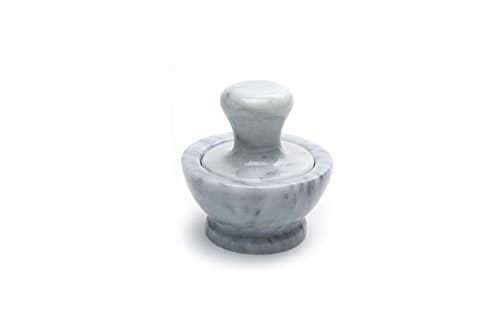
Dry spices, smallest budget
Fox Run Marble Mortar and Pestle Set (4 in)
The cheap, small one that still gets the important part right: a rough, unpolished interior, in a 4-inch bowl that lives in a drawer.
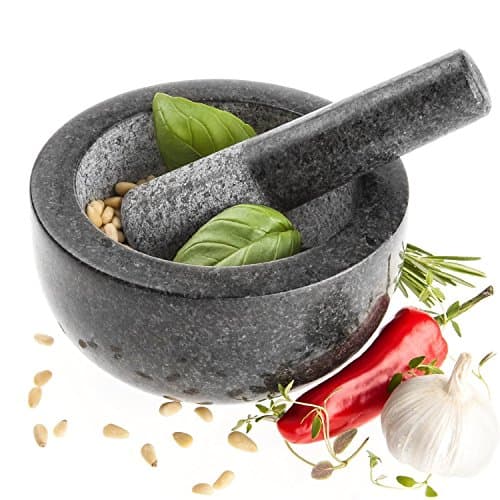
Most kitchens
Kota Japan Large Black Granite Mortar & Pestle
The set that publishes the number nobody else does: the interior bowl size, in unpolished granite, so you know what actually fits before it arrives.
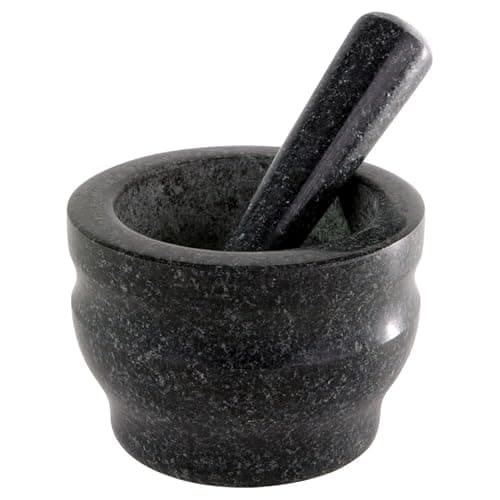
An unpolished pestle too
Cole & Mason Granite Mortar & Pestle (5.5 in)
The only listing here that says the pestle tip is unpolished as well as the bowl — which is the half of the equation most makers leave out.
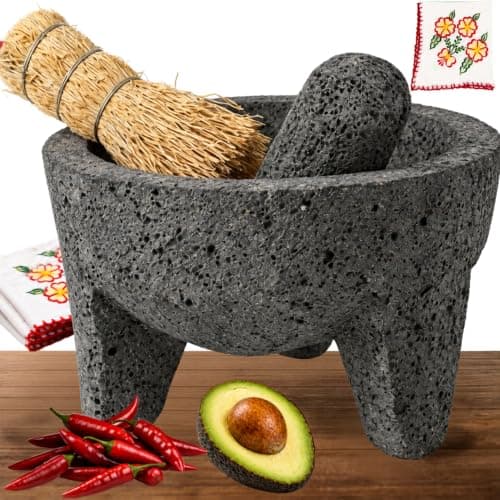
Guacamole and salsa
Cuitaxi 8-inch Molcajete, Mexican Lava Rock
The specialist: a hand-made 8-inch lava-rock molcajete from Puebla, which is the traditional tool for guacamole and roasted salsa rather than a general spice grinder.
#ad · As an Amazon Associate we earn from qualifying purchases.
Questions
Frequently asked
What size mortar and pestle is best?
Is a 2-cup mortar and pestle big enough?
What size mortar and pestle for pesto?
What size mortar and pestle for spices?
Does a heavier mortar grind better?
Why do so few listings publish interior dimensions?
Keep reading
Related
Receipts
Sources
- Amazon listing - Fox Run Marble Mortar and Pestle Set, 4 in (unpolished rough interior; 4 x 4 x 4.25 in; 1.9 lb; no interior dimensions or capacity published)
- Amazon listing - Kota Japan Large Black Granite Mortar & Pestle (solid unpolished granite; interior bowl 3-3/4 x 2-3/4 in; mortar 5-1/4 x 5-1/4 in; pestle 6-3/4 x 1-3/4 in; 2 cups; 8 lb)
- Amazon listing - Cole & Mason Granite Mortar & Pestle, 5.5 in (5.9 in bowl diameter with thick walls; 8 lb; capacity stated as 2 cups in the spec table and 3 cups / 20 oz in the bullets)
- Amazon listing - Cuitaxi 8-inch Molcajete, Mexican lava rock (8 in diameter, 5 in high; 7.0 to 8.8 lb as each is hand-made)
We do not run a testing lab and we do not pretend to. Specifications come from the manufacturer's own published documents and from published standards; prices come from the live Amazon API. Where a figure is not published, the page says “not published” rather than guessing. Read the full method.