Buying for baby food inverts the usual advice. A 14-cup bowl is actively wrong for two tablespoons of pureed carrot — the food spreads too thin to reach the blade, so you get chunks at the edge and liquid in the middle. What you want is a small bowl, a blade that reaches the bottom of it, and a machine you can wash in two minutes, because you are about to do this every day for the better part of a year.
Why bowl size is the whole decision
A first-stage puree is a genuinely tiny volume: one steamed carrot, half a sweet potato, a few tablespoons of cooking water. In a big work bowl that quantity sits in a ring around the outside where the blade never touches it, and you spend the session scraping down. In a three-cup bowl the same food stays under the blade and turns smooth in fifteen seconds.
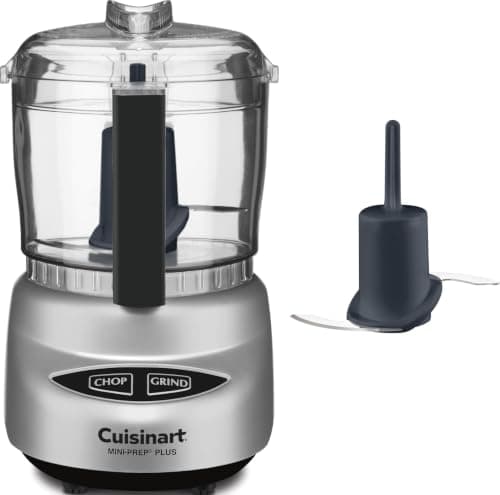
That is why the Cuisinart Mini-Prep Plus (DLC-2ABC)is the pick. Its 24-ounce bowl is right for the portion size, its 250-watt motor is ample for cooked vegetables and fruit, and its reversible blade has a blunt grinding edge as well as a sharp chopping one — useful later, for grinding oats or dried fruit into cereal. It also washes in about a minute, which is the spec that actually decides whether you keep using it.
The liquid is the technique. Almost every grainy first puree is under-liquided rather than under-powered. Steam the vegetable until it collapses under a fork, reserve the cooking water, and add it a spoonful at a time while the machine runs. Cooking water rather than fresh water keeps the nutrients that leached into it. If it is still grainy after a minute, it needs more liquid, not a stronger motor.
When to go smaller, and when to go bigger
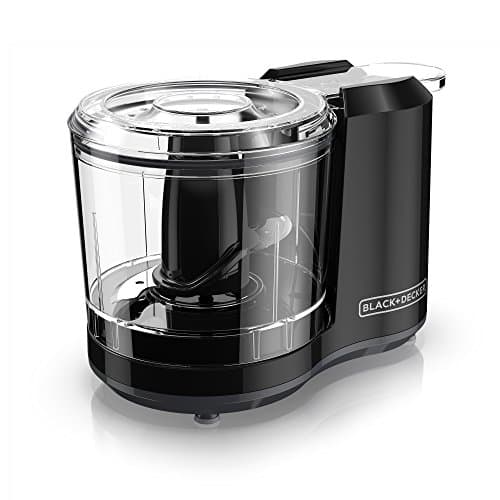
Smaller: the BLACK+DECKER 1.5-Cup Electric Food Chopperis a 1.5-cup chopper with oil holes in the lid, and for a single portion it is the fastest thing here to fill, run and rinse. The oil holes are genuinely useful for baby food too — they let you dribble in breast milk, formula or cooking water while the blade turns, which is exactly the technique above.
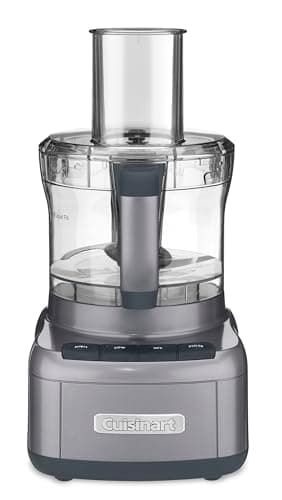
Bigger: if you are batch-cooking and freezing — the approach most parents settle into by month two — the Cuisinart Elemental 8-Cup Food Processor (FP-8SV) makes more sense. Eight cups takes a whole tray of roasted vegetables in one go, and simple on/off/pulse controls suit the job. Puree, spoon into an ice-cube tray, freeze, and you have a month of dinners in one afternoon.
Stage by stage, and what changes
| Stage | Texture | What the machine has to do |
|---|
| First foods (around 6 months) | Completely smooth, thin | Fully puree soft cooked produce with added liquid |
| Thicker purees | Smooth but spoonable | Same, with less liquid — blade reach matters more |
| Lumpy / mashed | Deliberately uneven | Pulse only — this is where over-processing ruins it |
| Finger foods | Chopped, not pureed | Short pulses; a chopper is as good as a processor |
The stage most people get wrong is the third. Moving a baby onto texture is developmentally important, and a processor left running produces the one texture that does not help. Pulse in bursts of a second and stop early — you can always pulse again.
Do you need a dedicated baby-food maker?
Almost never. The steam-and-blend units sold for this are a small steamer bolted to a small blender, they cost more than the Mini-Prep, and they are obsolete the moment weaning ends. A saucepan steams perfectly well and a small processor outlives the baby by a decade. The one honest argument for them is counter convenience in a very small kitchen, and that is a preference rather than a capability.
An immersion blenderis the other real alternative, and a decent one: it purees directly in the pan you cooked in, which means one thing to wash rather than three. It is slightly worse at very small quantities, because the bell needs depth to draw food in. If you already own one, try it before buying anything — and see food processor vs immersion blender for where the line falls.
If a stick blender is the route you take, we have now ranked four of them for this exact job: the best immersion blender for baby food compares them on splash control, on whether the guard is safe in the non-stick pan you steamed in, and on how many parts you end up washing twice a day for eight months.