Skip to content
TheBench

HUB 06 · Guides

Mortar and Pestle vs Food Processor

A pestle crushes; a blade cuts. That single difference decides pesto, curry paste, guacamole and spice grinding — and it also explains why the machine still wins for most of what you cook.

By Stephen V.Updated How we pick
#ad

We earn a commission if you buy through our links. It does not change the price you pay, and it does not decide our picks — our selection criteria are published in full. How this works.

The short answer

Quick picks

#ProductBest forScorePrice
01
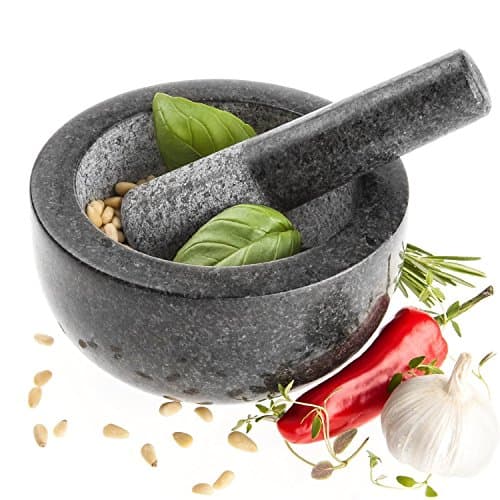
Kota Japan Kota Japan Large Black Granite Mortar & Pestle
Kota Japan Large Black Granite Mortar & Pestle

The set that publishes the number nobody else does: the interior bowl size, in unpolished granite, so you know what actually fits before it arrives.

Most kitchens
9.0
$28.98Amazon
02
ChefSofi ChefSofi Granite Mortar and Pestle Set (2 cups)
ChefSofi Granite Mortar and Pestle Set (2 cups)

The same unpolished granite and the same 2-cup bowl as our top pick, for a little less — bought on the stone rather than on the spec sheet.

A first granite mortar
8.5
$32.99Amazon
03
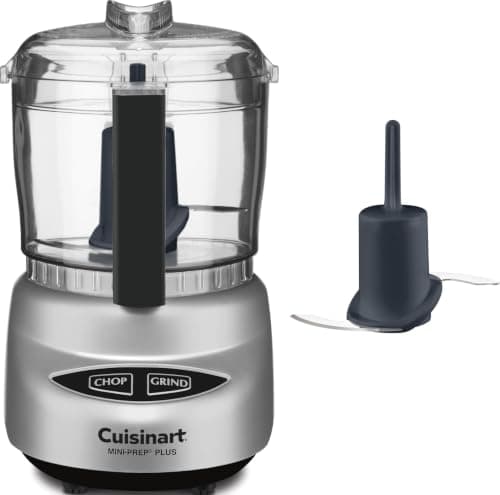
Cuisinart Cuisinart Mini-Prep Plus (DLC-2ABC)
Cuisinart Mini-Prep Plus (DLC-2ABC)

The 3-cup workhorse for small jobs: chopping herbs, an onion, a bit of dressing — without hauling out a big bowl.

Small daily chopping
7.1
$24.49Amazon
04
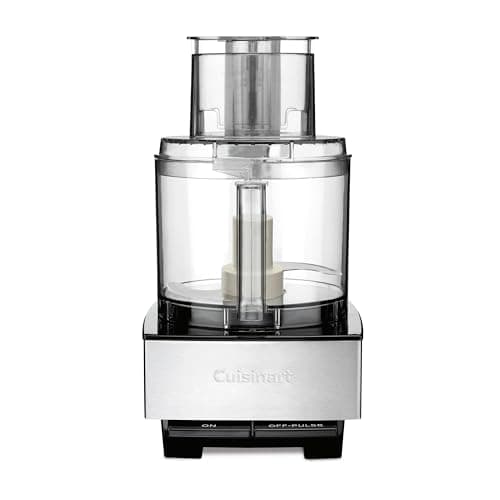
Cuisinart Cuisinart 14-Cup Food Processor (DFP-14BCNY)
Cuisinart 14-Cup Food Processor (DFP-14BCNY)

The default full-size processor for a reason: a big, simple, 720-watt workhorse with the shortest parts list to go wrong.

Most full-size kitchens
8.7
$194.73Amazon

#ad · Prices pulled live from the Amazon Product API, last checked October 5, 2026. Where we have no verified live price we show none — we would rather leave a gap than print a number that has gone stale. Scores are our own, compiled from published specs; they are not test results.

For pesto, curry paste, guacamole and whole spices, buy a mortar — the Kota Japan Large Black Granite Mortar & Pestle is the one we would buy, for the person who wants to make those four things properly rather than quickly. For everything else you were considering a food processor for, buy the processor: the Cuisinart Mini-Prep Plus (DLC-2ABC) for small daily chopping, the Cuisinart 14-Cup Food Processor (DFP-14BCNY) if you also want slicing, shredding and dough. These tools barely compete. What follows is why.

Crushing and cutting are not two speeds of one thing

A pestlepresses an ingredient against a rough stone wall until its cell walls give way. The cells rupture under pressure and release what is inside them — oils, resins, water — and because you are also smearing the ingredient across the surface, those released oils immediately mix with everything else in the bowl. The result is a paste that is emulsified by the act of making it.

A food processor blade does something different: it travels fast and slices. Each pass cuts pieces smaller without pressing them, so a lot of what is inside the cells stays inside the cells. The blade also throws ingredients to the outside of the bowl rather than pressing them together, which is why a processor gives you a fine chop that looks like a paste rather than a paste.

Everything below follows from those two sentences. Where the point of the dish is released flavor and an emulsion, stone wins. Where the point is reducing a volume of food into even pieces, the machine wins, and it wins by a mile.

Job by job

JobMortar and pestleFood processorBuy
PestoCrushes basil, releases oil, emulsifies with the olive oil as you goChops basil; bruises the cut edges; the oil stays separate until you force itMortar
Curry or spice pasteFibrous lemongrass, galangal and chilli break down into a true pasteLeaves fibre in strands unless you add liquid, which dilutes the pasteMortar
Whole dry spicesGrinds cumin, coriander and pepper fine, in teaspoon quantitiesToo little volume for the blade to catch; a grind pad helps but is not the sameMortar
GuacamoleMashes to a textured, scoopable consistencyOvershoots to a smooth puree in about two secondsMortar
Garlic paste with saltSalt acts as the abrasive; produces a smooth paste in secondsFlings small amounts up the bowl wall and leaves chunksMortar
Chopping onions, carrots, celeryNot the tool — a mortar crushes, and crushed onion is juiceSeconds, repeatably, in real volumeProcessor
Hummus, nut butter, mayonnaisePossible and genuinely laboriousWhat the machine is forProcessor
Slicing or shredding anythingImpossibleA disc job; a mortar has no equivalentProcessor
Breadcrumbs, dough, pastryNoYes, in one bowlProcessor

Why pesto is the dish people argue about

It is the clearest case because the recipe is named after the tool: pestocomes from the same root as pestle, and it describes an action rather than an ingredient list. Basil leaves are delicate and they bruise — a cut edge goes dark because it oxidizes, which is what a fast steel blade produces a great many of. A pestle tears and presses rather than slicing cleanly, and the oil released from the crushed leaf coats the cut surfaces as it is made.

That is a real difference and it is also a small one, which is the honest part. A processor pesto is a good dinner. If you make pesto twice a summer with supermarket basil, buy the machine you will use for ten other things. If pesto, curry paste or a spice blend is a thing you care about, the mortar is the tool, and it costs a fraction of the processor.

The spec that decides a mortar, and almost nobody prints it. A mortar grinds because its interior is unpolished. A polished stone bowl is a decorative object: ingredients slide across it and nothing breaks down. The Kota Japan Large Black Granite Mortar & Pestlestates solid unpolished granite and publishes its interior bowl dimensions — 3-3/4 by 2-3/4 inches, in an 8 lb set — which is the figure that actually tells you what fits. The ChefSofi Granite Mortar and Pestle Set (2 cups) states unpolished granite and a 500 ml bowl and nothing more. Our mortar and pestle roundup ranks five of them on exactly this, and seasoning a new mortar is the step that comes before the first thing you make in it.

Which to buy if you are only buying one

Buy the food processor. This is not a close call for a kitchen with one budget and one shelf: the processor chops, slices, shreds, purees and in the full-size case handles dough, and the mortar does none of that. The Cuisinart Mini-Prep Plus (DLC-2ABC)is a 24 oz bowl with a published 250 W motor and a reversible sharp-and-blunt blade — the cheapest way into the category, and its own listing is clear that it chops and grinds and does not slice. The Cuisinart 14-Cup Food Processor (DFP-14BCNY) is the full-size answer if slicing discs and dough are on your list; our food processor hub ranks the whole field.

Then buy the mortar second, later, cheaply, because it is the kind of tool that costs less than a good pan and lasts longer than the kitchen. Nobody needs to choose between these two for long.

If what you are really weighing is a processor against something smaller and simpler, that is a different page: food processor vs chopper covers the two bladed tools, and do I need a food processor is the one to read if you are not yet sure you need any machine at all.

In detail

The picks, in full

01
Kota Japan Kota Japan Large Black Granite Mortar & Pestle

Most kitchens

Kota Japan Large Black Granite Mortar & Pestle

States unpolished granitePublishes its interior bowl size
9.0/10

The set that publishes the number nobody else does: the interior bowl size, in unpolished granite, so you know what actually fits before it arrives.

Grinding surface
9
Capacity
8.6
Stability
9.2
Published detail
9.5
Value
8.6

What it gets right

  • The only set here that publishes the interior bowl dimensions — the figure that decides what genuinely fits, which a stated cup capacity does not
  • States unpolished granite outright, which is the entire mechanism of the tool
  • 8 lb of stone does not travel across the counter, and seasoning instructions come in the box

What it doesn't

  • 8 lb is a two-hand lift; this lives on the counter or in a low cupboard, never in a drawer
  • The listing says both 'rinse with warm water and let air dry' and 'dishwasher safe' — two different instructions for a stone you are also told to season

What it costs to run

Kota Japan publishes no usable wattage for this machine, so we do not show a running-cost figure for it. Here is the method we would have used.

Skip this if…

…You want a mortar you can lift down one-handed for one clove of garlic — at 8 lb this is the wrong tool, and a small 4-inch bowl will get used far more often.

$28.98on Amazon

Price last checked October 5, 2026. Prices move constantly — Amazon's at checkout is the one that counts.

#ad · we may earn a commission from this link to Kota Japan Large Black Granite Mortar & Pestle

02
ChefSofi ChefSofi Granite Mortar and Pestle Set (2 cups)

A first granite mortar

ChefSofi Granite Mortar and Pestle Set (2 cups)

States unpolished granite
8.5/10

The same unpolished granite and the same 2-cup bowl as our top pick, for a little less — bought on the stone rather than on the spec sheet.

Grinding surface
9
Capacity
8.8
Stability
8.8
Published detail
7
Value
8.8

What it gets right

  • States an unpolished granite interior and describes the friction it gives, which is the claim that matters
  • A stated 500 ml bowl is enough for a full batch of pesto or a double batch of curry paste in one go
  • Heavy enough at about 7 lb that it stays still while you work

What it doesn't

  • Publishes no bowl diameter, no depth and no pestle length, so it cannot be compared dimension for dimension with the Kota Japan
  • Like every unpolished stone set it sheds grit until it is seasoned, and its listing does not tell you how to do that

What it costs to run

ChefSofi publishes no usable wattage for this machine, so we do not show a running-cost figure for it. Here is the method we would have used.

Skip this if…

…You want to know exactly what you are getting before it arrives — this listing states a volume and a stone and nothing else about size.

$32.99on Amazon

$34.996% off

Price last checked October 5, 2026. Prices move constantly — Amazon's at checkout is the one that counts.

#ad · we may earn a commission from this link to ChefSofi Granite Mortar and Pestle Set (2 cups)

03
Cuisinart Cuisinart Mini-Prep Plus (DLC-2ABC)

Small daily chopping

Cuisinart Mini-Prep Plus (DLC-2ABC)

Fast to wash
7.1/10

The 3-cup workhorse for small jobs: chopping herbs, an onion, a bit of dressing — without hauling out a big bowl.

Capacity
5.5
Power
6.5
Versatility
6
Ease of clean
9.5
Build & warranty
8

What it gets right

  • Perfect size for herbs, nuts, a single onion or a small batch of dressing
  • Reversible blade has a sharp edge for chopping and a blunt edge for grinding
  • Cheap, tiny to store, and takes seconds to clean

What it doesn't

  • 3 cups is far too small for batch prep or slicing vegetables
  • No slicing or shredding discs — it only chops and grinds

What it costs to run

About $0.80 a year in electricity, at 3 minutes a day, 365 days a year and 17.45¢ per kWh.

250 W, the figure Cuisinart lists for the Mini-Prep Plus and shown on the listing. The full arithmetic is published.

Skip this if…

…You want one processor to do everything — this is a chopper, not a slicer, and it cannot replace a full-size machine for real prep.

$24.49on Amazon

$39.9539% off

Price last checked October 5, 2026. Prices move constantly — Amazon's at checkout is the one that counts.

#ad · we may earn a commission from this link to Cuisinart Mini-Prep Plus (DLC-2ABC)

04
Cuisinart Cuisinart 14-Cup Food Processor (DFP-14BCNY)

Most full-size kitchens

Cuisinart 14-Cup Food Processor (DFP-14BCNY)

Big-batch capacityOnly 3 parts to wash
8.7/10

The default full-size processor for a reason: a big, simple, 720-watt workhorse with the shortest parts list to go wrong.

Capacity
9.5
Power
8.5
Versatility
8
Ease of clean
9
Build & warranty
8.5

What it gets right

  • Genuinely large 14-cup bowl handles a whole batch of dough or a full head of cabbage without stopping to empty it
  • Only three washable parts — no fiddly interlocking accessories to store or lose
  • 720-watt motor pushes through pie dough and hard cheese without bogging down

What it doesn't

  • No smaller nested bowl — dicing a single shallot in a 14-cup bowl is wasteful and messy
  • Tall footprint does not fit under most upper cabinets when assembled

What it costs to run

About $2.29 a year in electricity, at 3 minutes a day, 365 days a year and 17.45¢ per kWh.

720 W, the figure Cuisinart publishes for the DFP-14 series and shown on the listing. The full arithmetic is published.

Skip this if…

…You cook for one or two and mostly do small jobs — a 14-cup bowl is a chore to wash for half an onion, and a mini processor will serve you better and cost a third as much.

$194.73on Amazon

$299.9535% off

Price last checked October 5, 2026. Prices move constantly — Amazon's at checkout is the one that counts.

#ad · we may earn a commission from this link to Cuisinart 14-Cup Food Processor (DFP-14BCNY)

What to check on each side

On a mortar: is the interior unpolished, in the maker’s own words? This is the whole mechanism and it is the one claim worth refusing to buy without. Both mortars here state it. A listing that says “natural stone” and shows a glossy photograph is selling an ornament.

On a mortar: weight, and whether you can live with it.Stone works because it does not move. The Kota set is 8 lb and the ChefSofi about 7 lb, which means both live on the counter or in a low cupboard — not a drawer, and not a high shelf. That is a real constraint on a tool whose main advantage is being reached for casually.

On a mortar: bowl size in inches, not in cups. A stated cup capacity tells you what the bowl holds; the interior diameter tells you whether you can actually swing a pestle in it without wearing the contents. Only the Kota publishes the interior dimensions, which is why it is ranked first.

On a processor: bowl volume and whether discs are included.The whole argument for the machine is job range, and job range is discs. A 24 oz chopping bowl with no slicing disc is a chopper that costs processor money — useful, but not the thing that beats a mortar at ten other tasks.

On a processor: whether the maker publishes a wattage.Cuisinart publishes 250 W for the Mini-Prep Plus. Several brands in this category publish nothing, which means a motor comparison across the field is not possible on paper — something we note on every page where it comes up rather than filling the gap with a guess.

Neither tool: if the job is grinding coffee, use a coffee grinder; if it is grinding meat, see our meat grinder roundup. A mortar will do neither well and a processor will do both badly.
How we picked

Tools we claim to have lab-tested: 0

Every site in this category tells you they ran twenty machines through a lab. We have not, and we say so. Here is what we do instead: read the manufacturer's manual and spec sheet, record the published bowl capacity, motor rating, blade and disc counts and materials, cross-check the warranty against the manufacturer's own warranty document, and cite all of it so you can check the work. Prices come live from Amazon's API and disappear rather than go stale.

The scores above are judgments from that documented research — not test results. The full rubric, including what disqualifies a product, is published in full.

Questions

Frequently asked

Is a mortar and pestle better than a food processor for pesto?
Yes, and it is the one dish where the difference is easy to taste. Crushing basil releases its oil into the mix as you work, while a fast blade cuts the leaves and bruises the cut edges. The gap is real but not enormous — processor pesto is good food. If you make it often, the mortar is worth it.
Can a food processor replace a mortar and pestle?
For a fine chop, yes. For whole dry spices, no — a teaspoon of cumin seed is too little volume for the blade to catch. For a fibrous curry paste, not without adding liquid, which changes the dish. For guacamole it overshoots to puree in about two seconds. A mortar is a small, cheap tool that covers the specific jobs the machine is worst at.
Which should I buy first?
The processor, almost always — it does ten jobs and the mortar does four. Then buy the mortar afterwards, because it is inexpensive and effectively permanent. Our mortar roundup and the food processor hub cover each side.
Why does my mortar not grind anything?
Either the interior is polished, in which case it never will, or it is unpolished and has not been seasoned yet, in which case it will as soon as you run rice through it. The difference matters enough that we wrote a separate page on seasoning.
What about a blender instead?
A blender needs liquid to circulate, which is exactly what a paste does not have. It is the wrong tool for both sides of this comparison. We cover the boundary in food processor vs blender.

Keep reading