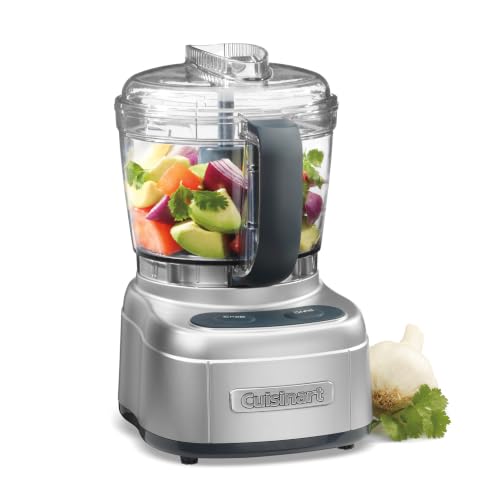
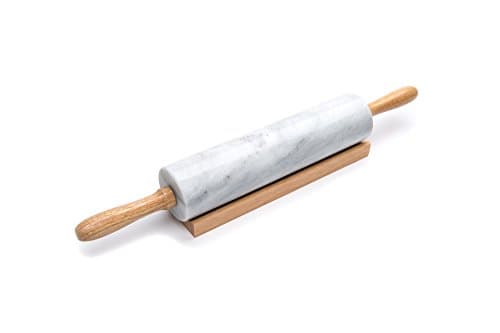
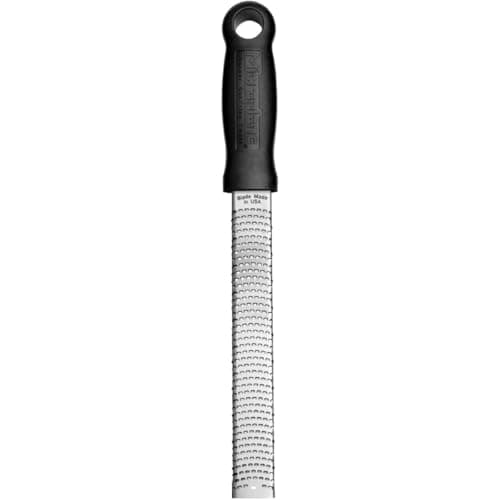
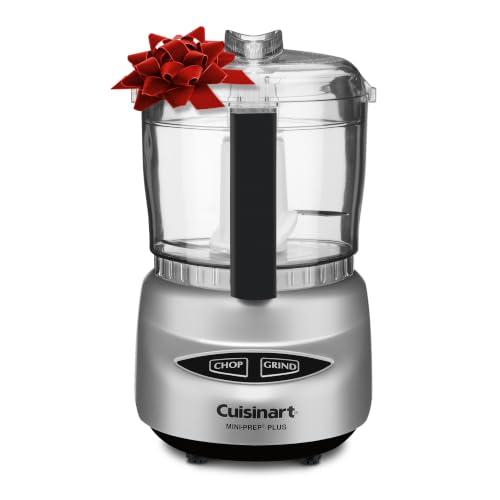
If you want one tool to take over most of what a mortar does, it is the Cuisinart Mini-Prep Plus (DLC-2ABC): small enough for the quantities a mortar handles, and the only machine here whose blade has a blunt grinding edge as well as a sharp chopping one. If dry whole spice is the job, the Cuisinart Elemental 4-Cup Chopper/Grinder (ECH-4SV) is the one with a dedicated grind control rather than a chop button. If you would rather not plug anything in, the Fox Run Polished Marble Rolling Pin with Cradle (4050COM)works by the same principle a mortar does — mass and pressure, not cutting. And the budget pick is the Microplane Classic Zester Grater, which handles the single job most households actually pull a mortar out for.
What a mortar and pestle does that none of these do
It crushes. A blade cuts food into smaller pieces; a pestle pushes food against a rough wall until the structure gives way. The usual explanation for why a pounded paste tastes different from a chopped one is that crushing bruises and tears cell walls rather than slicing them cleanly, releasing oils that a clean cut leaves inside the ingredient. We cannot measure that here and we are not going to pretend to, but it is why traditional cooking from Thai curry paste to Genoese pesto specifies a mortar and not a machine, and it is the one thing no tool on this page reproduces.
Two more things a mortar has to itself. It works at quantities too small for any machine — a teaspoon of cumin seed, four peppercorns, one clove — because a blade spinning in a bowl needs enough volume to catch. And it is the only tool here that turns dry whole seed into powder without a dedicated grinder: dry seed does not cut, it shatters and then skates. If one of those three is your actual requirement, the honest advice is to keep the mortar, and our mortar and pestle roundup ranks them on bowl texture and mass, which are the specs that decide the tool.
How this page is ordered
Not by which tool is best — they are not interchangeable — but by how much of the mortar’s work each one takes over. A mortar has four domestic jobs: wet pastes, dry spice, garlic and ginger, and the little jobs nothing else will catch. Each pick below is the best answer to one or more of those, and every one of them is faster and easier to clean than a mortar. That is the trade: you give up the crush and you get your evening back.
- Wet pastes— pesto, curry paste, chimichurri, romesco. A small bladed machine is genuinely good at this and far faster.
- Dry whole spice— cumin, coriander, peppercorn, fennel. The hardest job to replace, and the one where a dedicated grind setting earns its keep.
- Garlic, ginger and nutmeg— the jobs most home cooks reach for a mortar to do. A fine rasp or a press beats a mortar on speed here, comfortably.
- Tiny quantities— a teaspoon of seed, a pinch of saffron. No machine does this; a heavy rolling pin and a bag does.
The five substitutes, and the job each one takes
Wet pastes, and the closest all-round swap: Cuisinart Mini-Prep Plus (DLC-2ABC). Three cups is the right size for the quantities a mortar works in, which is the whole reason a full-size processor is the wrong substitute — a 14-cup bowl lets a handful of basil fly around above the blade. The mechanism that matters here is the reversible auto-reversing blade: a sharp edge for chopping and a blunt edge for grinding, which is the nearest thing to a crush anything on this page offers. Cuisinart states 250 watts and an 18-month limited warranty. The honest limits: it only chops and grinds, with no slicing or shredding, and three cups is far too small for batch prep. It also will not catch a teaspoon of anything.
Dry spice: Cuisinart Elemental 4-Cup Chopper/Grinder (ECH-4SV).The step up in bowl size, and more importantly the step up in control — this one has chop OR grind touchpads rather than a single pulse button, and the patented auto-reversing SmartPower blade with a BladeLock system that holds the blade in place so you can pour the bowl out. Four cups handles a real batch of salsa or a pile of onions, and every removable part goes in the dishwasher. What it costs you: Cuisinart publishes no watt figure for it at all, so there is no motor number to compare on paper, and a 4-cup bowl takes meaningfully more cupboard space than a mini chopper. For the dry-spice job specifically, the thing to understand is that a grind setting helps but a spinning blade still fractures seed rather than powdering it — you will get a coarse grind, not a dust.
No electricity, same principle: Fox Run Polished Marble Rolling Pin with Cradle (4050COM).This is the substitute that works the way a mortar works. Four and a half pounds of polished marble on nylon ball bearings, with a 10-inch barrel and a wooden cradle, and the way you use it for spice is to put the seed in a sealed bag on a hard counter and lean on it. The mass does the crushing, the way a stone pestle does, and marble is the same class of dense cold stone a good mortar is cut from. Its limits are real and Fox Run publishes some of them: marble is brittle and one drop on a tile floor is the end of it, no warranty is published, the 10-inch barrel is short, and there is no bowl — a bag is doing that job, and a bag splits. It also will not give you a fine powder. It is in our rolling pin roundup for its first job, which is cold pastry.
Garlic, ginger and hard cheese — the budget pick: Microplane Classic Zester Grater. Be honest about what most people actually use a mortar for at home, and it is not curry paste: it is reducing a clove of garlic, a knob of ginger or a piece of nutmeg to something that disappears into a sauce. A photo-etched surgical-grade stainless rasp does that in seconds, and Microplane states the blade is photo-etched surgical-grade stainless steel, made in the USA. It is magnetic, so it hangs on a knife strip, and it is dishwasher safe. Limits, plainly: it shaves rather than crushes, it is useless on dry seed, the plain BPA-free plastic handle is the one you notice on anything needing pressure, and no blade cover or non-slip foot is listed, which makes it the least drawer-friendly Microplane we track. It is the cheapest pick on this page and the one most likely to earn its place in a drawer. More of the field is in our zester and fine grater ranking.
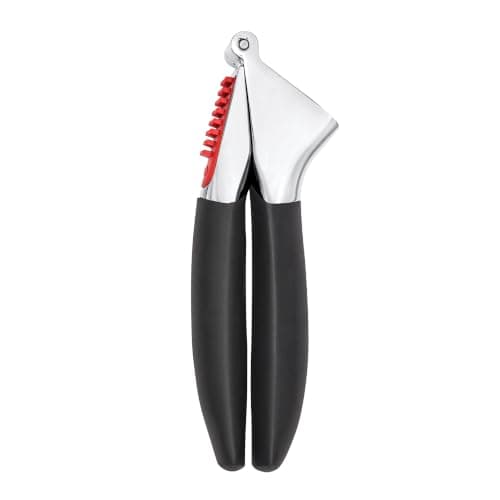
Garlic alone, done properly: OXO Good Grips Garlic Press. If garlic is the whole reason the mortar comes out, a press is the better tool and not a compromise: a heavy die-cast zinc body that crushes cloves unpeeled, soft wide handles that give leverage with little hand force, and a built-in cleaner that pops through the holes to push the pulp out. This is also the only pick here that genuinely crushes rather than cuts, which is why it belongs on the page even though it does exactly one thing. What it costs you: the cleaner is one more part to align when washing, and it is bulkier in a drawer than a bare press. The rest of the field is ranked in our garlic press roundup.
What you give up leaving the mortar
The texture, the small quantities and the silence — in that order. Texture is the one worth dwelling on, because it is not a quality difference so much as a different result: a machine-made pesto is emulsified and uniform, a pounded one is loose and varied, and people who care about the distinction care about it a lot. The small-quantity limit is the practical one you will hit first; four peppercorns in a 3-cup bowl just spin. And a mortar makes no noise, needs no outlet and has no motor to burn out, which is why a good one outlives every machine on this page.
What you gain is time and cleanup, and it is not a small gain. Every substitute here is dishwasher safe in whole or in part, where a stone mortar is a hand-wash item that should never meet soap if it has been seasoned. If you are weighing the two tools against each other directly rather than looking for a replacement, mortar and pestle against food processor is the head-to-head, and how to season a mortar explains the maintenance side of what you are giving up.