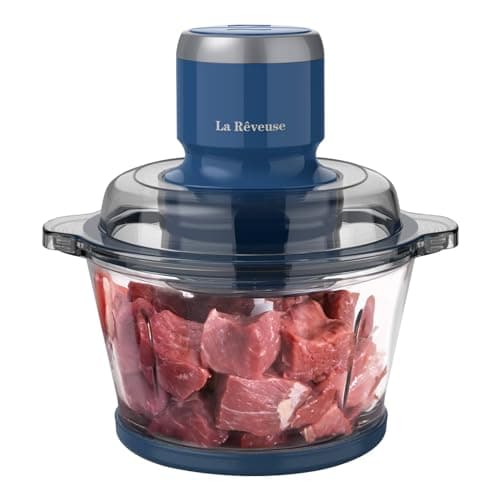
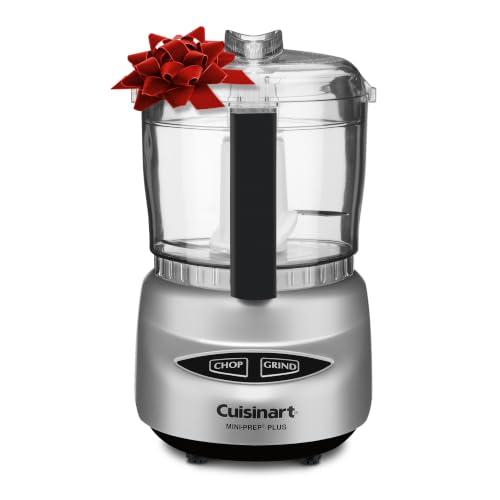
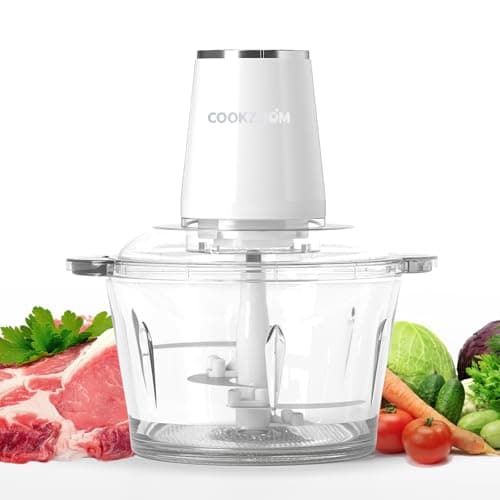
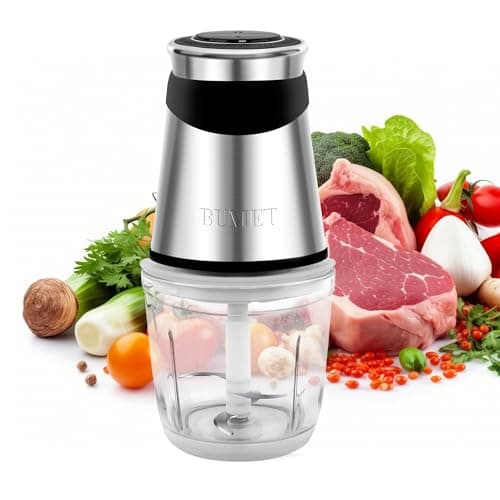
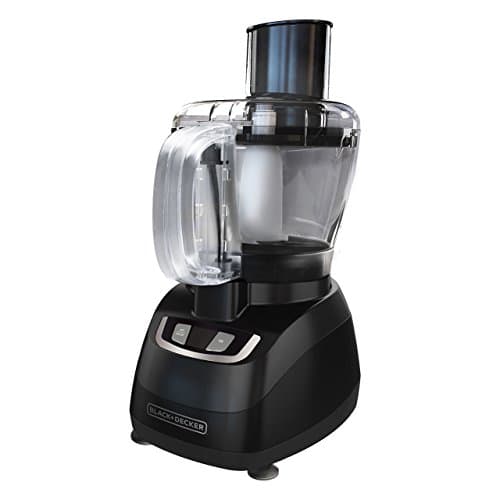
Under $50 there is one decision and it is not about brand or wattage. It is whether you need a machine that slices. The BLACK+DECKER 8-Cup Food Processor (FP1600B) is the only pick on this page with a feed chute and a slicing/shredding disc, which makes it the only one that is a food processor in the full sense of the word. The other four are bowl choppers: a blade in a bowl, no chute, no discs. They mince, puree and grind very well, and for a great many kitchens that is the entire job. The La Reveuse 7-Cup Glass Bowl Food Processor (LARB4016)is the best of them, and the budget pick — the cheapest machine here that is still worth owning — is the BUMET 2.5-Cup Glass Bowl Mini Chopper (B302MINI).
Every price in the table above is read live from Amazon with the date it was last checked. We never print a number we cannot verify, so a blank price means “check” rather than a stale figure. The $50 line is our editorial band, not a claim about today’s price — read the live figure before you buy, because machines at this end of the market cross it in both directions.
The one specification that decides this whole band
A feed chute and a disc. That is it. A disc machine pulls a potato past a blade at a fixed speed and gives you even slices or shreds in seconds; a bowl chopper spins a blade through a heap of food and gives you pieces. Those are different tools doing different jobs, and the reason the distinction matters so much at this price is that it is the ONE capability that nearly disappears below $50. Above the band you can take it for granted. Inside the band, exactly one machine has it.
This is also why the largest bowl on this page belongs to one of its cheapest machines. Bowl volume is cheap to manufacture; a chute, a disc stem, a pusher and a lid interlock are not. A maker working to a $25 bill of materials spends it on the bowl and the motor and leaves the disc assembly out, which is a rational decision rather than a cynical one. Our food processor against food chopper explainer works through the mechanical difference in detail, and it is worth five minutes before you spend anything here.
How we drew the line at $50
- Currently purchasable, at a real price. Every pick was checked for availability and a live price before it was written up. A machine that is nominally $40 and permanently out of stock is not a $40 machine.
- A published motor figure, or an honest blank.Four of these five makers state a wattage in their own listing. The fifth publishes none, so no wattage appears in its spec rows — we leave the figure out rather than converting a guess.
- A bowl you would actually wash.Capacity is only useful if the bowl comes apart and goes in a dishwasher. Where a part is hand-wash only — and one here is — it is named in the cons rather than buried.
- Limits the maker will put in writing. The most useful thing a cheap machine can publish is what it will not do. One maker on this page rules out hard nuts, nut butter, bones, sinew, dry chili and dry grains by name, and we rate that higher than a bigger number on the box.
Which one, for which kitchen
Buy the BLACK+DECKER 8-Cup Food Processor (FP1600B) if any part of your week involves slicing a cucumber thin, shredding a block of cheese or cutting a bag of potatoes into even rounds. Eight cups, two speeds plus pulse, and a reversible slicing/shredding disc in the box. The honest cost is the build: it is light, and a fully loaded bowl can make the machine walk on the counter. If you will use a processor more than once a week, the step up to our budget band buys a noticeably sturdier machine.
Buy the La Reveuse 7-Cup Glass Bowl Food Processor (LARB4016)if you do not need discs and you would rather not own a plastic bowl. Seven cups of glass is the largest size most households actually use, it has two pulse speeds rather than one on/off button — which is what stops an onion going to water — and it ships with a whisking disc, a spatula and a mat, so there is nothing else to buy. Its 300 watts is the lowest published motor here: fine for vegetables, cooked meat and baby food, slow on anything dense. It is also our first pick in the wider glass-bowl ranking, where the whole category is assessed on its own terms.
Buy the Cuisinart Mini-Prep Plus (DLC-2ABC)if you want a brand name, a stated warranty and a machine small enough to live on the counter. Three cups is genuinely small — herbs, a single onion, a bit of dressing — and the auto-reversing blade with a sharp edge for chopping and a blunt edge for grinding is a real mechanism rather than a marketing line. It is a pick in our mini food processor roundup for the same reason.
Buy the COOKZHOM 12-Cup Glass Bowl Food Processorif batch size is the problem. Twelve cups, three liters, in glass, for less than half the price of a name-brand 8-cup plastic machine — and COOKZHOM states a 2 to 4 lb meat batch per pass, which makes this the one machine here that can grind for burgers or meatballs in a single go. The catch is published and we will not soften it: the lid is PE and the listing says it cannot go in the dishwasher, so the dirtiest part is hand-wash only, and three liters of glass is heavy to lift full.
Buy the BUMET 2.5-Cup Glass Bowl Mini Chopper (B302MINI)— the budget pick — if the jobs are small and frequent. Garlic, herbs, baby purees, one shallot: 2.5 cups of glass with a 500-watt motor and a safety lock that stops the motor unless the bowl is seated. BUMET also recommends filling to half capacity, which leaves roughly 1.25 usable cups, so it is smaller in practice than on paper. It is the cheapest thing on this page and the one whose maker is most specific about its ceiling.
If nothing here needs to be electric. A manual chopper does a surprising share of this work for a fraction of the price and never needs an outlet, and under $25 the whole field is ranked in our food choppers under $25. If the real question is whether you need a processor at all, start with do I need a food processor.
What you are giving up against the $200 band
Three things, in order of how much you will notice them. First, disc variety: at $200 you get a dicing kit, a julienne disc or an adjustable slicer, where here you get one reversible plate at best. Second, motor headroom— the step from a 300-watt bowl chopper to a 700-watt-plus machine is what you feel in pie dough and hard cheese, and none of these five is a dough machine. Third, a warranty worth reading: the longest term published on this page is 18 months, against the multi-year motor warranties printed in the spec rows of our under-$200 picks.
What you are not giving up is the everyday chop. A $25 bowl chopper minces an onion as finely as a $300 machine does, because a blade spinning in a bowl is a blade spinning in a bowl. The expensive machine wins on the jobs that need a chute, a disc or sustained torque — which is exactly the list above.
Glass or plastic, at this price
Three of the five picks here have glass bowls, and that is not a coincidence: glass is where the generic brands have chosen to compete, because no major manufacturer sells a full-size glass-bowl processor at any price. Glass does not stain, does not hold onion or garlic smell, and does not scratch into a cloudy film the way a plastic bowl eventually does. It is also heavier, breakable, and — the part most buyers miss — incompatible with a disc assembly, which is why none of the glass machines on this page slices. If you came looking for glass specifically, the glass-bowl roundup covers six of them. If the brand is what you have ruled out rather than the price, the Ninja alternatives page starts from the other end of the market.