HUB 06 · Guides
Do I Need a Food Processor?
The honest answer is: only if you regularly do a handful of specific jobs. Here is the short version, then the list of tasks that justify one — and the cheaper tools that beat it for everything else.
We earn a commission if you buy through our links. It does not change the price you pay, and it does not decide our picks — our selection criteria are published in full. How this works.
You need a food processor if you regularly do at least a couple of these five jobs: shredding cheese or vegetables in bulk, slicing a lot of produce evenly, making dough, grinding your own nut butter, or blitzing dips and pesto in real quantity. If you do none of them — if your prep is a single onion and some herbs — you do not need one, and a cheap chopper or a good knife will serve you better and take up far less space.
The five jobs that justify one
- Shredding in bulk. A processor shreds a block of cheese or a bag of carrots in seconds. If you shred often, nothing else comes close for speed.
- Even slicing.Uniform potato, cucumber or vegetable slices for gratins, salads and roasting trays — faster than a knife, and safer than a mandoline for large volumes.
- Dough. Pizza, pie and bread dough come together in under a minute in a capable machine. This is where motor power earns its keep.
- Nut butter and thick spreads.Homemade peanut or almond butter, hummus by the batch — jobs a blender struggles with and a processor handles.
- Dips and pesto in quantity.A coarse salsa, a big batch of pesto, a chunky dip — the processor’s wide bowl and blade do these better than a blender, which purees them too smooth.
When something cheaper is the smarter buy
If you only chop small amounts, a food choppercosts a fraction as much and stores in a drawer. If your goal is smoothies and purees, you want a blender, not a processor — we settle that in food processor vs blender. And if you just need soup blitzed smooth, an immersion blender is cheaper and easier to clean. Buy the processor when the jobs above are a regular part of your cooking; skip it when they are not.
The hardware
The hardware this guide is about
The products this guide refers to, with prices pulled live from Amazon and dated on every card. Full rankings live in the roundups linked above.
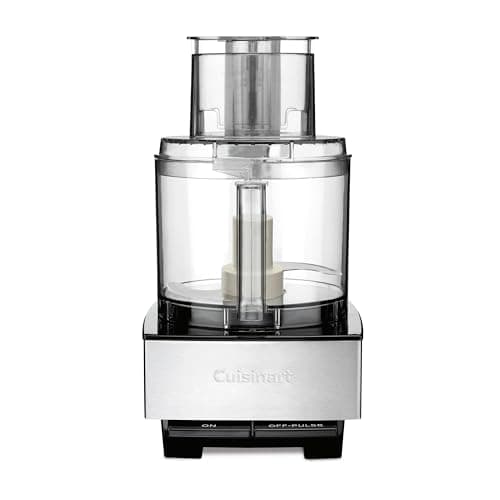
Most full-size kitchens
Cuisinart 14-Cup Food Processor (DFP-14BCNY)
The default full-size processor for a reason: a big, simple, 720-watt workhorse with the shortest parts list to go wrong.
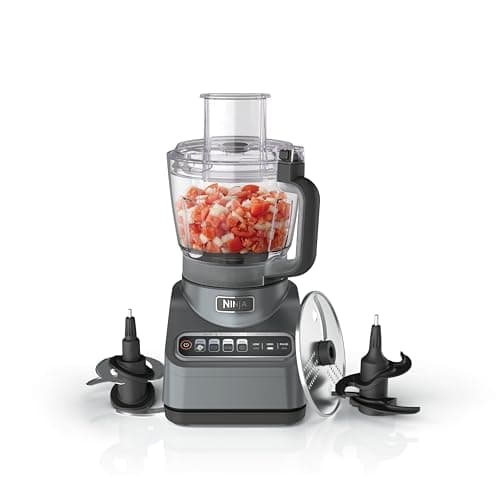
Value and dough
Ninja Professional Plus Food Processor (BN601)
The value pick: a 1,000-peak-watt motor and a dough blade for well under half the price of the premium machines.
#ad · As an Amazon Associate we earn from qualifying purchases.
Questions
Frequently asked
Can I use a blender instead of a food processor?
Is a food processor worth it for one person?
Keep reading