Cabbage is the job a mandoline was invented for, and it is also the job with the highest injury rate, for one reason: a half-head of cabbage starts wider than the blade and ends up as a fist-sized lump that no hand guard grips well. The two specs that matter are the width of the cutting surface and the thinnest setting. Everything else on a mandoline spec sheet is secondary here.
Why width decides the cut
A cabbage wedge is typically four to six inches across. If your blade is narrower than the face you are pushing, the wedge catches on the runners and you end up sawing it sideways — which is both a worse cut and the moment your hand slips. A full-width platform lets the whole cut face travel across the blade in one movement, and that is what produces the long, even shreds that make slaw look like slaw rather than chopped salad.
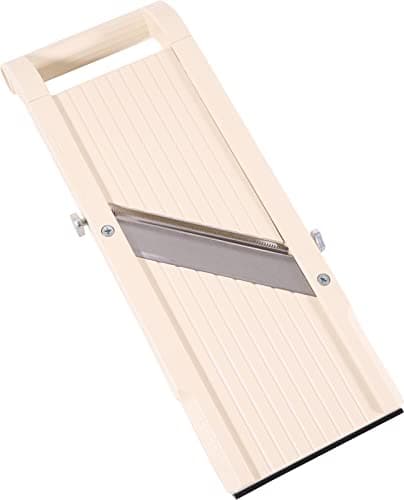
The Benriner Super Slicer (Japanese Mandoline)is the traditional answer, and it is the one professional kitchens use for exactly this. It is a plain, wide, very sharp platform with no concessions — which makes it the best cabbage tool here and the one that most demands a cut-resistant glove. Our full Benriner review is blunt about that trade.
Why the thinnest setting decides the dish
Slaw and sauerkraut are different problems. Slaw wants shreds thin enough to soften under dressing within an hour but thick enough to keep a bite — roughly 2 mm. Kraut wants them thinner and more uniform, because fermentation is a surface-area game and inconsistent thickness ferments unevenly. Onions for a salad or a burger want the thinnest setting the machine has, which is where a mandoline visibly beats a knife: nobody cuts a sub-millimeter onion ring freehand.
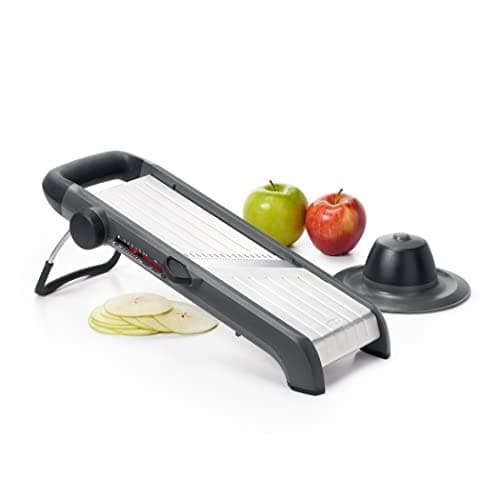
The OXO Good Grips Chef's Mandoline Slicer 2.0is the pick for anyone who wants that range with a safety net. Its adjustability covers the slaw-to-onion span, and its food holder is the best designed here — which matters more on cabbage than on anything else, because the last third of the wedge is the dangerous part.
The cabbage-specific safety rule. Cut the head into wedges small enough that the food holder can actually grip them before you start, not when you notice it is getting small. Quarter a head, core it, then quarter again if the guard will not sit on it. The stub you throw away costs pennies; the alternative is the most common mandoline injury there is.
How they compare for this job
| Mandoline | Best cabbage job | Guard | Trade-off |
|---|
| Benriner Super Slicer (Japanese Mandoline) | Volume slaw and kraut | Minimal by design | Sharpest and fastest; least forgiving |
| OXO Good Grips Chef's Mandoline Slicer 2.0 | Slaw and onions with a safety net | Best-designed food holder | Bulkier to store |
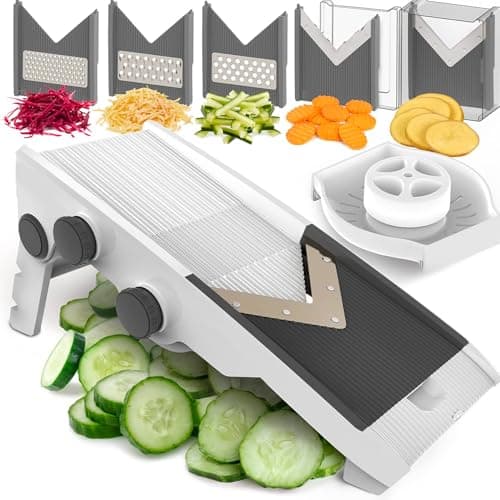
| Mueller Austria Multi-Blade Adjustable Mandoline | Occasional slaw on a budget | Included holder | Cheapest route in |
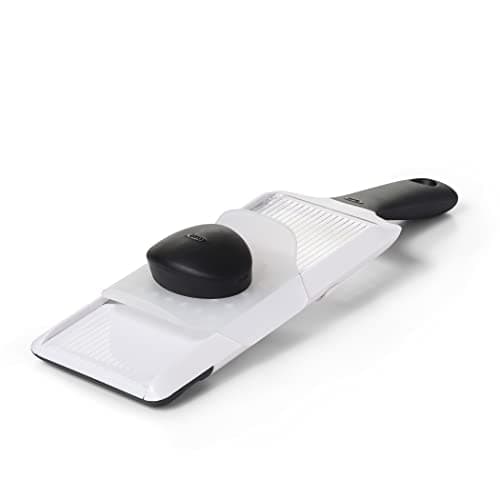
| OXO Good Grips Hand-Held Mandoline Slicer | A few onions, straight over a bowl | Handheld, over-bowl use | Not a volume tool |
When to use something else entirely
If you are shredding cabbage by the kilo — a batch of kraut, slaw for a party — a food processor with a slicing disc is faster, safer and produces a perfectly acceptable shred. The disc is enclosed, the feed tube does the holding, and a 14-cup bowl takes a whole head in stages without you touching a blade. Our mandoline vs food processor comparison sets out the full case; the short version is that the mandoline wins on adjustability and on the very thinnest cuts, and the processor wins on volume and on safety.
For onions specifically, there is a third option worth knowing: a push-dicergives you even cubes with no exposed blade at all. It cannot make rings, and it will not slaw a cabbage, but for the “diced onion” that most recipes actually want it is the lowest-risk tool in the kitchen.
How we picked
Tools we claim to have lab-tested: 0
Every site in this category tells you they ran twenty machines through a lab. We have not, and we say so. Here is what we do instead: read the manufacturer's manual and spec sheet, record the published bowl capacity, motor rating, blade and disc counts and materials, cross-check the warranty against the manufacturer's own warranty document, and cite all of it so you can check the work. Prices come live from Amazon's API and disappear rather than go stale.
The scores above are judgments from that documented research — not test results. The full rubric, including what disqualifies a product, is published in full.