HUB 06 · Guides
Food Processor vs Meat Grinder
A processor can grind meat, and the result is not the same. The mechanical reason why, the technique that closes most of the gap, and the volume at which you should stop pretending.
We earn a commission if you buy through our links. It does not change the price you pay, and it does not decide our picks — our selection criteria are published in full. How this works.
Yes, a food processor grinds meat. No, it does not do it the same way, and the difference is mechanical rather than a matter of quality. A grinder shears: a rotating knife cuts meat against a fixed plate, so every strand is cut once, cleanly, to the size of the holes. A processor chops: a spinning blade hits whatever tumbles into it, repeatedly. One produces uniform strands; the other produces a mixture of sizes with some of it smeared.
What that does to a burger
A burger made from sheared grind has structure — visible strands that hold together loosely, trap fat between them and stay juicy. A burger made from over-processed meat is closer to a paste: it binds tightly, cooks dense, and has the texture people describe as “bouncy” or sausage-like.
The gap is smaller than that makes it sound, and technique closes most of it. It is largest for burgers and for anything you want coarse; it is nearly irrelevant for meatballs, meatloaf or a bolognese, where the meat is bound with egg and breadcrumb and cooked long enough that texture differences disappear.
How to grind meat in a food processor properly
- Cube it small and even. Roughly 2 cm cubes. Uneven pieces means the small ones are pulverized while the big ones are still whole.
- Freeze it partially. Twenty to thirty minutes in the freezer until the edges are firm. Cold meat fractures cleanly; warm meat smears, and smeared fat coats everything.
- Work in small batches. Half a bowl at most, even in a Cuisinart 14-Cup Food Processor (DFP-14BCNY). A packed bowl grinds the bottom to paste while the top stays whole.
- Pulse, and count. Eight to ten one-second pulses, then look. Never run it continuously.
- Trim the sinew first.Silverskin does not cut in either machine — it wraps and stretches. Take it off with a knife before it goes in the bowl.
The one thing that matters most is temperature. Both machines fail the same way for the same reason: warm fat smears rather than cutting, and once fat has coated the blade or the plate, everything after it is being pushed rather than cut. Chill the meat and, for a grinder, the metal parts too.
Where a grinder wins outright
Volume. A processor grinds half a bowl at a time and needs the bowl scraped between batches. A grinder takes meat continuously for as long as you feed it, which is the whole difference when you are processing a deer or ten pounds of pork shoulder. Our wild game grinder roundup is about exactly that scenario.
Consistency. Plate size sets the grind, exactly, every time. The STX Turboforce 3000 Electric Meat Grinder ships with fine, medium and coarse plates; a processor has one blade and one texture, controlled only by how long you dare pulse.
Sausage. A grinder takes stuffing tubes and fills casings directly. A processor cannot do this at all. If sausage is on your list, the decision is already made.
Durability under load. The LEM BigBite #8 Electric Meat Grinder (0.5 HP) is designed for repeated heavy sessions: 0.5 HP, a stainless steel build and a five-year factory warranty. A processor motor asked to grind ten pounds of meat is being used outside its design intent and will trip its thermal cutout.
Where the processor wins
You already own it. That is not a small point. A grinder is a large, heavy, single-purpose machine that lives in a cupboard for eleven months of the year. If you grind meat three times a year, buying one is a poor trade against the counter space.
Cleaning. Three parts versus a head, an auger, a knife, a plate and a ring, all of which must be dried properly to avoid rust.
Everything else. The processor also slices, shreds, makes dough and makes dips. It earns its space every week. The grinder earns its space on the days you grind.
The comparison, side by side
| Food processor | Meat grinder | |
|---|---|---|
| Mechanism | Spinning blade chops | Knife shears against a plate |
| Texture | Mixed sizes; can smear | Uniform strands |
| Batch size | Half a bowl at a time | Continuous |
| Grind control | Pulse count only | Interchangeable plates |
| Sausage | No | Yes, with stuffing tubes |
| Other uses | Slicing, shredding, dough, dips | None |
The decision rule
Grind in a food processor if you do it a handful of times a year, in batches of a couple of pounds, for meatballs, meatloaf, bolognese or the occasional burger. Follow the cold-and-pulse method above and the result is genuinely good.
Buy a grinder if you grind more than about ten pounds at a sitting, if you make sausage, if you process game, or if burger texture is something you actually care about. Start with the meat grinder roundup.
And if you own neither yet, buy the processor first. It is the machine that does a dozen other jobs — see what to buy first— and it will tell you honestly, within a couple of batches, whether grinding is a big enough part of your cooking to justify the second machine.
The hardware
The hardware this guide is about
The products this guide refers to, with prices pulled live from Amazon and dated on every card. Full rankings live in the roundups linked above.
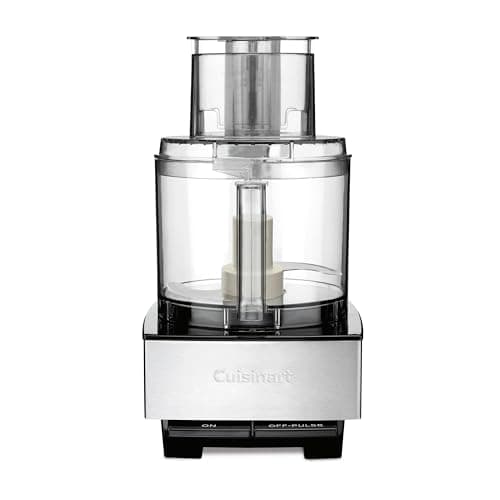
Most full-size kitchens
Cuisinart 14-Cup Food Processor (DFP-14BCNY)
The default full-size processor for a reason: a big, simple, 720-watt workhorse with the shortest parts list to go wrong.
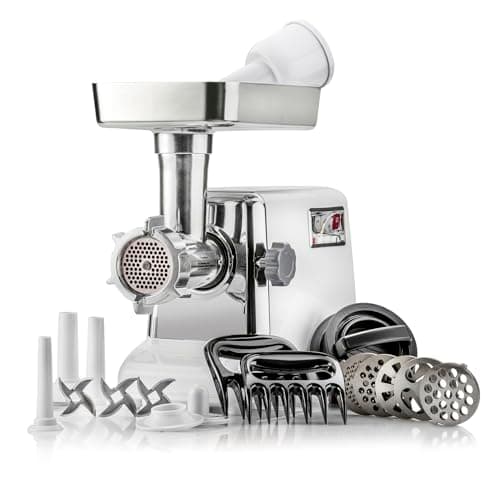
Home grinding & sausage
STX Turboforce 3000 Electric Meat Grinder
The home grinder to buy: a strong electric grinder with three plates and sausage tubes for well under the pro machines.
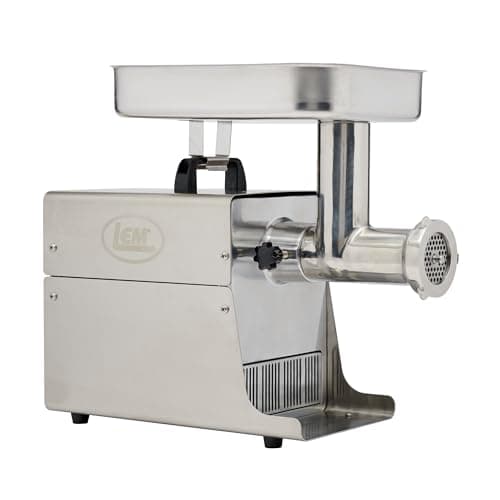
Heavy, frequent grinding
LEM BigBite #8 Electric Meat Grinder (0.5 HP)
The buy-it-for-life grinder: LEM's stainless BigBite #8, a 0.5 HP machine built for serious hunters and home butchers.
#ad · As an Amazon Associate we earn from qualifying purchases.
Questions
Frequently asked
Can you grind meat in a food processor?
Is a meat grinder better than a food processor for burgers?
Why does meat turn to paste in a food processor?
Do I need a meat grinder?
Keep reading