HUB 06 · Guides
Food Processor vs Stand Mixer
One cuts fast; the other beats air in slowly. That difference decides pastry, bread and cake — and explains why serious bakers usually own both.
We earn a commission if you buy through our links. It does not change the price you pay, and it does not decide our picks — our selection criteria are published in full. How this works.
Buy a food processor if you make pastry, chop and slice, and want dough together in under a minute. Buy a stand mixerif you make cakes, meringue, buttercream or enriched bread, or if you want a machine that works while you do something else. The two overlap on exactly one job — dough — and even there they suit different doughs.
The mechanical difference, which explains everything else
A food processor spins a blade at high speed in a closed bowl. It cuts. That is perfect for cutting cold butter into flour, and it is why pastry made in a processor is reliably flaky: the butter stays in distinct pieces and never warms up.
A stand mixer turns a beater slowly through an open bowl, sweeping the sides. It aerates and stretches. That is what creaming butter and sugar requires, what whips egg whites, and what develops gluten gently over ten minutes in a wet, enriched dough. A processor cannot aerate — it shears air back out — and a mixer cannot cut.
The job table
| Job | Food processor | Stand mixer |
|---|---|---|
| Pie and pastry dough | Excellent — fast, keeps butter cold | Good |
| Bread and pizza dough | Good — under a minute, needs watching | Excellent — hands-off |
| Enriched / high-hydration dough | Poor | Excellent |
| Cake batter and creaming | Poor | Excellent |
| Meringue and whipped cream | Cannot | Excellent |
| Slicing, shredding, chopping | Excellent | Only with paid attachments |
| Dips, pesto, nut butter | Excellent | Cannot |
| Hands-off operation | No — seconds matter | Yes |
The dough question, properly answered
For a lean dough — flour, water, salt, yeast, as in pizza or a basic loaf — a food processor is genuinely excellent and much faster: forty-five seconds against ten minutes. The friction warms the dough slightly, which you compensate for with cooler water.
For an enriched dough — brioche, cinnamon rolls, anything with a lot of butter, egg or sugar — the mixer wins clearly. Those doughs need long, gentle working to build gluten while the fat is incorporated, and a processor blade tears rather than stretches. For very wet doughs, the same applies.
If dough is the main reason you are choosing, our best food processor for dough covers which machines have the blade and the headroom to do it properly.
The honest ranking, if you can only own one. For most home cooks the processor is the more useful machine, because chopping, slicing and shredding are everyday jobs and cake is occasional. For anyone who bakes more than they cook, the mixer is obvious. A processor cannot make meringue; a mixer cannot shred cheese. Neither substitutes for the other.
The attachment argument
Stand mixer manufacturers sell slicer, shredder and grinder attachments that bolt onto the hub, and they work. They are also sold separately, often at a meaningful price, and they are slower to fit and to clean than dropping a disc into a processor bowl. If you already own a mixer and slice occasionally, the attachment is a reasonable way to avoid a second machine. If slicing and shredding are weekly jobs, a processor is faster and usually cheaper than the attachment set.
The reverse does not hold. There is no processor attachment that turns it into a mixer, because the limitation is mechanical rather than a matter of tooling: a bowl designed around a fast central blade cannot sweep a slow beater around its walls. That asymmetry is worth knowing, because it means a mixer can be talked into a processor’s territory and a processor cannot be talked into a mixer’s.
Price, footprint and how long each lasts
Stand mixers are, as a class, the more expensive purchase, and the gap widens at the top of each range. They are also substantially heavier — a full-size mixer is a two-handed lift, which in practice means it lives on the counter permanently and becomes part of the kitchen’s furniture rather than an appliance you put away.
A food processor is lighter and cheaper at equivalent quality, but assembled it is usually taller than the gap under an upper cabinet, so it tends to live on the counter too. Neither is a machine you will tuck away and forget. If counter space is genuinely scarce, that is an argument for buying one of them properly rather than both cheaply.
On longevity, both are simple, and both tend to outlive their plastic parts rather than their motors. Processor bowls crack and lids warp; mixer bowls are usually metal and last indefinitely, while the plastic gear inside some mixer heads is a deliberate sacrificial part. Check replacement-part availability for either before you commit — it is the single most useful thing to look up and the one almost nobody checks.
A note on cheaper hybrids
Hand mixers cover a surprising amount of what a stand mixer does — whipping cream, beating egg whites, creaming butter and sugar for a single cake — for a small fraction of the price and in a drawer rather than on a counter. What they cannot do is knead dough for ten minutes without your arm getting involved.
So the honest three-way answer for a kitchen on a budget is often: buy the food processor for cutting and pastry, add a hand mixer for cakes and cream, and only buy the stand mixer when bread becomes a regular habit. That sequence covers more real cooking than starting with the most expensive machine.
The hardware
The hardware this guide is about
The products this guide refers to, with prices pulled live from Amazon and dated on every card. Full rankings live in the roundups linked above.
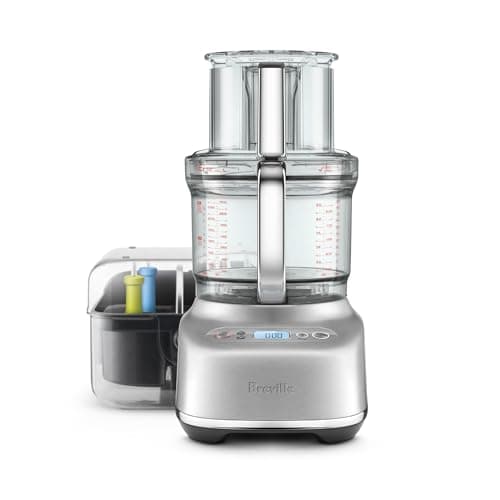
Serious, frequent cooks
Breville Sous Chef 16 (BFP810)
The one to buy if you actually use a processor daily: an adjustable slicing dial and a 1,450-watt motor that never flinches.
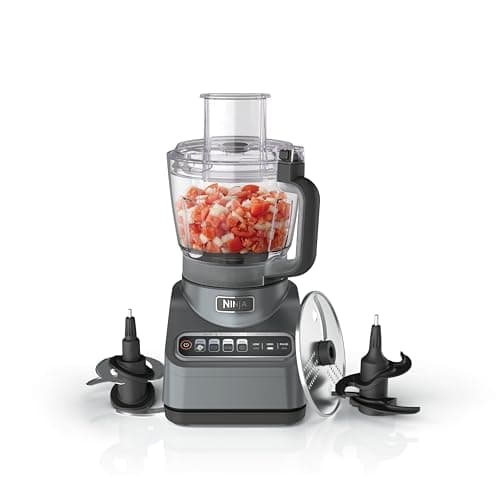
Value and dough
Ninja Professional Plus Food Processor (BN601)
The value pick: a 1,000-peak-watt motor and a dough blade for well under half the price of the premium machines.
#ad · As an Amazon Associate we earn from qualifying purchases.
Questions
Frequently asked
Can a food processor replace a stand mixer?
Which is better for pie crust?
Can a stand mixer chop vegetables?
If I bake and cook equally, which do I buy first?
Keep reading