HUB 06 · Guides
Wood vs Plastic Cutting Board
Most people assume plastic is the hygienic choice. The research that made USDA drop its plastic-only advice found something closer to the opposite — and the part that actually matters is what happens once a board is scarred.
We earn a commission if you buy through our links. It does not change the price you pay, and it does not decide our picks — our selection criteria are published in full. How this works.
Own both, and divide them by job rather than by material: a dishwasher-safe plastic board for raw meat, poultry and fish and a wood or composite board for everything else. That is also, almost word for word, what USDA’s own guidance recommends — it accepts either material and asks you to separate raw protein from food that needs no further cooking. If you can only own one, make it plastic, because the ability to put it through a dishwasher is the single most useful property a board can have.
What USDA actually says
The Food Safety and Inspection Service’s cutting-board guidance is less dramatic than the internet argument around it. Consumers “may choose either wood or a nonporous surface cutting board such as plastic, marble, glass, or pyroceramic,” and it notes that “nonporous surfaces are easier to clean than wood.”
Its practical advice is about separation rather than material: use “one cutting board for fresh produce and bread and a separate one for raw meat, poultry, and seafood,” because that prevents bacteria from the raw board contaminating “a food that requires no further cooking.” Both wood and plastic boards can be sanitized with a solution of one tablespoon of unscented liquid chlorine bleach per gallon of water, flooded over the surface and left to stand for several minutes. Nonporous plastic, acrylic and glass boards and solidwood boards can go in a dishwasher — laminated boards may crack and split. And all boards, in both materials, wear out: “once cutting boards become excessively worn or develop hard-to-clean grooves, they should be discarded.”
That last sentence is the one most people have never read, and it is the most important thing on this page.
The research that changed the advice
Dean O. Cliver, Ph.D., of the University of California (Davis), took up the comparison after USDA acknowledged it had no scientific evidence behind a recommendation that home kitchens use plastic rather than wood. The findings are not what most people expect.
Disease bacteria — E. coli O157:H7 and Salmonellaamong them — “were not recoverable from wooden surfaces in a short time after they were applied,” while “new plastic surfaces allowed the bacteria to persist.” New plastic was, however, easy to clean and disinfect.
Then the part that matters in a real kitchen. Used wooden boards “that had been used and had many knife cuts acted almost the same as new wood.” Knife-scarred plastic did not: those surfaces “were impossible to clean and disinfect manually, especially when food residues such as chicken fat were present.” Mechanical dishwashing, though, “can be done successfully with plastic surfaces (even if knife-scarred) and wooden boards especially made for this.” The conclusion was that “food can be prepared safely on wooden cutting surfaces and that plastic cutting surfaces present some disadvantages that had been overlooked.”
Read those two findings together and the practical rule falls out.A scarred plastic board that you hand-wash is the worst option on this page. A scarred plastic board that goes through a dishwasher is fine. A wooden board stays roughly as hygienic scarred as new — but it must never go in a dishwasher, which is why it should not be your raw-chicken board. Material is not the variable that decides this. How you wash it, and whether you replace it when it is grooved, is.
The honest comparison
| Factor | Wood | Plastic | Paper composite |
|---|---|---|---|
| Dishwasher | No — hand wash only | Yes | Yes |
| Bleach sanitizing per USDA | Yes | Yes | Follow the maker |
| When knife-scarred | Behaved almost like new wood in the UC Davis work | Hard to clean by hand; fine through a dishwasher | Scores cosmetically; non-porous surface |
| Kindness to a knife edge | Best — the board gives, so the blade does not | Hardest of the three in the way that matters | Between the two |
| Maintenance | Needs periodic oiling | None | None |
| Right board for raw chicken | No | Yes | Workable |
| Weight and stability | Heaviest — the Boos is 12 lb and does not move | Depends on feet; the OXO publishes non-slip feet | Light and thin |
Which boards, specifically
For raw protein: OXO Good Grips Plastic Utility Cutting Board.Non-porous, dishwasher safe, 10.4 by 14.8 inches, with non-slip feet and a drip catcher. The dishwasher is the whole argument — it is the one treatment the research found works on plastic even once it is scarred. Its own card is honest that plastic scores over time and that scored plastic is harder to sanitize than fresh plastic, which is your cue to replace it.
For everything else: John Boos R-Board Reversible Maple Cutting Board (20×15). Twelve pounds of edge-grain maple, an inch and a half thick, reversible, hand wash only and oiled a few times a year. It is by a distance the kindest surface here to a knife edge, and at that weight it does not move at all.
If you have one drawer: Epicurean Kitchen Series Cutting Board (11.5×9).Richlite paper composite — knife-friendly and non-porous like wood, dishwasher safe and maintenance-free like plastic, rated to 350°F so it doubles as a trivet. The catch is size: 11.5 by 9 inches will not take a whole chicken.
If separation is the problem: Gorilla Grip Reversible Cutting Board Set (3).Three dishwasher-safe plastic boards in three sizes for about the price of one good board, which is the cheapest honest way to follow USDA’s separate-boards advice. They flex at 0.37 inches thick, and they take three storage slots.
Our cutting board roundup ranks all four against each other on stability, knife friendliness, cleaning and durability. This page is the material argument; that one is the buying decision.
What about bamboo, glass and microplastics?
Bamboois a grass, not a hardwood, and it is harder and less absorbent than maple — which makes it more resistant to knife scarring and harder on your knives at the same time. It is a reasonable middle option; it is not covered by the UC Davis findings above, which looked at wood and plastic.
Glass and marbleare on USDA’s acceptable list because they are non-porous, and they are still the wrong choice: they dull a knife faster than anything else in a kitchen and they are slippery. Avoid them for cutting, whatever the hygiene argument.
Microplasticsare the newest line in this debate, and we are not going to put a number on it, because we have not found a figure we can cite and attribute. What is verifiable is the direction of travel: a plastic board loses material as it is scored, and that material goes somewhere. It is one more reason to follow the guidance that already exists — discard a board once it is grooved — rather than a reason to panic about the board you own.
The hardware
The hardware this guide is about
The products this guide refers to, with prices pulled live from Amazon and dated on every card. Full rankings live in the roundups linked above.
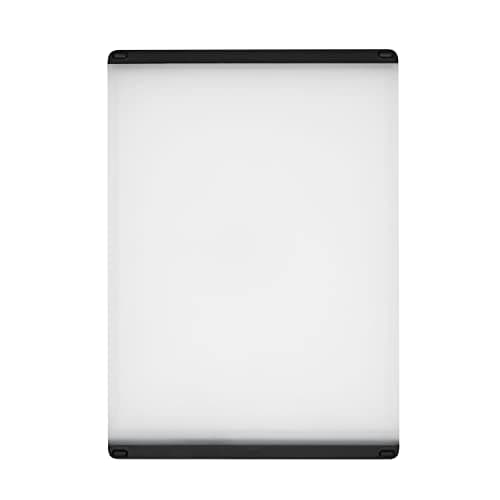
Everyday prep
OXO Good Grips Plastic Utility Cutting Board
The everyday board: big, non-porous, dishwasher safe, with non-slip feet and a drip catcher that actually catches drips.
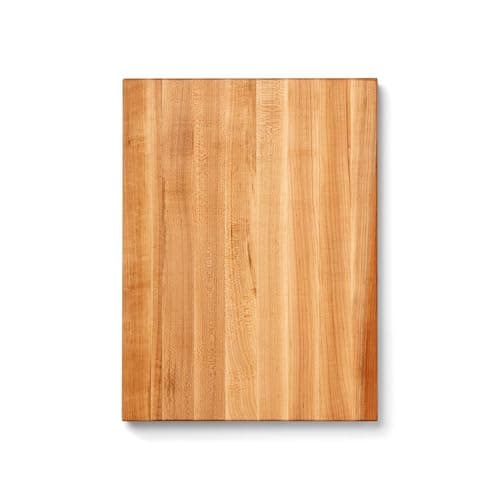
Serious knife work
John Boos R-Board Reversible Maple Cutting Board (20×15)
The buy-once board: 12 pounds of edge-grain maple, an inch and a half thick, reversible, made in the USA.
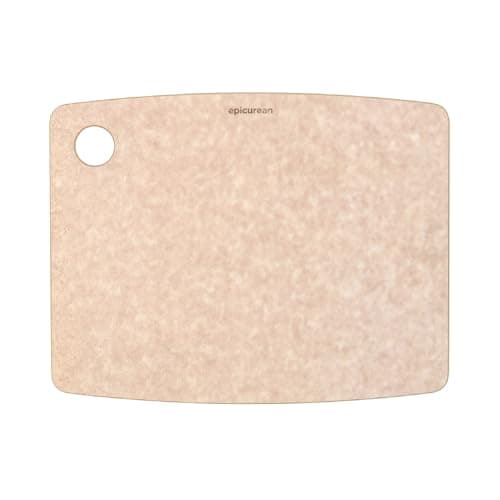
Small kitchens
Epicurean Kitchen Series Cutting Board (11.5×9)
The composite compromise: knife-friendly and non-porous like wood, dishwasher safe and maintenance-free like plastic.
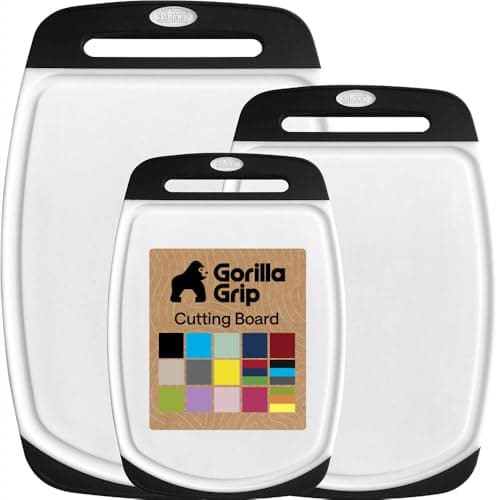
Separating raw and ready-to-eat
Gorilla Grip Reversible Cutting Board Set (3)
Three boards for the price of one, which is the cheapest honest way to stop cross-contaminating raw meat and salad.
#ad · As an Amazon Associate we earn from qualifying purchases.
Questions
Frequently asked
Is wood or plastic more hygienic for a cutting board?
What cutting board should I use for raw chicken?
Can you sanitize a wooden cutting board?
When should you throw out a cutting board?
Does a wooden board ruin knives less?
Do I really need two cutting boards?
Keep reading
Related
Receipts
Sources
- USDA FSIS — Cutting Boards and Food Safety (material choice, separate boards, bleach sanitizing, dishwasher, when to discard)
- Dean O. Cliver, Ph.D., University of California (Davis) — Plastic and Wooden Cutting Boards: bacterial recovery from wood, new plastic and knife-scarred plastic
We do not run a testing lab and we do not pretend to. Specifications come from the manufacturer's own published documents and from published standards; prices come from the live Amazon API. Where a figure is not published, the page says “not published” rather than guessing. Read the full method.