Start with what the tool you are replacing is actually good at, because it is specific and it is not nothing. An immersion blender is the only machine in a home kitchen that purees a full pot of hot soup without decanting it— the blade goes to the food instead of the food going to the blade. It emulsifies mayonnaise in a narrow jar in about half a minute, it whisks cream with the right attachment, and it stores in a drawer. Nothing on this page does all four. What the tools below do is take over parts of that job, and in several cases do those parts better.
The ranking is ordered by how much of the work each one absorbs, not by which is “best”, because they are not interchangeable. The Hamilton Beach Blender & Food Processor Combo (58163) takes over the most. The Cuisinart Elemental 8-Cup Food Processor (FP-8SV) takes over the blending and adds every job a stick cannot do. The OXO Good Grips Food Mill does one thing no stick blender can do at all. The Cuisinart Mini-Prep Plus (DLC-2ABC)replaces the chopper attachment, and the budget pick — the honest cheap answer — is the OXO Good Grips Stainless Steel Potato Masher. Every price above is read live from Amazon with the date it was last checked.
The one mechanical difference behind all of this
A stick blender brings a small, fast blade into the food. Everything else here makes the food come to the tool: into a jar, into a bowl, through a disc, or under a wire head. That single distinction explains every trade-off on this page.
It is why a jar blender gives a smoother soup than a stick does — a sealed vortex circulates everything past the blade repeatedly, where a stick only blends what is within a few inches of it. It is also why a jar blender makes you pour two quarts of near-boiling liquid out of a pot, which is the single most dangerous thing in this comparison. And it is why a food mill, which has no blade at all, is the only tool here that can leave the skins and seeds behind.
How we ranked the substitutes
- Job coverage first. Each tool was scored on how many immersion-blender jobs it genuinely does: hot soup, cold smoothies, emulsions, small-batch chopping and whisking. Coverage beats refinement here, because a substitute that only does one of the five is a specialist, not a replacement.
- Published specs, or no spec row.Every figure in the spec tables comes from the maker’s own listing. Where a maker publishes a peak wattage rather than a continuous one — as Hamilton Beach does — the spec row says so, because a peak figure cannot be compared with a continuous one.
- Hot liquid handled honestly. Only one pick here has a jar its maker describes as built for extreme temperatures. The rest of the powered picks are not hot-fill vessels, and the page says that rather than leaving you to find out.
- Real purchasability. Availability and a live price were checked on every pick before it was written up.
- A reason to skip, on every pick. Each card carries a specific, disqualifying line. If a tool is wrong for you, we would rather you learn it here than after it arrives.
Which substitute, for which job
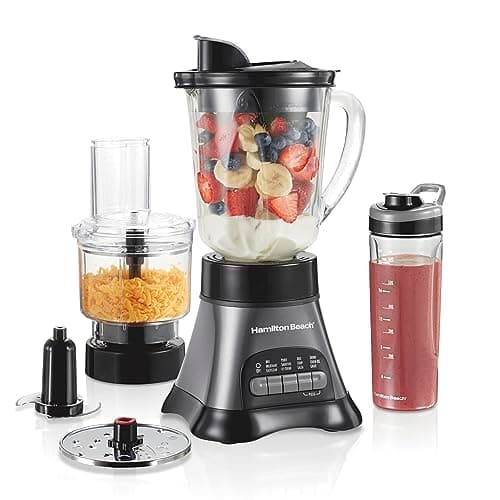
Buy the Hamilton Beach Blender & Food Processor Combo (58163)if you want one purchase to cover the most ground. It is a 40 oz glass blending jar plus a 3-cup chopper attachment on one base, which maps almost exactly onto a stick blender’s two main uses — pureeing and small chopping — and the glass jar is the reason it leads: Hamilton Beach describes it as built for extreme temperatures, so hot soup can go in it, which is the one thing a plastic jar is worst at. Two honest limits. The chopper attachment is not the glass part, and the 700-watt figure is peak power rather than a continuous rating, so it is not comparable with the continuous wattages elsewhere on this site. You also still have to carry the pot to the jar.
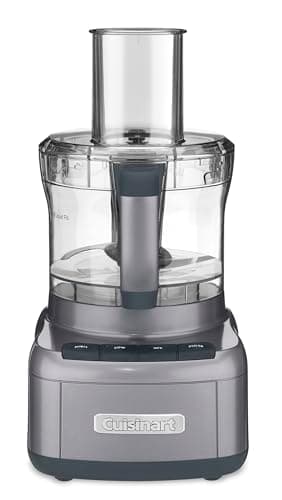
Buy the Cuisinart Elemental 8-Cup Food Processor (FP-8SV)if the honest answer is that you wanted a processor all along. Eight cups, 350 published watts and a simple on / off / pulse control: it purees soup in batches, makes hummus and pesto properly, emulsifies a dressing through the feed tube, and then does the entire half of kitchen work a stick blender cannot touch — slicing, shredding and chopping into pieces rather than into smoothness. The cost is the transfer and the footprint: 350 watts labors on stiff dough and hard cheese, there is one disc thickness only, and it lives on the counter rather than in a drawer. Our food processor against immersion blender comparison works the division of labor through job by job.
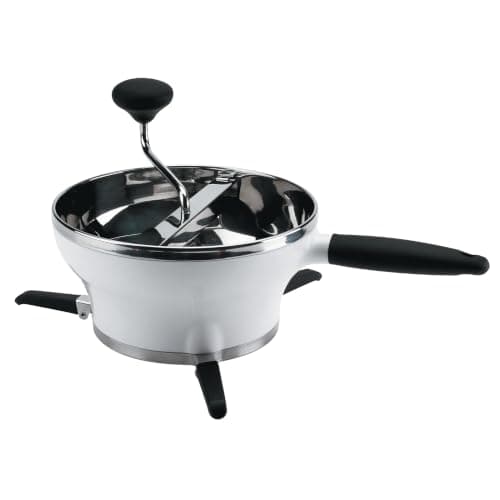
Buy the OXO Good Grips Food Mill for the job no stick blender can do, at any wattage: separating skins and seeds from the puree. Tomato sauce, apple sauce, raspberry coulis, a potato puree with no gluey streaks — a mill presses the flesh through a perforated disc and keeps the rest behind, where a blade would simply chop the skins finer and leave them in. Three discs, a crank, no cord, and it straddles the pot so the puree lands where it should. The costs are real: it is your arm doing the work, there are more parts to wash than any other pick here, and it is bulky to store. If you do not need the skins gone, this is the wrong tool — see food mill against ricer against masher for which of the three fits your cooking, and the full food mill ranking if it does.
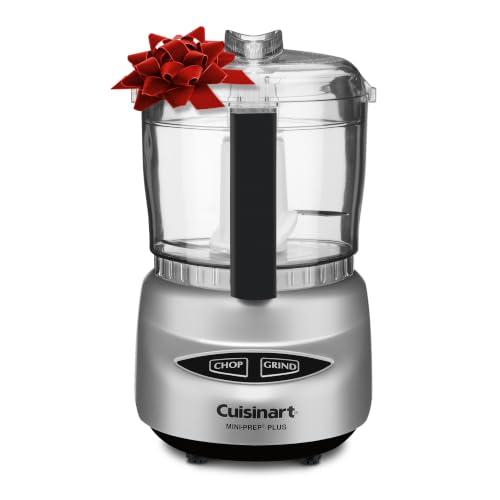
Buy the Cuisinart Mini-Prep Plus (DLC-2ABC)if what you actually use the stick for is the chopper cup. Three cups is the right size for herbs, a single onion, a small batch of dressing or pesto, or a portion of baby food, and the auto-reversing blade with a sharp edge for chopping and a blunt edge for grinding is a real mechanism rather than a marketing line. It is also the cheapest powered pick here by a clear margin. It will not puree a full pot of soup, it has no discs, and 250 watts is modest — it is a chopper, and it replaces one attachment rather than the whole machine. The mini food processor roundup ranks the category on its own terms.
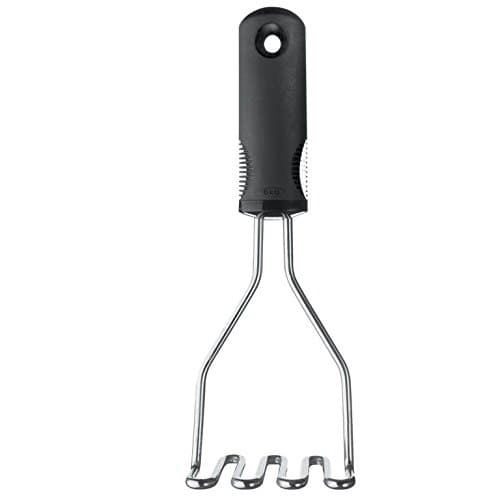
Buy the OXO Good Grips Stainless Steel Potato Masher— the budget pick — if the real job is soup and potatoes and you would rather not own another motor. A masher is the honest cheap substitute for a stick blender in a pot of lentil soup, chili, or anything starch-thickened: it breaks the solids down and leaves texture, which many cooks prefer and which no blender can give back once it is gone. The cushioned handle is the whole argument for this one, because mashing is a tool you drive with your palm. What it will not do is make anything smooth, and it cannot touch a smoothie or an emulsion. Our masher ranking covers the field, and ricer against masher settles the texture question.
Three jobs go back to the stick blender, and we will not pretend otherwise. First, pureeing a full pot of hot soup without decanting it— every powered alternative here means carrying hot liquid to a jar or a bowl, and that is the step people get burned on. Second, mayonnaise and other narrow-jar emulsions, where a stick in a jar just wide enough for its head is genuinely the best tool in the kitchen; our emulsifying page explains why. Third, storage: a stick blender lives in a drawer, and nothing else on this page does. If any of those three is your main use, buy the stick — the under-$50 band starts at the price of this masher plus a little.
What people usually mean by “immersion blender substitute”
Three different questions arrive at this search, and they have different answers.
“I need to puree this soup and I do not own one.” Use what you have, in this order: a jar blender in batches with the lid vented and the jar no more than half full; a food mill or a ricer straight over the pot; or a masher for a rustic finish. A blender gives the smoothest result, a mill gives the cleanest, a masher gives the fastest. None of them needs a purchase today.
“Which should I buy, a stick or something else?”If more than half of what you cook is soup, sauce or smoothies, buy the stick — it is cheaper, smaller and better at exactly that. If vegetable prep is the bottleneck, buy the processor; you will use it daily and it does the blending too, in batches. If you only ever puree one specific thing — tomato sauce, apple sauce, baby food — buy the tool built for it, which is usually the mill.
“What about a hand mixer or a whisk?” A hand mixer replaces the whisk attachment and nothing else: it aerates, it does not cut, so it will never puree a vegetable. That boundary is worth understanding before you substitute one for the other, and immersion blender against hand mixer draws it properly.
Safety, because this is where the substitutes differ most
Every alternative on this page except the mill and the masher asks you to move hot liquid from a pot into a vessel, and hot liquid in a sealed jar is the one genuine hazard in home blending: steam expands, pressure builds under the lid, and the lid is what gives. The rules are simple and non-negotiable. Let soup cool for a few minutes first. Fill the jar no more than half. Vent the lid — remove the center cap and cover the hole with a folded towel. Start on the lowest speed. Our hot-liquid safety guide covers the same ground for sticks, where the risk is splash-back rather than pressure.
This is also the clearest argument for the two unpowered picks. A food mill and a masher work on hot food in the pot, at the pot, with no transfer and no lid. For a cook who makes a lot of soup in a small kitchen, that is not a compromise — it is the safer workflow.
What none of these will do
No tool on this page crushes ice well, and none of them is a stand mixer: if you are kneading bread or whipping meringue, the whole comparison is the wrong one, and food processor against stand mixer is the page you want. None of them grinds meat, which needs a dedicated head and plates — our meat grinders under $200 page covers that properly. And none of them is a replacement for a knife and a board: if the real problem is that prep takes too long, the honest fix is usually a manual chopper or a mandoline, not another motor.