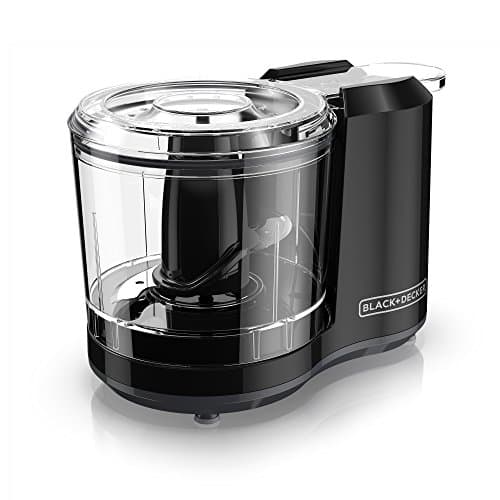
For garlic specifically, buy the BLACK+DECKER 1.5-Cup Electric Food Chopper. Its published 1.5-cup bowl is the smallest here, and on a load as small as half a head of garlic that is the single thing that decides the result — a blade can only chop what it reaches, and in a bigger bowl the cloves get thrown to the wall on the first rotation and stay there. It also has oil holes in the lid, which is what turns it from a chopper into an aioli and vinaigrette tool. If you mince garlic for one or two dishes a day, that plus OXO Good Grips Garlic Press for the two-clove nights is the whole kit.
Garlic is a small-load problem, not a power problem. Every chopper here has more than enough motor for a clove of garlic — garlic is soft. What they do not all have is a bowl small enough to keep it in the blade’s path. This is why the ranking on this page is almost the reverse of the chopper hub, where capacity and power count for a lot more. Match the bowl to the load and a $15 chopper outperforms a $150 processor.
The three things that decide a garlic chopper
Bowl volume, scaled to six cloves. Half a head of garlic is a couple of tablespoons. In 1.5 cups it sits in the blade’s arc; in 4 cups it needs stopping, scraping down and re-pulsing two or three times. That is the whole ranking in one sentence.
Whether you can add oil while it runs. Garlic’s two best uses in a chopper are an emulsion — aioli, a garlic vinaigrette, toum — and a paste. Both want oil going in slowly against a running blade. Only two picks here publish a way to do it: BLACK+DECKER states oil holes in the lid, and the KitchenAid 3.5-cup states a drizzle basin. Without one, you stop, lift the lid, pour, replace, pulse — and the emulsion splits.
What it does to the kitchen afterwards. Cut garlic releases sulphur compounds that cling to plastic, so the smell outlasts the wash on any machine. The listings here state dishwasher-safe removable parts on the BLACK+DECKER, the Ninja and the Cuisinart Elemental, which is the best defence available; a press with a pop-through cleaner is better still because there is no bowl to hold the smell at all.
The five, smallest load first
1. Half a head at a time, plus emulsions
The BLACK+DECKERpublishes a 1.5-cup bowl and a 150-watt motor — the lowest wattage in this category, and irrelevant on garlic. Its oil holes are the feature that matters: a running blade plus a thin stream of oil is how you get aioli instead of separated garlic and oil. It is light enough to lift with one hand, cheap enough to leave out, and its removable parts go in the dishwasher. The honest limits are stated plainly on its own listing and ours: 1.5 cups is tiny, so two onions means two batches, and hard nuts or parmesan are a stretch for 150 watts.
2. If garlic is one job among many
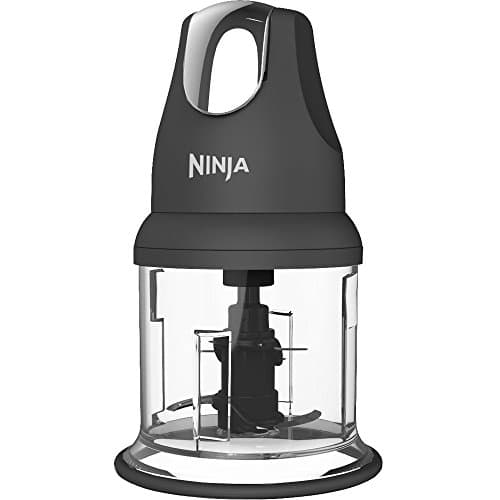
The Ninja Express Chop (NJ110GR) is a 16 oz (2-cup) bowl on a 200-watt motor with stacked stainless blades, and it is the pick if garlic shares the tool with onions, herbs and nuts. Two cloves in a 2-cup bowl still need a scrape-down; a whole head does not. The stacked blades — two tiers rather than one — are the reason it copes with a bigger bowl than its rivals at the same price. No pour spout, and no way to add oil without lifting the lid.
3. The most motor among the small bowls
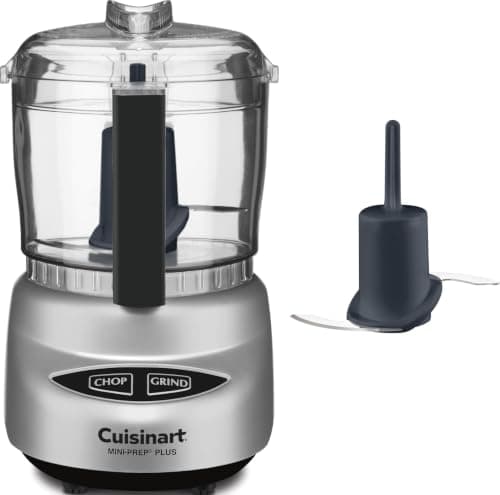
The Cuisinart Mini-Prep Plus (DLC-2ABC) publishes a 24 oz (about 3-cup) bowl, 250 watts, and the feature that earns its place here: a reversible sharp/blunt auto-reversing blade. The sharp edge chops garlic; the blunt edge grinds. Cuisinart also publishes an 18-month limited warranty on it, which is a short figure stated honestly rather than a long one implied. It is the pick if you want one small machine for garlic, herbs, nuts and a dressing, and it is the easiest of the powered picks to wash.
4. Two cloves, no machine
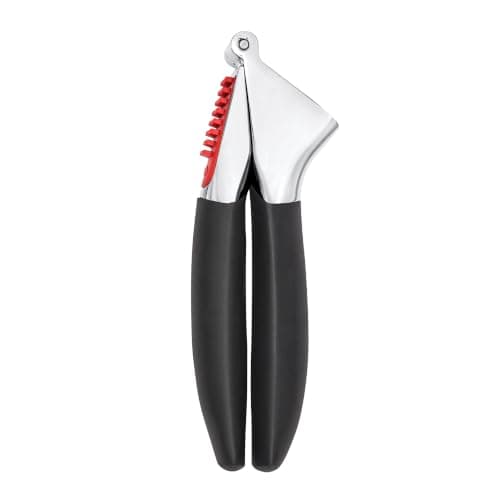
The honest answer for most garlic, most nights, is not a chopper at all. The OXO Good Grips Garlic Press is a heavy die-cast press that takes unpeeled cloves — so you skip the peeling — and ships with a built-in cleaner that pops the pulp out of every hole. For one to four cloves it is faster than any machine here end to end, because there is nothing to plug in, nothing to scrape and nothing to dry. It gives you crushed garlic rather than a mince, which is a different texture and a stronger flavour; if that distinction matters to you, our garlic press roundup ranks the field.
5. A head at a time, or garlic paste by the jar
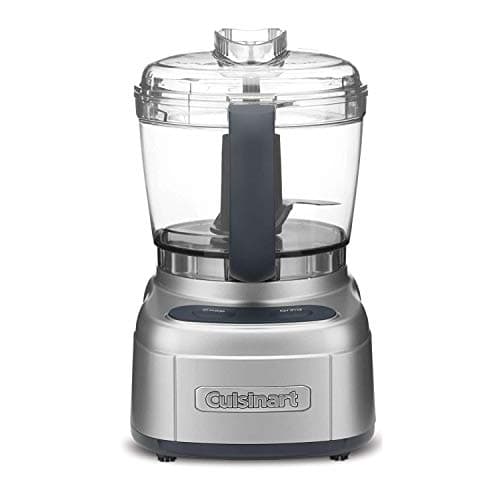
The Cuisinart Elemental 4-Cup Chopper/Grinder (ECH-4SV) is the volume answer: a 4-cup work bowl with a handle, an auto-reversing blade, and separate chop and grind touchpads. Dedicated grind is what makes it the pick for a jar of garlic paste or a garlic-and-chilli base you keep in the fridge, and every removable part is dishwasher safe. Cuisinart publishes no watt figure for it, so there is no motor number to compare here — we are not going to invent one. For six cloves it is simply too much bowl, and you will be scraping the walls.
What each one publishes
| Pick | Mechanism | Published bowl | Published motor | Oil while running? |
|---|
| BLACK+DECKER 1.5-Cup Electric Food Chopper | Powered blade | 1.5 cups | 150 W | Yes — oil holes in the lid |
|---|
| Ninja Express Chop (NJ110GR) | Powered stacked blades | 16 oz (2 cups) | 200 W | No |
|---|
| Cuisinart Mini-Prep Plus (DLC-2ABC) | Reversible sharp/blunt blade | 24 oz (about 3 cups) | 250 W | No |
|---|
| OXO Good Grips Garlic Press | Hand press, die-cast body | Not applicable — clove by clove | None | Not applicable |
|---|
| Cuisinart Elemental 4-Cup Chopper/Grinder (ECH-4SV) | Powered blade, auto-reversing | 4-cup work bowl | Not published by Cuisinart | No |
|---|
Mince, crush or paste — they are not the same garlic
A bladed chopper minces: it cuts garlic into small, slightly uneven pieces that brown and sweeten in a pan. A press crushes: it ruptures far more cells, which releases more allicin and tastes noticeably sharper and stronger in the same quantity. A mortar makes a paste, by grinding with salt as an abrasive until the cell structure is gone entirely — the texture a toum or a Caesar dressing needs, and one no chopper on this page produces. If paste is what you are after, that is a mortar and pestle job, and we say so rather than selling you a machine for it.
The practical consequence: if you swap a press for a chopper in a recipe, you are using a milder garlic, and the other way round you are using a stronger one. Taste before you commit the whole amount.
Technique that fixes most garlic complaints
Pulse, do not run. Two or three one-second pulses, then look. A continuous run turns garlic into a wet, bitter purée that catches in a hot pan.
Scrape down once. On any bowl bigger than about two cups, the first pulse throws garlic to the wall. One scrape with a spatula and one more pulse is the difference between an even mince and half a bowl of whole cloves.
Add a pinch of coarse salt. Salt gives the blade something to work against and stops the garlic skidding. It is the same trick that makes a mortar work, borrowed.
Rinse immediately. Garlic residue dries into a varnish. Ten seconds under a tap before you cook beats scrubbing after you eat — the full argument is in how to clean a vegetable chopper.
Why this page is not the mini-processor page
The best mini food processors ranks small machines with discs and feed tubes on general small-batch prep, and the best onion choppers answers a load ten times bigger where force and capacity dominate. This page answers one question — what to mince garlic in — and because garlic is the smallest and softest load in the kitchen, the answer inverts the usual order. The boundary is deliberate and stated on each page.
How much garlic are you actually chopping?
One to four cloves, most nights. Buy the press. Nothing with a motor wins on total time once you count the wash.
Half a head, several times a week. Buy the 1.5-cup BLACK+DECKER. This is the load it exists for, and the oil holes open up aioli and dressings.
A head at a time, or garlic shares the bowl with onions and herbs. Buy the Ninja or the Mini-Prep Plus. Two cups and three cups respectively, both easy to wash, both happy with mixed loads.
A jar of garlic paste or a batch base. Buy the Cuisinart Elemental for the 4-cup bowl and the separate grind pad — or accept that a mortar gives a better paste and a food processor gives a bigger batch.
What we are not claiming
We have not tested these five tools on garlic or on anything else. Every bowl volume, watt figure, blade description, oil-hole claim and care instruction above is the manufacturer’s own published wording, cited below — including the absence of a watt figure for the Cuisinart Elemental, which we leave blank rather than estimate. The mince-versus-crush difference is food chemistry you can verify in any reference on allicin, not a tasting panel we ran. Prices come live from Amazon with the date attached.