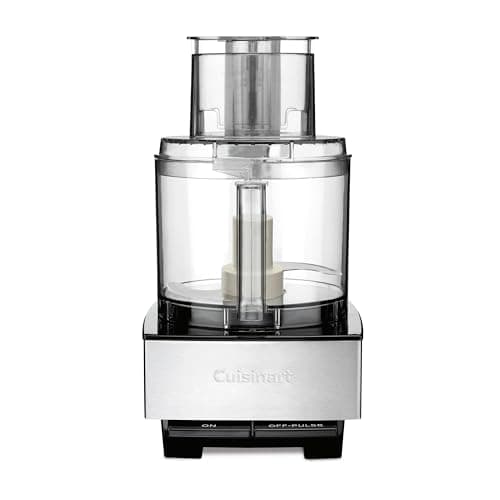
A food chopper is the tool you reach for when a full food processor is overkill and a knife is too slow: a couple of onions for a curry, a handful of herbs, a small batch of salsa. It costs a fraction of a processor, stores in a drawer, and is the single best way to stop crying over onions. The category splits cleanly into two kinds of tool, and choosing the wrong kind is the most common mistake buyers make.
Electric bowls vs manual push-dicers
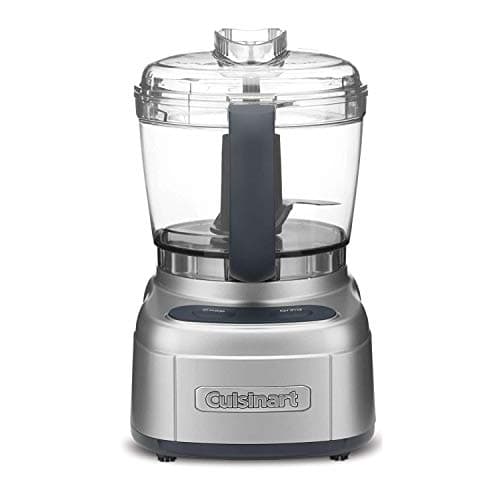
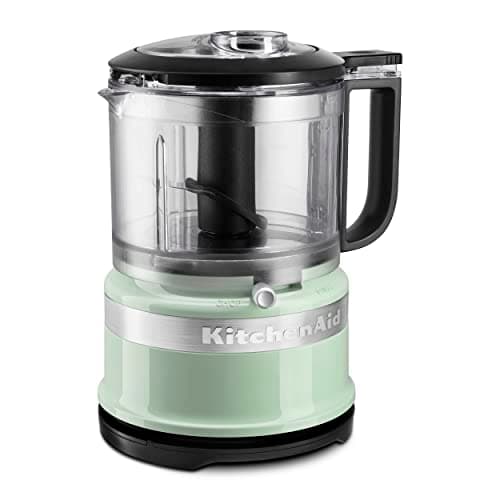
An electric chopperis a mini bowl with a spinning blade you pulse with a button. It minces — onions, garlic, herbs, nuts — fast and with no effort, and it is brilliant for anything you want finely and evenly broken down. What it does not do is dice into neat cubes: a spinning blade produces an uneven mince by its nature, and if you pulse too long you get puree.
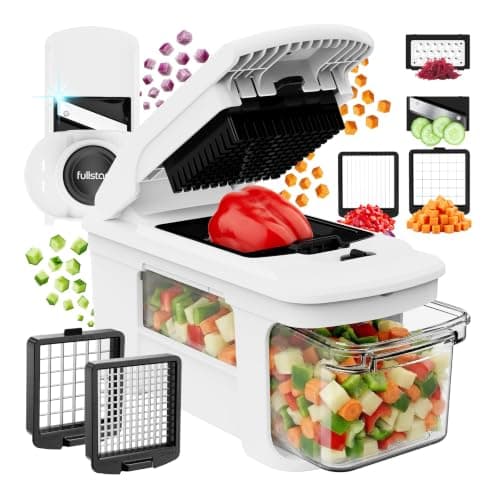
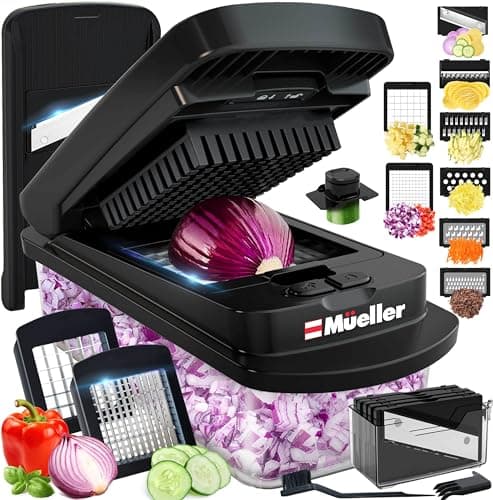
A manual push-dicer is the opposite tool. You lay a vegetable on a blade grid and push the lid down; the food is forced through the grid and falls into a container as clean, even cubes. It is the right tool for a tidy dice of onion, pepper and tomato, and it uses no electricity. The catch is force: a tomato goes through easily, but a raw carrot or sweet potato takes a real shove, which matters if you have weak grip or wrist trouble.
Pick by the cut you actually want.If you want fine mince — onion for a soffritto, garlic, herbs, nut crumbs — buy electric. If you want even cubes — pico de gallo, a mirepoix you can see — buy a push-dicer. Buying the wrong one is why so many choppers end up in a cupboard.
Once you have decided on a push-dicer, the choice narrows to two tools at almost the same price, and Fullstar vs Mueller settles it: they make the identical cut, so the decision is four blades and a bigger container against eight blades and a food holder — plus the fact that neither maker publishes a warranty length.
Capacity and cleanup, the two things that annoy owners
Chopper bowls are small — typically 2 to 4 cups — so a big pot of soup means working in batches. That is fine for most people and a real limit for batch cooks; if you routinely prep for a crowd, a full food processor is the honest answer, and we cover that in food processor vs chopper. Cleanup is the other recurring gripe: a bladed electric chopper has a bowl, a lid and a sharp blade to rinse; a push-dicer has a grid of little edges that needs the included cleaning tool. Neither is hard, but a chopper that is dishwasher-safe is a chopper you will keep using.
How we rank them
We score chopping power (does it mince evenly or bog down on nuts), capacity, ease of cleaning and build, and we call out the specific job each one is best at. Electric and manual choppers appear in the same roundup because most people are really asking “what should I buy to chop things”, and the honest answer depends on which cut you need. Every pick carries a live Amazon price and a plain line on who should skip it. If you are not sure a chopper is even the right category, the prep gadgets worth owning guide puts it in context with the other small tools.
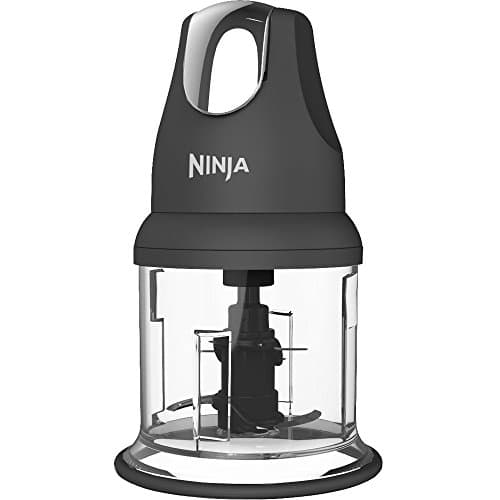
The Ninja Express Chop (NJ110GR)is the food chopper most kitchens should buy, and the reason is speed with almost nothing to it: a small 200-watt bowl, one button, stacked blades, and an onion reduced to an even mince in two or three one-second pulses. If you want a gadget that chops and grinds and then washes in seconds, buy it and stop reading. But the ranking below turns on a fork most buyers do not see until the parcel arrives — whether you want to mince or to dice.
The split: bladed choppers mince, push-dicers cube
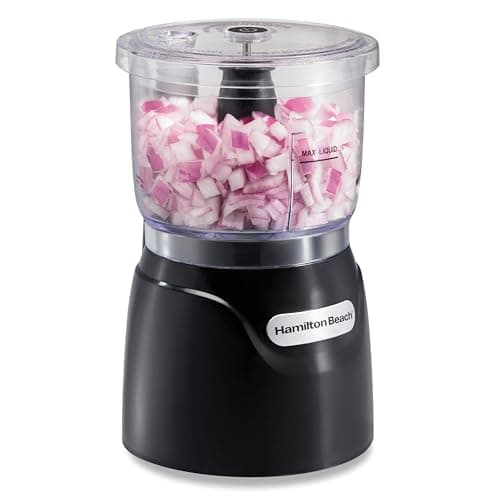
Every pick here does one of two very different things. The electric choppers — the Ninja, the Cuisinart Elemental 4-Cup Chopper/Grinder (ECH-4SV), the KitchenAid 3.5-Cup Food Chopper (KFC3516) and the Hamilton Beach 3-Cup Electric Vegetable Chopper— spin a blade that whips food to a mince. That is exactly what you want for onions, garlic, herbs, nuts and a coarse salsa, and it is fast and effortless. What a spinning blade cannot do is make a neat cube: pulse a moment too long and the edges go to mush, so the texture is always a little uneven by design.
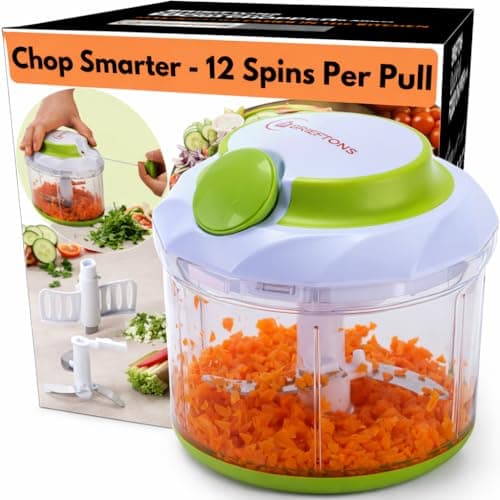
The push-dicers — the Fullstar Pro XL Vegetable Chopper & Mandoline and the Mueller Pro-Series 10-in-1 Vegetable Chopper— solve the opposite problem. You lay food on a grid of blades and press the lid, and it falls through as identical cubes. That is the tidy, uniform dice a bladed chopper never gives you, with no motor to burn out. The cost is muscle: a hard carrot or sweet potato takes a real shove, which is the one honest reason to think twice. The odd one out is the Brieftons QuickPull Manual Food Chopper (4-Cup), a pull-cord chopper that minces like the electrics but runs on a tug of a string — no outlet, no noise.
The one-line rule.Want herbs, onions and salsa in seconds? Buy an electric chopper — the Ninja for most people. Want even cubes for mirepoix, stew or pico de gallo? Buy a push-dicer like the Fullstar. Want to dice andskip the price and footprint of a full processor? A push-dicer is also the cheapest route to a real cube — we settle that in food processor vs chopper.
How the ranking is ordered
The Ninja leads because a fast, cheap mince is the cut most people actually make, and it does that as well as anything here. The Fullstar sits second because dicing is the job a chopper is uniquely good at and a processor mostly is not, and it does it for pocket money. From there it is horses for courses: the Cuisinart for bigger electric batches and spice grinding, the Mueller for the widest blade set, the KitchenAid for a nicer-built electric with two speeds, the Brieftons for cord-free chopping, and the Hamilton as the cheapest electric that still holds a real bowlful. Every pick below carries a live Amazon price and a plain line on who should skip it.