HUB 06 · Guides
How to Chop Onions Without Crying
Most of the advice you have read is folklore. The mechanism is simple enough to reason from, and once you know it the useful fixes sort themselves into three groups — and the popular tools land in surprising places.
We earn a commission if you buy through our links. It does not change the price you pay, and it does not decide our picks — our selection criteria are published in full. How this works.
An onion does not contain anything that stings your eyes. It contains the ingredients for something that does, kept in separate compartments, and cutting the onion breaks those compartments open and lets them react. The product is a volatile sulfur compound that drifts upward, meets the moisture on the surface of your eye, and irritates it. Everything that genuinely helps does one of three things: rupture fewer cells, slow the reaction down, or keep the gas away from your face. Everything else is folklore.
The three things that work
1. A sharper blade
This is the biggest single improvement and it costs nothing if your knife is already good. A sharp edge parts the onion’s cell walls; a dull one crushes its way through, rupturing many times more cells and releasing far more of the irritant. The same logic applies to every tool on this page — a mandoline with a fresh blade is kinder than one that has been used for two years, and a food processor blade that has been through a hundred hot dishwasher cycles is not the blade it was.
It is the reason a serrated bread knife is the worst thing you can cut an onion with, and the reason people who complain most about onions are usually the people with the dullest knives.
2. A colder onion
Chemical reactions slow down when they are cold, and this one is no exception. Fifteen to thirty minutes in the fridge, or ten in the freezer, makes a noticeable difference. Do not leave onions in the fridge permanently — they go soft and the texture suffers — but chilling the one you are about to cut is free and it works.
A cold onion is also firmer, which makes it easier to cut cleanly, which loops back to rupturing fewer cells. Two effects, one step.
3. Moving air
The gas is lighter than air and it rises toward your face because your face is directly above the board. Anything that moves air across the board takes it somewhere else: an extractor fan on full, a small desk fan aimed across the counter, an open window with a draft, or simply cutting at the other end of the counter from where you usually stand.
This is also why standing back matters. Your eyes are closer to the onion than they need to be. Cutting on a board at a comfortable height, with your head up rather than bent over the work, helps more than most of the tricks people try instead.
The one gadget that definitively works is goggles. They look ridiculous and they solve the problem completely, because the gas cannot reach what it cannot touch. Onion goggles are sold for this and swimming goggles do the same job for less. We do not sell either; we are telling you because it is true.
The things that do not work
Bread in your mouth. No mechanism, no effect. The gas reaches your eyes through the air, not through your mouth.
Cutting under running water. Water does absorb the compound, which is why this one sounds plausible, but cutting a wet onion on a wet board with a wet knife is a real way to cut yourself and the onion ends up waterlogged. Rinsing the cut halves before you dice them is the safe version of the same idea and it does help a little.
Holding a spoon in your teeth, breathing through your mouth, lighting a candle, chewing gum. None of these has a mechanism that survives contact with the explanation above.
Leaving the root on. This one is half true and worth getting right. The root end is the densest part of the onion and cutting into it releases a disproportionate amount of irritant, so leaving it intact until last genuinely helps — and it is also the correct knife technique, because the root is what holds the layers together while you dice. Cut the onion in half through the root, peel, make your horizontal and vertical cuts toward the root without cutting through it, then slice across. The root goes in the trash at the end, uncut.
Where the tools land, honestly
An electric chopper such as the Ninja Express Chop or the KitchenAid 3.5-cup is the fastest way to get an onion minced, and its effect on tears is smaller than people expect. The lid is closed while it runs, which is good, but the gas does not disappear — it is waiting in the bowl when you take the lid off, and a chopper ruptures a very large number of cells in a couple of seconds. The trick that makes it work is simple: pulse it, then leave the lid on and walk away for thirty seconds before you open it. Our electric chopper roundup covers the machines; our best onion chopper page ranks them for this job specifically.
A push-down dicer like the Fullstar is better on this front than a bladed chopper, for a reason that has nothing to do with the lid: it makes a small number of clean cuts with a sharp grid instead of thousands of ragged ones, so less irritant is released in the first place. It also produces neat cubes rather than mince, which our dicer roundup explains at length. The cost is effort — you push hard on a lever, and that is real.
A mandoline is the best of the lot for sliced onion and the worst idea if you are already tearing up, for an obvious reason: you cannot see well when your eyes are streaming, and a mandoline is the tool in this kitchen that punishes that most. Chill the onion first, use the food holder, and read our mandoline safety guide if you have not.
A food processor with the S-blade is the wrong tool for onions in most cases and it is worth saying why. It minces unevenly, it bruises the onion, and the resulting wet pulp releases more irritant and cooks differently from knife-cut onion. Our processor versus chopper comparison goes into where each one earns its place. The exception is a machine with a slicing disc: onion through a disc is fast, clean and completely hands-off.
The cheat nobody mentions
Frozen chopped onion exists, it is cheap, and it is genuinely good in anything that will be cooked for more than a few minutes — stews, sauces, soups, curries, bolognese. It releases nothing, it needs no board, and it goes into the pan frozen. Anyone who cooks a lot and dislikes onions keeps a bag.
It is not the answer for a salad, a salsa or anything where raw onion texture matters. For those, chill the onion, use a sharp knife, put a fan on, and keep the root on until last.
If you want to buy your way out of it
Buy a sharpener before you buy a gadget. A dull knife is the cause of most of this, and it is also the cause of most kitchen cuts. Nothing on this site will help you as much as a knife that parts an onion instead of crushing it.
Then, if you chop onions most days, buy a chopper. The right one depends on what you want to come out. A bladed electric chopper gives you fast, fine mince and a lid you can leave closed. A push-down dicer gives you even cubes, needs no outlet, and asks for real hand force — which is why we steer people with grip problems away from it on our kitchen tools for arthritic hands page.
If you slice more than you dice, buy a mandoline instead. Onion rings, onions for a tart, onions to caramelize — all of these want even slices and all of them are faster on a mandoline than with a knife. Our beginner mandoline page is the one to read first if it would be your first.
What not to buy: anything sold specifically as an anti-tear onion gadget that is not goggles. If a product claims to stop onion tears without either covering your eyes or reducing the number of ruptured cells, it does not have a mechanism.
Knife technique, in five lines
Cut the onion in half from the top through the root. Peel each half, leaving the root end intact. Lay a half flat and make vertical cuts toward the root, stopping short of it. Optionally make one or two horizontal cuts, again stopping short. Then slice across, and the onion falls into dice on its own.
The root is doing all the structural work in that sequence, which is why leaving it whole is both the tear-reduction trick and the reason the technique works at all. It is also why you should buy onions with the root still on them.
After the onion
Onion smell on your hands is a different compound and it does not wash off with soap alone. Rubbing your hands on anything stainless steel under cold running water works, which is why stainless “soap bars” are sold; the sink itself does the same job for free.
Boards hold the smell too, especially wooden ones, which is one of several reasons our cutting board roundup suggests owning more than one. A wipe with a cut lemon and a little salt deals with most of it.
And if you have chopped more than you need: raw chopped onion keeps a couple of days in a sealed container in the fridge and freezes well for cooking. Chopping four onions once is a better use of a bad ten minutes than chopping one onion four times.
The hardware
The hardware this guide is about
The products this guide refers to, with prices pulled live from Amazon and dated on every card. Full rankings live in the roundups linked above.
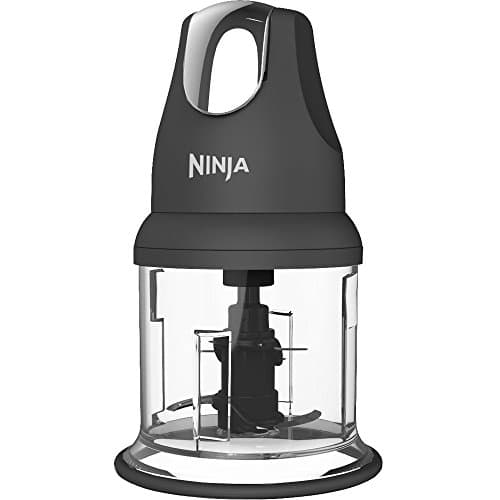
Fast electric chopping
Ninja Express Chop (NJ110GR)
The electric chopper to beat: a 200-watt, one-touch bowl that turns onions and nuts to an even mince in seconds.
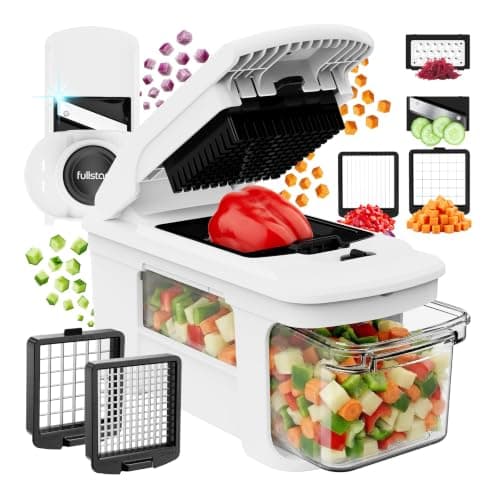
Even manual dicing
Fullstar Pro XL Vegetable Chopper & Mandoline
The best-selling push-down dicer: press the lid and vegetables fall through a grid into neat, even cubes.
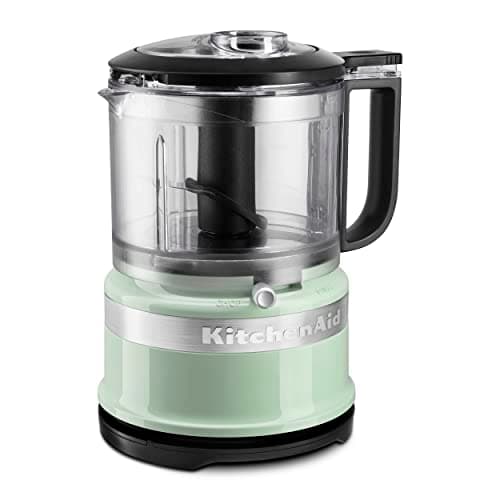
Neatly built electric chopper
KitchenAid 3.5-Cup Food Chopper (KFC3516)
A tidy 3.5-cup chopper with two speeds and a drizzle spout — the built-a-bit-nicer electric option.
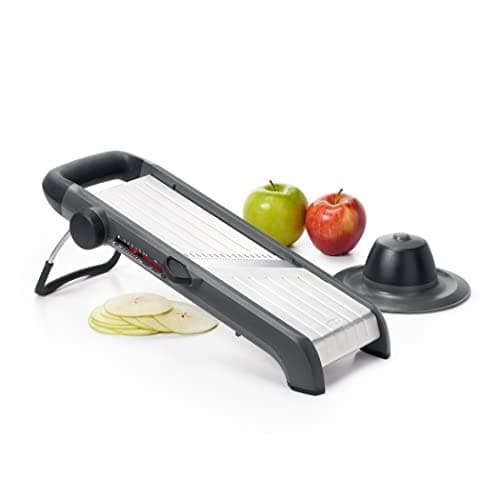
Most home cooks
OXO Good Grips Chef's Mandoline Slicer 2.0
The mandoline to buy: a solid, foldable slicer with a runway of thickness settings and a genuinely usable hand guard.
#ad · As an Amazon Associate we earn from qualifying purchases.
Questions
Frequently asked
Why do onions make you cry?
What actually stops onion tears?
Does an electric chopper stop you crying?
Should you leave the root on when chopping an onion?
Does cutting onions under water work?
Is frozen chopped onion any good?
Keep reading
Related
- Best onion choppersRanked for this job specifically.
- KitchenAid 3.5-cup food chopper reviewTwo speeds and a lid you can leave closed.
- Best vegetable dicersClean cuts, even cubes, fewer ruptured cells.
- Food processor vs chopperWhy the big machine is usually the wrong one for onions.
- How to use a mandoline safelyRead this before slicing onions when your eyes are streaming.
- Best food processor for salsaWhere raw onion texture is the whole recipe.