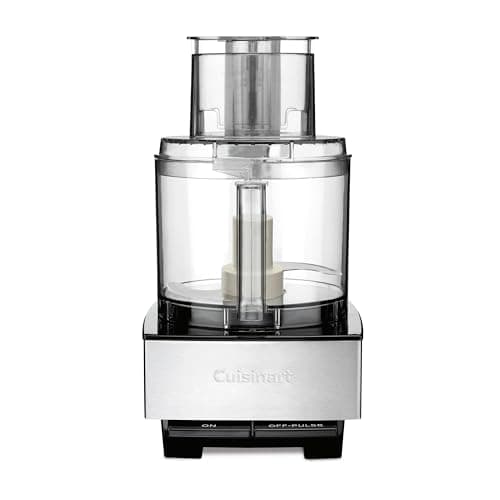
The Cuisinart 14-Cup Food Processor (DFP-14BCNY)is still the large food processor to beat, and the reason has almost nothing to do with the wattage on the box. It pairs a genuinely large 14-cup bowl with the shortest parts list in this ranking — a bowl, a lid and a blade — and in a category where the real cost of using the machine is measured at the sink, that matters more than any spec sheet suggests.
What “large” buys you, and what it costs
The case for a big processor is batch work. Two pounds of dough, a whole cabbage for slaw, a pound of cheese, a party bowl of dip, a summer of tomato sauce — jobs where a 9-cup machine means running three loads and a 14-cup machine means running one. If you cook that way, the upgrade pays for itself in evenings.
The costs are equally concrete and rarely mentioned in listings. A 14-cup machine assembled is roughly cabinet-height, so it typically will not live under an upper cabinet with the lid on. It is heavy enough that most people leave it out permanently, which means it occupies counter space you were probably using. And it is a chore to wash for small jobs, which is exactly why so many owners end up buying a mini processor as well.
The one-line rule. Buy large if you batch-cook, bake, or feed four or more people regularly. If you mostly prep for one or two and occasionally do something bigger, a 9-to-11-cup machine from the main ranking is the better-tempered choice.
The table: capacity, motor and running cost
Capacity leads, because it is the reason this page exists. Motor power is printed in each manufacturer’s own words — peak watts and continuous watts are different measurements and brands use them interchangeably — and where a brand publishes no figure, the cell says so rather than carrying a guess. The last column is the honest reply to wattage marketing: even the most powerful machine here runs for a few dollars a year.
Running cost assumes 3 minutes a day, 365 days a year, at 17.45¢ per kWh (US EIA, Electric Power Monthly — average residential price, US total, retrieved July 2026). Deliberately generous — most kitchens run a processor for seconds at a time.| Machine | Bowl | Published motor | Est. cost / year |
|---|
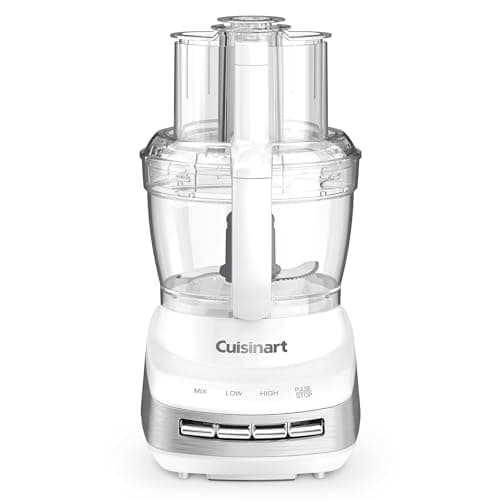
| Cuisinart 14-Cup Food Processor (DFP-14BCNY) | 14 cups | 720 W | $2.29 |
|---|
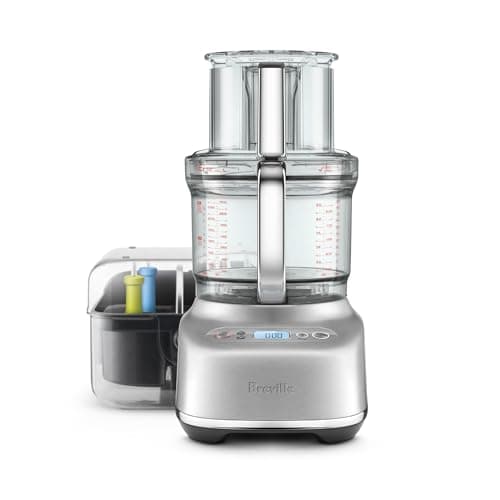
| Breville Sous Chef 16 (BFP810) | 16 cups | 1,450 W | $4.62 |
|---|
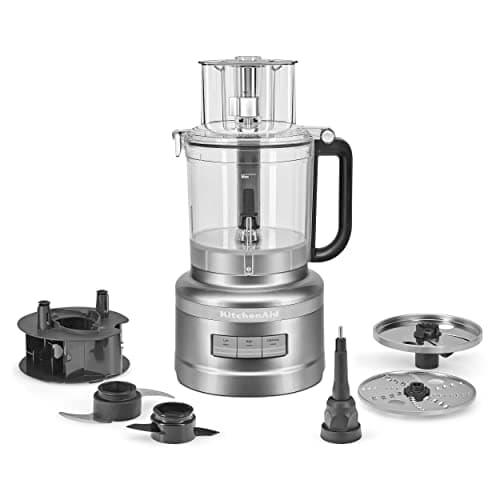
| KitchenAid 13-Cup Food Processor (KFP1318) | 13 cups | Not published | not published |
|---|
| Cuisinart Core Custom 13-Cup (FP-130) | 13 cups | 550 W | $1.75 |
|---|
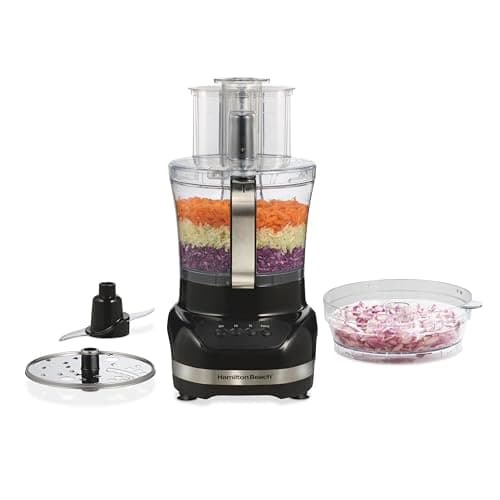
| Hamilton Beach Big Mouth Duo Plus 12-Cup | 12 cups | 500 W | $1.59 |
|---|
Which large processor for which kitchen
Buy the Cuisinart 14-Cup Food Processor (DFP-14BCNY) as the default: big, simple, powerful enough for dough, and with the fewest parts to lose or wash. Step up to the Breville Sous Chef 16 (BFP810)if you slice a lot and want the thickness dial — an adjustable 0.3 to 8.0 mm disc is a different tool from a fixed one, and the 1,450-watt motor is the most headroom here for dough and nut butter. It is also by some distance the most expensive pick, and the extra accessories are extra things to store.
Choose the KitchenAid 13-Cup Food Processor (KFP1318) if you want variety of cut above all: a dicing kit, an external slicing lever you can adjust while it runs, and a 3-in-1 feed tube. The Cuisinart Core Custom 13-Cup (FP-130)is the more modern Cuisinart — 13 cups, an adjustable slicing disc, a friendlier control panel — and a sensible pick if the DFP-14’s vintage styling puts you off. And the Hamilton Beach Big Mouth Duo Plus 12-Cupis the budget entry: 12 cups, plus a 4-cup chopper bowl that nests inside it, for a fraction of the others. It gives up the dough blade, the adjustable disc and the finish — not the capacity.
How we picked
Tools we claim to have lab-tested: 0
Every site in this category tells you they ran twenty machines through a lab. We have not, and we say so. Here is what we do instead: read the manufacturer's manual and spec sheet, record the published bowl capacity, motor rating, blade and disc counts and materials, cross-check the warranty against the manufacturer's own warranty document, and cite all of it so you can check the work. Prices come live from Amazon's API and disappear rather than go stale.
The scores above are judgments from that documented research — not test results. The full rubric, including what disqualifies a product, is published in full.