HUB 01 · Food Processors
What Size Food Processor Do I Need?
Bowl capacity is quoted dry and to the brim, which is not how anyone cooks. Here is what each size genuinely handles, matched to household and to job.
We earn a commission if you buy through our links. It does not change the price you pay, and it does not decide our picks — our selection criteria are published in full. How this works.
For most households the answer is 9 to 11 cups: enough to slice a few vegetables, shred a block of cheese and mix a modest dough without a second batch, and small enough that washing it is not a decision. Go smaller — 3 to 5 cups — if you cook for one and mostly chop. Go to 12 cups or more only if you genuinely batch cook or bake.
Why the number on the box is not the number you get
Manufacturers quote work-bowl capacity dry and level with the rim. Real use is neither. For solid food — chopped vegetables, shredded cheese, breadcrumbs — you can fill a bowl to roughly two-thirds before the blade stops circulating what is above it and you get a mash at the bottom and chunks on top. For anything wet — soup, batter, a thin sauce — the practical ceiling is closer to half, because liquid climbs the bowl wall as the blade spins and finds its way past the lid seal.
So a 14-cup machine is a 9-cup machine for slaw and a 7-cup machine for soup. That single adjustment resolves most of the disappointment people report after buying: they bought for the printed number and cook against the real one. If you have narrowed it down to specific machines at 11, 14 and 16 cups, we put those three side by side in Cuisinart 14-cup vs 11-cup vs Breville Sous Chef.
The size table
| Bowl size | Usable (solids) | Serves | Best for |
|---|---|---|---|
| 1.5–3 cups | 1–2 cups | One person | Herbs, garlic, dressings, a single onion |
| 4–5 cups | 3 cups | One to two | Everyday chopping, small-batch hummus, some shredding |
| 7–8 cups | 5 cups | Two to three | Weeknight prep, slicing and shredding for a meal |
| 9–11 cups | 6–7 cups | Three to five | The mainstream size: dough, slaw, dips, full dinner prep |
| 12–16 cups | 8–11 cups | Five or more, or batch cooking | Two-pound doughs, whole cabbages, sauce and freezer runs |
Size by job, not by household
- Pie crust and pizza dough. 9 cups minimum for a single crust, 11 to 14 for a double batch. Dough needs room to climb and fold; a crowded bowl bogs the motor and heats the butter, which is exactly what you are trying to avoid in pastry.
- Shredding cheese. A pound of cheese is roughly 4 cups shredded, so a 7-cup bowl handles it and a 5-cup one needs emptying midway.
- Hummus and dips. One can of chickpeas fits comfortably in 4 to 5 cups. Double it and you want 9.
- Soup and sauce. Halve the printed capacity, then consider whether an immersion blenderis simply the better tool — it blends in the pot with nothing to pour.
- Nut butter. Small batches seize and climb; this is a job that wants a larger bowl and a stronger motor than the quantity suggests.
The second machine question
A great many kitchens are better served by two small-to-medium machines than one large one. A 14-cup processor is the wrong tool for a shallot, and the friction of washing it is enough that most people simply reach for a knife instead — which means the expensive machine sits idle. If your cooking swings between “chop a couple of things” and “prep a whole dinner”, pairing a cheap chopper with a 9-to-11-cup processor covers more real cooking than one 16-cup machine, and usually costs less.
The other thing worth measuring before you spend: the gap between your counter and your upper cabinets. Anything from 12 cups up is likely to be taller than it, assembled. That is not a reason to avoid a big machine — it is a reason to know in advance that it will live on the counter or be lifted in and out of a cupboard every time.
The hardware
The hardware this guide is about
The products this guide refers to, with prices pulled live from Amazon and dated on every card. Full rankings live in the roundups linked above.
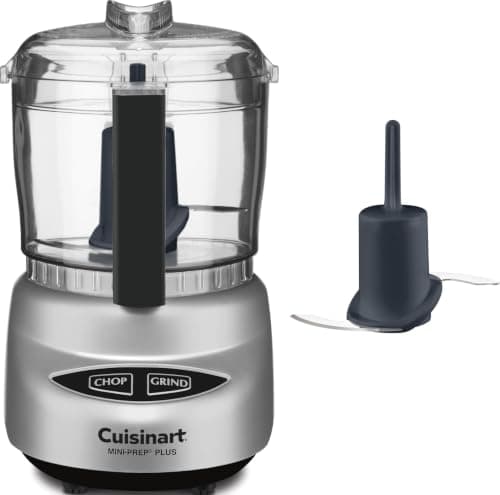
Small daily chopping
Cuisinart Mini-Prep Plus (DLC-2ABC)
The 3-cup workhorse for small jobs: chopping herbs, an onion, a bit of dressing — without hauling out a big bowl.
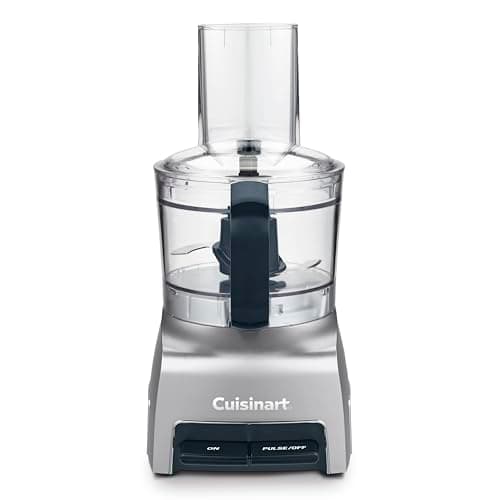
Small kitchens that still shred
Cuisinart 5-Cup Chop & Shred Food Processor (FP-5)
The smallest machine here that still shreds: a 5-cup bowl with a real reversible disc, so it slots between a chopper and a full-size processor.
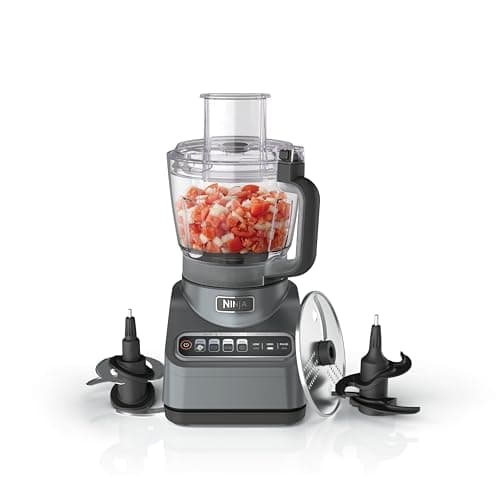
Value and dough
Ninja Professional Plus Food Processor (BN601)
The value pick: a 1,000-peak-watt motor and a dough blade for well under half the price of the premium machines.
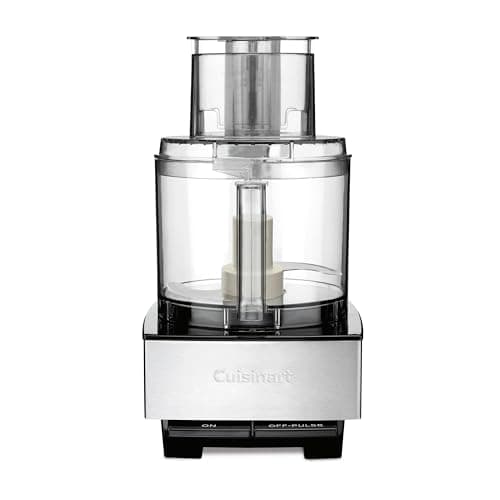
Most full-size kitchens
Cuisinart 14-Cup Food Processor (DFP-14BCNY)
The default full-size processor for a reason: a big, simple, 720-watt workhorse with the shortest parts list to go wrong.
Serious, frequent cooks
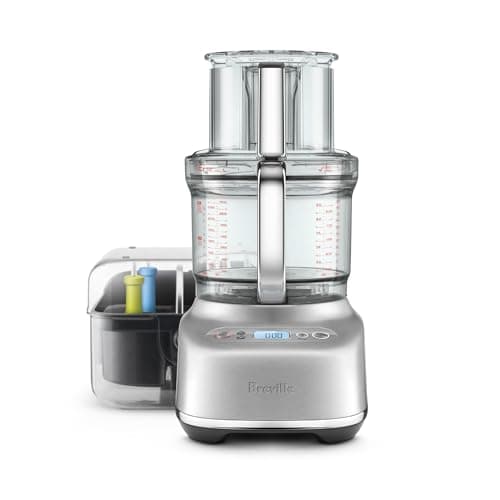
Breville Sous Chef 16 (BFP810)
The one to buy if you actually use a processor daily: an adjustable slicing dial and a 1,450-watt motor that never flinches.
#ad · As an Amazon Associate we earn from qualifying purchases.
Questions
Frequently asked
What size food processor do I need for a family of four?
What size food processor do I need for pie crust?
Is an 8-cup food processor big enough?
Can you overfill a food processor?
Keep reading