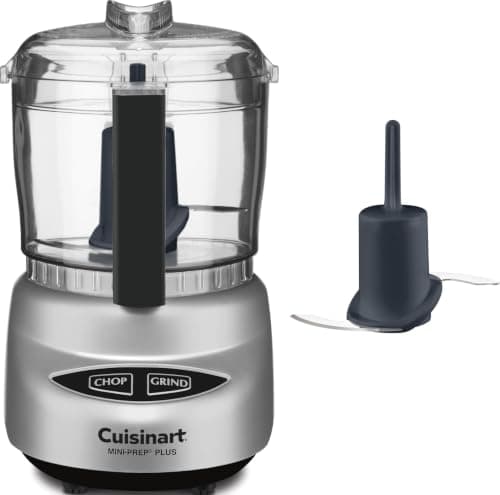
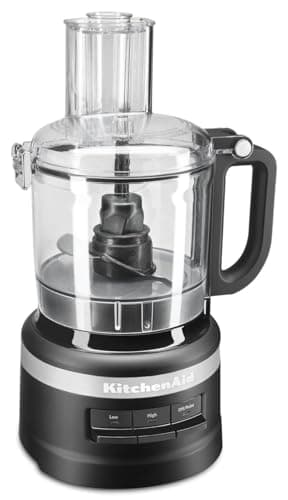
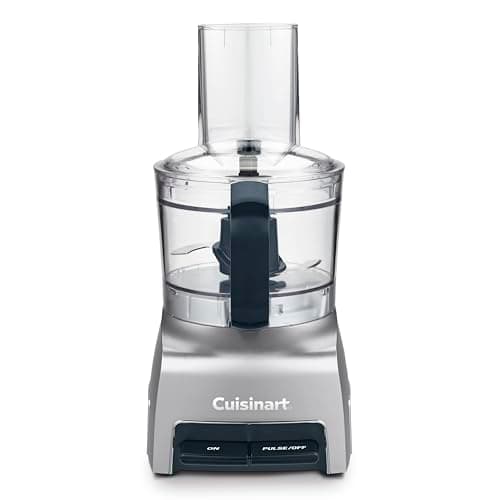
The Cuisinart 5-Cup Chop & Shred Food Processor (FP-5) is the mini food processor most small kitchens should buy, for one reason that the listings bury: it is the smallest machine in this ranking that still carries a shredding disc. Almost everything else sold as a “mini food processor” is a chopper with a nicer name — a blade spinning in a bowl, which minces beautifully and cannot shred a block of cheese or cut an even slice. That distinction, not the cup count, is what separates these five.
The line that actually divides this category
A food processor is defined by its discs, not its bowl. Drop a flat slicing or shredding disc onto the drive shaft and food passes over it through a feed tube, coming out in even slices or shreds. Take the disc away and you have a chopping blade in a bowl — a chopper. Both are useful. They are not interchangeable, and the price difference between them is smaller than the capability gap.
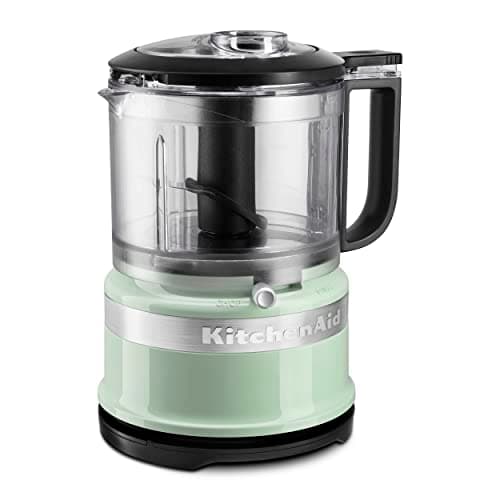
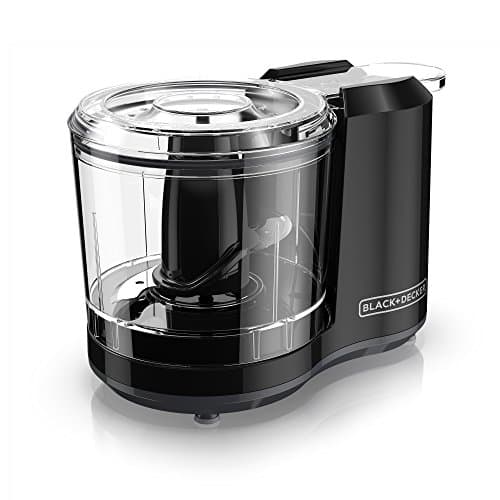
Of the five picks below, two are genuine processors with discs: the Cuisinart 5-Cup Chop & Shred Food Processor (FP-5) and the KitchenAid 7-Cup Food Processor (KFP0718). The other three — the Cuisinart Mini-Prep Plus (DLC-2ABC), the KitchenAid 3.5-Cup Food Chopper (KFC3516) and the BLACK+DECKER 1.5-Cup Electric Food Chopper— chop and grind only. They are ranked here anyway, because for a great many small kitchens chopping is the whole job, and paying for discs you will never fit is not thrift.
The one-line rule.If you want cheese shredded or vegetables sliced, buy a small machine with a disc — the Cuisinart 5-cup or the KitchenAid 7-cup. If you only ever mince onions, garlic, herbs and nuts, buy the cheapest bowl that holds enough, and read our electric chopper roundup before you spend more. If it is the bowl material you came for rather than the size, our glass bowl food processors include a 2.5-cup glass mini — all of them choppers, for a reason that page sets out.
How much bowl is enough
Bowl capacity is quoted dry and to the brim, and no processor works usefully when it is full. Plan on filling roughly half to two-thirds for solid work, and less than half for anything wet, because liquid climbs the bowl wall and escapes past the lid. That arithmetic is why 1.5 cups is genuinely small — call it one onion — while 5 cups covers a couple of onions, a carrot and a handful of herbs in a single go, and 7 cups will do dinner prep for four without a second batch.
The other half of the size question is the cupboard. A mini processor earns its keep by being easy to reach for; the moment it lives on a high shelf, you stop using it and go back to the knife. All five picks below store in a normal cabinet, and the Cuisinart 5-cup nests its parts inside the bowl with the cord in the base, which is the difference between “stores easily” and “stores as one object.”
Which mini processor for which cook
Buy the Cuisinart 5-Cup Chop & Shred Food Processor (FP-5) if you want the most capability in the smallest box: it chops and shreds, the feed tube is wide, and it packs away into itself. Buy the Cuisinart Mini-Prep Plus (DLC-2ABC)if your prep is genuinely small and constant — herbs, garlic, a dressing — and you want something you will wash in twenty seconds; its reversible sharp/blunt blade also grinds spices and hard cheese, which most choppers cannot — our full Mini-Prep Plus review goes through what it can and cannot do, including the one job Cuisinart says not to give it. Step up to the KitchenAid 7-Cup Food Processor (KFP0718)if “mini” for you means “not a 14-cup monster”: seven cups plus an adjustable slicing and shredding disc is a real processor that happens to be compact.
The KitchenAid 3.5-Cup Food Chopper (KFC3516)is the one to pick if build quality matters more than versatility — two speeds, a drizzle basin in the lid and a solidly-made feel for a chopper. And the BLACK+DECKER 1.5-Cup Electric Food Chopper is the honest budget end: 1.5 cups, 150 watts, oil holes in the lid so a vinaigrette emulsifies instead of splitting. It is a tiny tool for tiny jobs, priced accordingly, and there is nothing wrong with that as long as you know that is what you are buying.
And if the reason you are looking at mini machines is square footage rather than portion size, the processor is only one of the decisions. Our prep tools for a small kitchen roundup ranks the board, the spinner, the slicer and the chopper on the same question this page asks of a processor: where does it live the other twenty-three hours of the day?