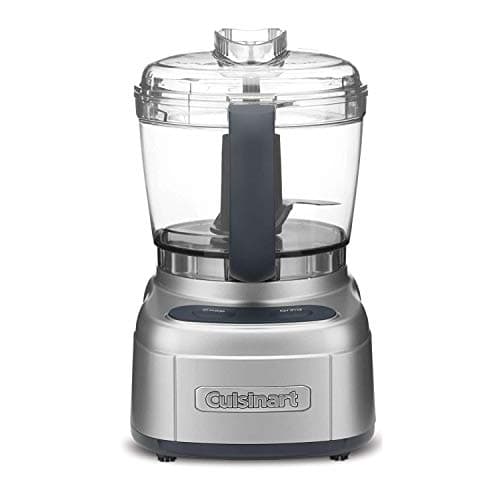
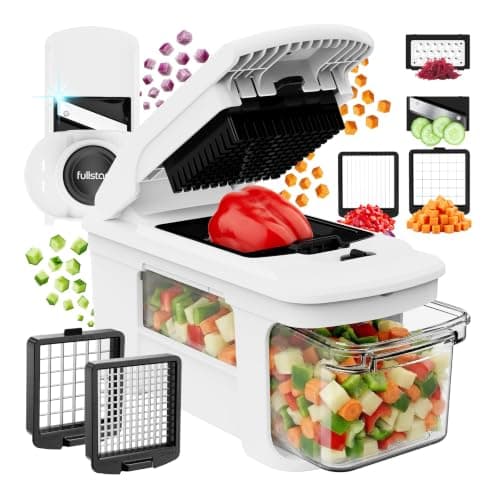
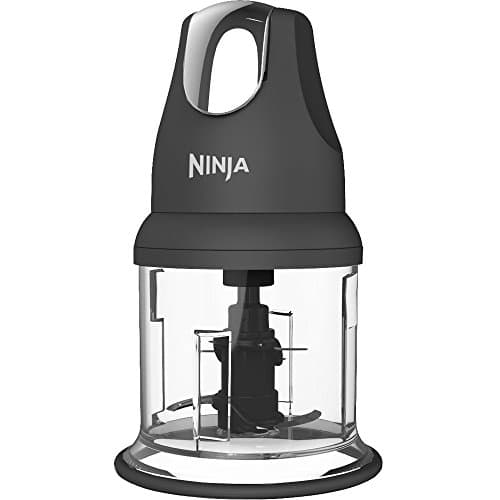
Buy the Ninja Express Chop (NJ110GR) if you cook Indian food at home and want one tool for the part that takes the longest. A 2-cup bowl and stacked blades turn onion into the fine, almost-paste mince a bhuna or a korma base needs, and crush ginger and garlic together in a few one-second pulses — which is most of what a weekday dal or sabzi asks of a chopper. Step up to the Cuisinart Elemental 4-Cup Chopper/Grinder (ECH-4SV) if you cook for more than two and want a separate grind pad for whole jeera and coriander seed. The Fullstar Pro XL Vegetable Chopper & Mandoline is last here on purpose: it is the best-selling chopper in the category and the wrong shape for a masala base.
The cut decides this page, not the brand. A bladed chopper — electric or pull-cord — spins blades through food and produces an uneven mince. A push-down dicer presses food through a fixed grid and produces an even cube. Indian cooking wants the mince almost everywhere: the onion has to break down into the oil, the ginger and garlic have to become a paste, the coriander has to be cut and not bruised. Cubes are for the raita, the salad and the aloo in a dry sabzi. If you only read one line of this page, read that one — and then read our full electric vs manual chopper comparison, which is the same fork applied to the whole category.
The three jobs, and which tool does each
Nobody buys a chopper for “Indian cooking” in the abstract. They buy it because one of three specific tasks is eating twenty minutes a night. Here is what each one actually demands of a machine.
1. Onion, minced fine enough to disappear
This is the job. A masala base is onion cooked until it loses its structure, and the finer it starts the faster it gets there. A bladed chopper does this in two or three pulses, and the unevenness that makes it a bad dicer is irrelevant here — everything is going into hot oil and collapsing anyway. The 2-cup Ninja takes roughly one large onion at a time; the 4-cup Cuisinart takes two to three. Both out-run a knife by a wide margin, and neither makes you cry over the board.
2. Ginger and garlic, crushed to a paste
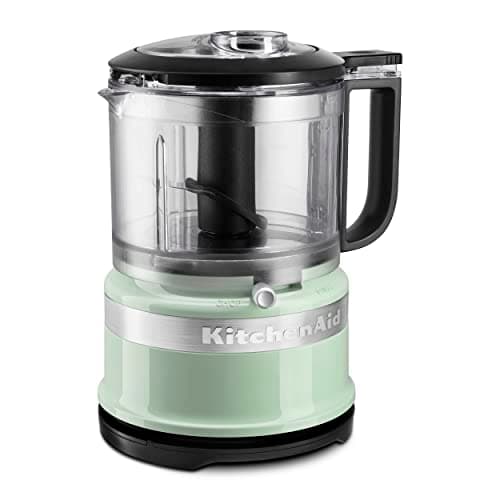
Ginger-garlic paste is the other daily ritual, and it is where a chopper beats every alternative except a mortar. Peel, drop both in together, pulse, and scrape out. The one detail that matters is oil: paste keeps better and emulsifies properly when a little oil goes in while the blades are moving, which is exactly what the KitchenAid 3.5-Cup Food Chopper (KFC3516)’s drizzle basin in the lid is for, and what the 1.5-cup BLACK+DECKER’s oil holes do on the electric chopper page. If you make paste in batches to keep in the fridge, that feature is worth more than another cup of bowl.
3. Whole spices, ground
This is the job most choppers quietly fail. A chopping blade cuts; grinding needs impact and a tight chamber. Of everything here only the Cuisinart Elemental 4-Cup Chopper/Grinder (ECH-4SV) publishes a dedicated grind control — a separate pad rather than just a chop button — so it is the only pick on this page we will say handles jeera, coriander seed and a small garam masala. We will also say plainly what the category does not: no chopper on this page replaces a dedicated spice grinder or a granite mortar and pestle for a serious masala, and a mortar is the only one of the three that ruptures a seed and releases its oil instead of cutting around it.
What each one publishes
Every figure below is the maker’s own, taken from the listing the buy button points at. Where a brand publishes nothing, the cell says so rather than filling in a number from somewhere else.
| Pick | Bowl | Motor | Controls | The job it owns |
|---|
| Ninja Express Chop (NJ110GR) | 16 oz (2 cups) | 200 W | One-touch pulse | Onion mince and ginger-garlic for one or two people |
|---|
| Cuisinart Elemental 4-Cup Chopper/Grinder (ECH-4SV) | 4 cups | Not published | Separate chop and grind pads | Family-size bases and whole spices |
|---|
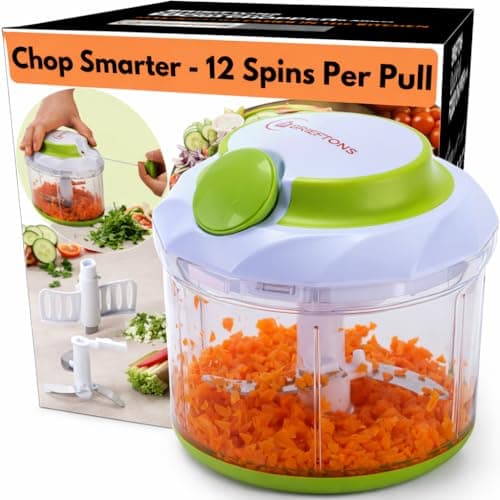
| Brieftons QuickPull Manual Food Chopper (4-Cup) | 4 cups | None — pull cord | Texture by pull count | Coarse-to-fine control with no outlet |
|---|
| KitchenAid 3.5-Cup Food Chopper (KFC3516) | 3.5 cups | Not published | Two speeds plus pulse; drizzle basin | Ginger-garlic paste with oil added as it runs |
|---|
| Fullstar Pro XL Vegetable Chopper & Mandoline | 1.8 L container | None — hand press | 4 blades: fine dice, medium dice, 2 mm slice, grate | Even cubes for raita, salad and dry sabzi |
|---|
Two rows in that table deserve a second look. Only Ninja publishes a wattage — 200 W, printed in its own title. Cuisinart and KitchenAid publish none for these models, which means any page ranking this category on motor power is comparing one real number against two it invented. And the Brieftons has no motor at all: you pull a cord and the blades spin, which sounds like a gimmick until you realise it gives you something the electric choppers do not — texture by pull count, so three pulls is a coarse onion for a salad and twelve is close to a paste.
The one job where the dicer wins
We ranked the Fullstarlast, and it is still on the page, because there is a real Indian-kitchen job that a blade is bad at: anything that has to hold its shape. Cucumber and onion for raita, tomato and onion for a kachumber, potato for a dry aloo sabzi, paneer for a bhurji — all of those want a cube, and a spinning blade cannot make a cube. Press them through the Fullstar’s medium dicing grid and they come out even, which is also why it is our rank-1 pick on the best vegetable dicers.
The honest version of this page, then, is that an Indian kitchen cooking a mix of wet and dry dishes eventually wants both tools, and they cost very little together. If you can only buy one, buy the bladed chopper — the base is the job that happens every single night.
What none of these will do
They do not make dough. Atta for roti needs a machine with a dough blade and a motor built for it; a 2-cup chopper will stall and heat up. That is a food processor job, and the difference between the two machines is laid out in food processor vs chopper.
They do not grind a wet masala to a fine paste. A coconut-and-chilli wet grind wants a stone-style wet grinder or a full-size processor with volume and time; a 2-cup bowl will give you a coarse mix and a hot motor.
They do not puree dal or soup. That is an immersion blender job, done in the pot, and it is a far better tool for it than anything on this page.
How to choose, in four questions
How many people do you cook for? One or two: the 2-cup Ninja is enough and the smallest thing to wash. Three or more: go to a 3.5- or 4-cup bowl, because a chopper you have to run three times is a chopper you stop using.
Do you keep ginger-garlic paste in the fridge? If yes, buy the tool with a way to add oil while the blades turn — the KitchenAid’s drizzle basin or the BLACK+DECKER’s lid holes. If you make it fresh each time, skip the feature.
Do you grind your own whole spices? If yes, the Cuisinart’s separate grind pad is the only published grind function here — and consider a mortar alongside it, because crushing a seed and cutting a seed are not the same thing.
Is counter space or an outlet the constraint? The Brieftons needs neither and is quiet enough to use early in the morning. It costs you effort instead of electricity, which for a 4-cup bowl of onion is a real trade and not a bad one.
What we are not claiming
We have not run any of these machines. Every capacity, wattage, control and care instruction above is the manufacturer’s published wording, cited below, and the live prices come from Amazon with the date they were read. Nobody here has measured how finely any of these chop an onion, and we are not going to pretend otherwise — the recommendation rests on mechanism and published spec, which you can check.