HUB 06 · Guides
How to Clean a Vegetable Chopper
A chopper that is annoying to wash is a chopper you stop using - and that, not a dull blade, is how this category actually fails. Here is the routine, split by the two mechanisms, with each maker's own care instruction quoted.
We earn a commission if you buy through our links. It does not change the price you pay, and it does not decide our picks — our selection criteria are published in full. How this works.
The short version: rinse it under running water the moment you finish chopping, before you cook, not after you eat. Everything else on this page is damage control for not having done that. Food in a dicing grid takes about ten seconds to remove while it is wet and about ten minutes once it has dried on, and that single difference is why some people love their chopper and others have one in the back of a cupboard.
Two mechanisms, two problems. A push-down dicer is a grid of fixed blades: the problem is skin, starch and seeds lodging between dozens of small edges, and the risk is your fingers. A bladed electric chopper is one blade in a bowl: the problem is the gasket, the lid underside and the seal around the drive, and the risk is a sharp blade in soapy water. The routines below are different because the failure is different.
Cleaning a push-down dicer, in order
- Empty the catch container first. Do not try to rinse a grid with food sitting under it — you will just push everything into the container you are about to wash.
- Run the grid under the tap from the BACK. Food enters from the top, so water pushes it out the way it came if you spray the underside. Doing it from the top packs the debris in tighter. This one detail saves more time than anything else here.
- Put a glove on before you touch it. A dicing grid is a field of exposed edges and soapy water makes your fingers numb to them. Almost every chopper injury happens at the sink, not at the counter. Neither the Fullstar nor the Muellerbox includes a glove — the Fullstar includes a finger guard and a cleaning brush — so buy one separately. Our cut-resistant glove roundup covers the three worth owning, and what they do and do not stop explains the limits.
- Use the brush that came in the box, along the blade, never across it. The Fullstar listing specifies a cleaning brush among the four blades, the finger guard and the 1.8 L container. Stroke parallel to each edge; a perpendicular scrub is how bristles and fingertips get cut.
- For anything stuck: soak in warm water for five minutes. Not hot — hot water sets starch. Five minutes of warm soaking turns a scrub into a rinse.
- Dry the grid before it goes away. Water sitting in a blade frame is how cheaper stainless picks up spots, and a wet grid in a drawer is a rusty grid in a month.
- Dishwasher: check your own listing. Fullstar states top rack for the whole chopper and its accessories. Mueller states it is dishwasher safe dismantled. Both mean taking it apart first, which is not optional.
Cleaning a bladed electric chopper, in order
- Unplug it. Every one of these has a lid interlock, and interlocks fail.
- Do the half-fill trick. Put warm water and one drop of dish soap in the bowl, fit the lid, and pulse twice. Nearly everything comes off the blade and the bowl wall without your hand going near the edge. Pour it out, rinse, done — this is a 20-second job.
- Lift the blade out by its central hub, not its edge, and wash it separately. Ninja states the bowl, blades and lid are all dishwasher safe; KitchenAid and the rest of the electric field publish similar removable-part claims — read your own.
- Clean the underside of the lid and the gasket. This is where garlic and onion smell lives, and it is the part people skip. If there is a drizzle basin — the KitchenAid has one in the lid — oil collects in it and goes rancid.
- Never put the motor base in water. Wipe it with a damp cloth. Wet electrical contacts are the single most common way one of these dies.
- Store it with the lid off. A sealed damp bowl smells within a day.
The specific problems people search for
Dried-on starch in the grid
Potato and sweet potato starch sets into a glue. Warm water and five minutes fixes it. If it has been there days, add a teaspoon of baking soda to the soak — mildly alkaline water breaks starch down and will not harm stainless or ABS. Do not reach for anything abrasive; scratched plastic holds more food next time, not less.
Tomato skin and seeds wrapped around the edges
The worst case in the whole category, and the reason our best chopper for tomatoes page says to rinse immediately. Skin is thin, strong and wraps. Back-flush from the underside first, then run a brush along each edge.
Garlic and onion smell that will not leave
Both are sulphur compounds and they bind to plastic. A paste of baking soda and water, left on the bowl for ten minutes, then rinsed, removes most of it. Lemon juice works too but is acidic, so rinse it off rather than leaving it. For a bowl that is already permanently scented, accept it — and keep that bowl for savoury work only.
Cloudy, hazy plastic
Usually hard-water scale or dishwasher etching, not dirt. A rinse in a 1:4 white vinegar solution clears scale. Etching from repeated hot dishwasher cycles is permanent, which is one practical argument for hand-washing a tool you intend to keep.
Rust spots on the blades
Stainless steel resists rust, it is not immune, and a wet blade sitting in a closed container is the condition that gets you there. Dry it. If a spot appears, a paste of baking soda lifts a light one; a deeply pitted grid is a part to replace, not an edge to restore.
The habit that actually fixes this
Wash the chopper as part of the prep, not as part of the cleanup. You have already chopped the onion; the tool is wet; the sink is two steps away. Thirty seconds then replaces five minutes later, and — this is the part that matters — it removes the only real reason people abandon these tools. A chopper lives or dies on whether using it feels like a net saving, and a dried-out grid at 9pm is what tips that calculation the wrong way.
If it has already tipped, the honest fix might be a different mechanism rather than a better routine. A bladed electric chopper is genuinely faster to wash than a dicing grid, and the trade is that it minces instead of cubing. That fork, with both sides argued, is in electric vs manual choppers, and the same logic applied to a bowl rather than a grid is in how to clean a food processor.
What the makers themselves publish about cleaning
| Tool | Published care instruction | In the box to help |
|---|---|---|
| Fullstar Pro XL Vegetable Chopper & Mandoline | Top rack dishwasher safe, chopper and accessories | Cleaning brush and a finger guard (no glove) |
| Mueller Pro-Series 10-in-1 Vegetable Chopper | Dishwasher safe, dismantled | Food holder for small items |
| Ninja Express Chop (NJ110GR) | Bowl, blades and lid are dishwasher safe | Nothing extra — and nothing needed |
| KitchenAid 3.5-Cup Food Chopper (KFC3516) | Removable parts washable; drizzle basin in the lid needs its own wipe | Nothing extra |
Two notes on that table. The Fullstar box list is an explicit enumeration — four blades, a cleaning brush, a finger guard and the container — which is how we know a cut-resistant glove is not included, whatever you may have read. And a drizzle basin is the one feature on this page that creates a cleaning job rather than removing one: oil sits in it.
What we are not claiming
We have not disassembled or washed any of these tools. The care instructions quoted above are each maker’s own published wording on the listing the buy button points at, cited below. The routine itself is a mechanism argument — where food lodges, what dissolves starch, why hot water sets it — not a test result, and we are not going to dress it up as one.
The hardware
The hardware this guide is about
The products this guide refers to, with prices pulled live from Amazon and dated on every card. Full rankings live in the roundups linked above.
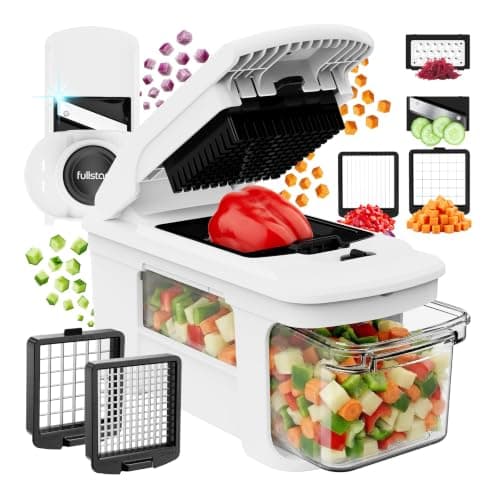
Even manual dicing
Fullstar Pro XL Vegetable Chopper & Mandoline
The best-selling push-down dicer: press the lid and vegetables fall through a grid into neat, even cubes.
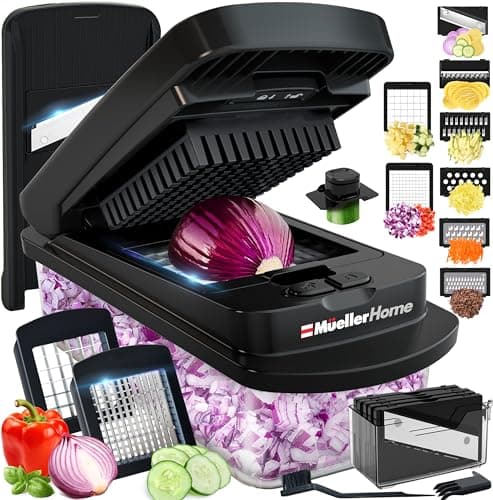
Most blade options
Mueller Pro-Series 10-in-1 Vegetable Chopper
A push-dicer with the widest blade set here — eight inserts covering dice, slice, grate and spiralize.
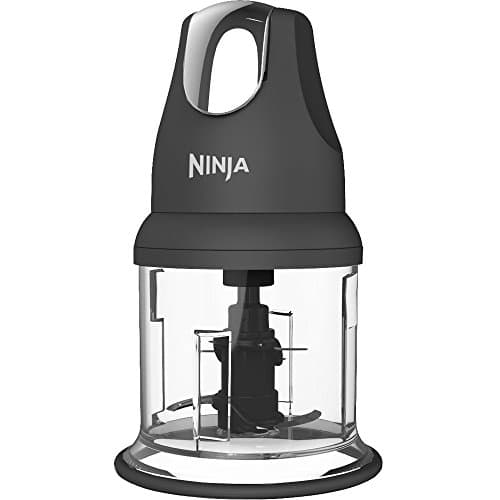
Fast electric chopping
Ninja Express Chop (NJ110GR)
The electric chopper to beat: a 200-watt, one-touch bowl that turns onions and nuts to an even mince in seconds.
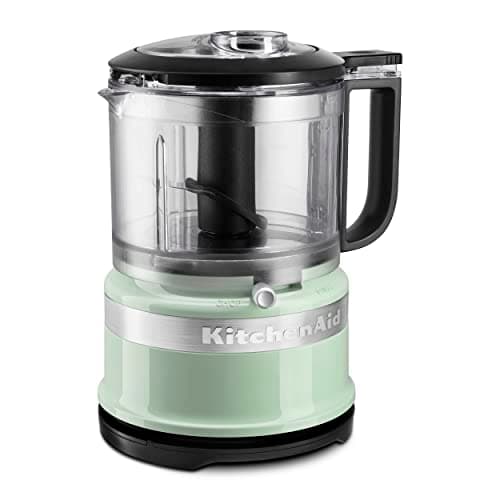
Neatly built electric chopper
KitchenAid 3.5-Cup Food Chopper (KFC3516)
A tidy 3.5-cup chopper with two speeds and a drizzle spout — the built-a-bit-nicer electric option.
#ad · As an Amazon Associate we earn from qualifying purchases.
Questions
Frequently asked
Can you put a vegetable chopper in the dishwasher?
How do you get food out of a dicing grid?
How do you clean a chopper blade safely?
How do I get the garlic smell out of a food chopper bowl?
Why is my chopper blade rusting?
Which chopper is easiest to clean?
Keep reading
Related
Receipts
Sources
- Amazon listing - Fullstar Pro XL Vegetable Chopper & Mandoline (top-rack dishwasher safe for chopper and accessories; box contains 4 stainless blades, 1 cleaning brush, 1 finger guard and a 1.8 L container)
- Amazon listing - MUELLER HOME Pro-Series 10-in-1 Vegetable Chopper, model MC-780 (dishwasher safe dismantled; 8 blades, 1.2 L container, food holder)
- Amazon listing - Ninja Express Chop NJ110GR (bowl, blades and lid stated dishwasher safe)
- Amazon listing - KitchenAid 3.5-Cup Food Chopper KFC3516 (drizzle basin in the lid, two speeds plus pulse)
We do not run a testing lab and we do not pretend to. Specifications come from the manufacturer's own published documents and from published standards; prices come from the live Amazon API. Where a figure is not published, the page says “not published” rather than guessing. Read the full method.