Nothing on this page is about power. Tomatoes, onions, chilli and coriander are soft; any processor here reduces them to liquid in about eight seconds, and liquid is exactly what you do not want. Salsa is a pulse-control problem, and the machine that suits it best is the one with a responsive pulse and a bowl that is not too big for the batch.
Bowl size, and why bigger is worse here
A batch of salsa — four tomatoes, half an onion, a couple of chillies and a handful of coriander — is about three cups of ingredients. In a 14-cup bowl that spreads into a thin ring: the pieces near the blade get pulverized while the ones at the edge stay whole, so you end up with pink liquid andchunks of raw onion. In an 8-cup bowl the same quantity stays in the blade’s path and cuts evenly.
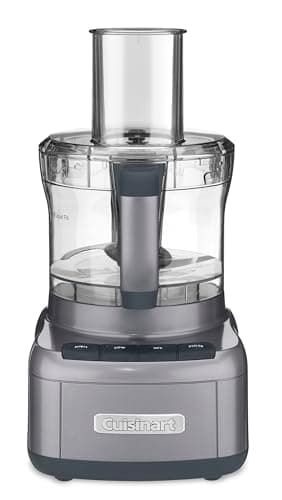
That is why the Cuisinart Elemental 8-Cup Food Processor (FP-8SV) is the pick for most people making salsa. Eight cups is the right size for a normal batch, and its plainest feature is its best one here: a simple on/off/pulse control that does exactly what you press, with no preset program deciding how long a pulse should last.
The order that keeps it chunky.Pulse the hard aromatics first — onion, garlic, chilli — three or four times, alone, until they are evenly minced. Only then add the tomatoes and pulse two or three more times, watching the bowl rather than the clock. Coriander and lime go in last, off the machine, stirred by hand. Doing it in one go is how salsa turns pink: the tomatoes over-process while the onion is still coarse.
When to size up
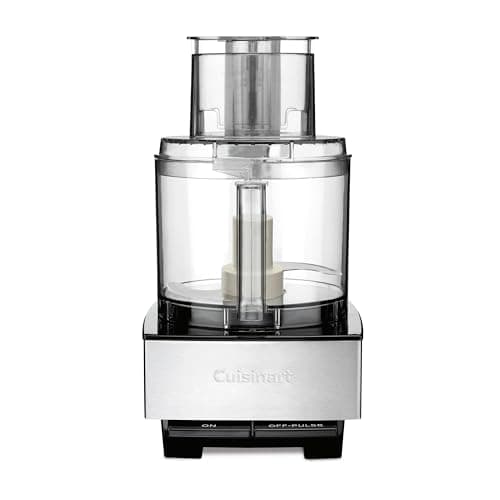
For party quantities, the Cuisinart 14-Cup Food Processor (DFP-14BCNY) earns its bowl: a triple batch fits in one load, and at that volume the food fills the bowl properly so the evenness problem disappears. It is also the machine with the fewest parts to wash, which matters after something as messy as salsa.
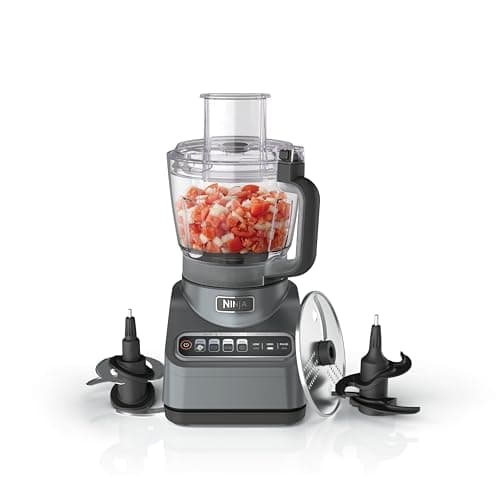
The Ninja Professional Plus Food Processor (BN601)is the value choice and a good one, with the caveat that its Auto-iQ preset programs are the wrong tool for this recipe — a program runs for a fixed time and salsa needs you to stop when it looks right. Use the manual pulse and ignore the presets, and it does the job for considerably less money than either Cuisinart.
How they compare for this job
| Machine | Bowl | Controls | Best salsa batch |
|---|
| Cuisinart Elemental 8-Cup Food Processor (FP-8SV) | 8 cups | On / off / pulse | One normal batch — the right size |
| Cuisinart 14-Cup Food Processor (DFP-14BCNY) | 14 cups | On / off / pulse | Double or triple, for a crowd |
| Ninja Professional Plus Food Processor (BN601) | 9 cups | Manual pulse plus Auto-iQ presets | One batch on a budget — use pulse, not presets |
Pico de gallo is a different tool entirely
If what you want is pico de gallo — distinct cubes of tomato and onion, not a sauce — no food processor will give it to you. A processor cuts by impact, so it produces irregular pieces and releases juice. Pico needs a knife, or a push-dicer that presses food through a grid into even cubes. Our chopper roundup splits the category on exactly that line: bladed choppers mince, push-dicers cube.
For a single serving of blended salsa, the mini processors handle it fine — and a food chopper is arguably the better small-batch tool, since it is quicker to wash. The full-size machine earns its place once you are making enough to keep in the fridge.
Why not a blender
A blender vortex pulls everything down onto the blades continuously, so there is no such thing as a coarse cut — you get a smooth, aerated, pale sauce. That is genuinely the right texture for a cooked or restaurant-style salsa roja, and if that is what you want, use one. It is the wrong tool for a chunky fresh salsa, and it is why so many home batches come out watery and pink. Food processor vs blender covers the general case; salsa is one of the clearest illustrations of it.
How we picked
Tools we claim to have lab-tested: 0
Every site in this category tells you they ran twenty machines through a lab. We have not, and we say so. Here is what we do instead: read the manufacturer's manual and spec sheet, record the published bowl capacity, motor rating, blade and disc counts and materials, cross-check the warranty against the manufacturer's own warranty document, and cite all of it so you can check the work. Prices come live from Amazon's API and disappear rather than go stale.
The scores above are judgments from that documented research — not test results. The full rubric, including what disqualifies a product, is published in full.