A mandoline is the fastest route to uniform slices there is — paper-thin potatoes for a gratin, even cucumber for pickles, waffle-cut fries — and it is also the single most dangerous tool in a home kitchen. Hand surgeons have a name for the injury. That combination, genuinely useful and genuinely hazardous, is why this category deserves more care than a listicle gives it, and it is why we wrote a mandoline safety guide instead of burying the warning in a caption.
What a mandoline is for — and when a grater is the better tool
A mandoline slices and, with the right blade, juliennes. It is the tool when you need many even slices and you need them fast, and nothing else in the drawer matches it for that. It is the wrong tool for grating cheese, for a couple of slices you could do with a knife, or for anyone unwilling to use the hand guard every single time. For grating — cheese, carrots, zest — a box grater is faster, safer and more versatile, and a rotary grater keeps your knuckles clear of hard cheese entirely. This hub covers all three because they answer the same underlying question: how do I turn a block or a vegetable into even, small pieces quickly.
The specs that decide a mandoline
Three things separate a good mandoline from a frustrating one. Sharpness: a dull blade is more dangerous than a sharp one because it needs force, and force is when hands slip — the razor-sharp Japanese blades cut with almost no pressure. Adjustability: a dial that gives you a real range of thicknesses, repeatably, is what makes the tool worth owning over a fixed slicer. And the guard: the food holder is the only thing between your fingertips and the blade on the last few slices, and a holder that grips awkward shapes is worth more than any other feature. We weight safety as heavily as cut quality, because a beautiful slicer you are scared to use is a drawer ornament.
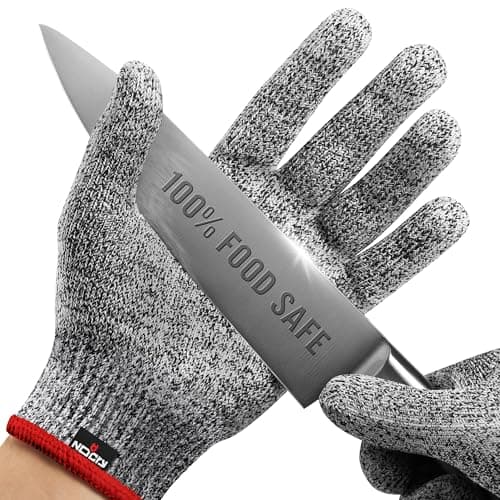
The rule that prevents the injury.Use the hand guard for the whole vegetable, and when the piece gets too small to hold safely in the guard, stop — the last slice is the one that gets people. A cut-resistant glove is a cheap second layer. The full method is here.
Graters: box vs rotary
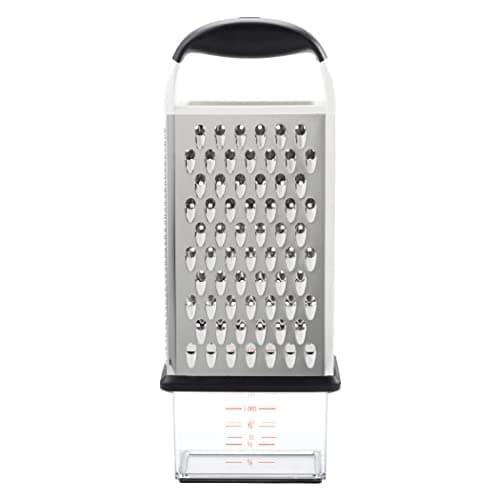
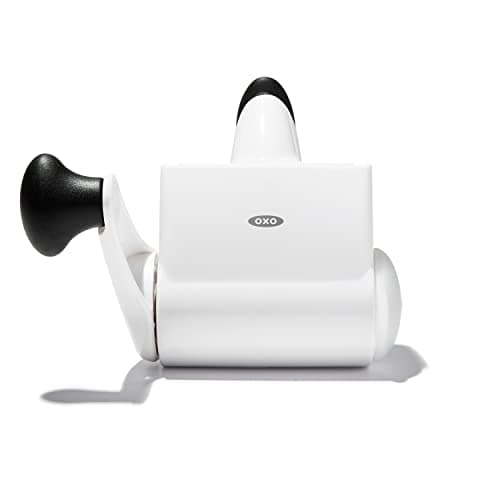
A four-sided box grateris the most versatile grating tool you can own — coarse and fine shreds, a slicing side, a zesting side — and a good one has a non-slip base and a container that catches and measures what you grate. A rotary grater does one job, hard cheese, and does it fast and safely: you crank a handle and the drum keeps your fingers well clear, which makes it the neat choice for grating parmesan straight onto a plate. We rank both, and we are clear about which job each is for, so you do not buy a rotary grater and then wish it could handle carrots.
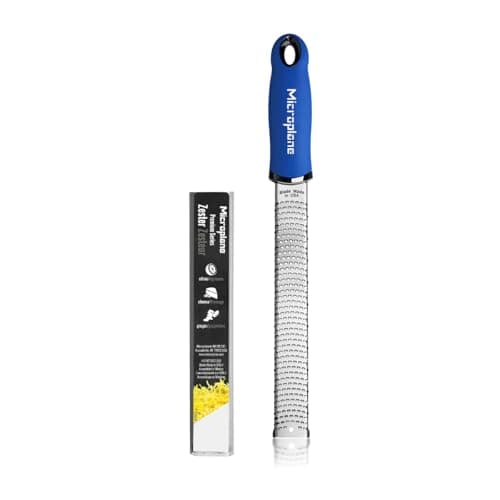
The third grating shape is the flat handheld rasp — a zester. It is the finest cut in the category and the only one that takes citrus rind without dragging up the bitter pith, which also makes it the tool for whole nutmeg, fresh ginger, garlic paste and parmesan fine enough to melt on contact. It is nothing but a blade and a handle, so we rank the five picks on the one thing that decides them: what each maker actually publishes about how that blade was cut.
Every pick carries a live Amazon price and a plain skip line. Slicing and grating are also two of the jobs a food processor does with a disc, so if you already own one, read the food processor roundup before adding another tool to the drawer.
If this would be your first mandoline, start with the beginner pagerather than the rankings. It orders the same slicers on a criterion nobody else uses — how many times each one makes you handle a loose, bare blade — and it treats the cut-resistant glove as part of the purchase rather than an accessory.
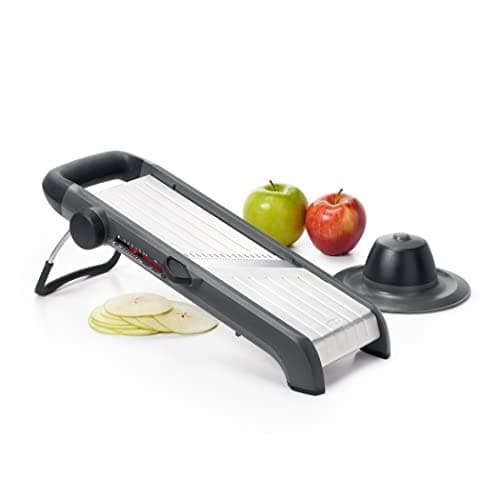
The OXO Good Grips Chef's Mandoline Slicer 2.0is the best mandoline for most people, and the reason is not just that it cuts well — every mandoline here cuts well. It is that OXO pairs a wide, repeatable range of thickness settings with a food holder you will actually keep using. A mandoline is the fastest way to slice a bag of potatoes into even coins, and it is also the tool most likely to take the tip off a finger. The one to buy is the one that makes the safe way the easy way.
Read this before you read the rankings: a mandoline is a fixed blade
Unlike a knife, a mandoline blade does not move — your hand does, driving food across an exposed, razor-sharp edge at speed, again and again. That is exactly why it slices so evenly, and exactly why emergency rooms see mandoline injuries constantly. The blade cannot tell a potato from a knuckle. Almost every serious cut happens the same way: the food gets small, the guard feels like a nuisance, the cook does “just the last few” with bare fingers, and the blade does what it was built to do. So the honest first question is not which mandoline is sharpest — it is whether you will use the guard every single time. If the answer is no, size down to a box grater or a push-dicer instead. We walk through the safe method in full in our mandoline safety guide.
Why the OXO wins, and when it does not
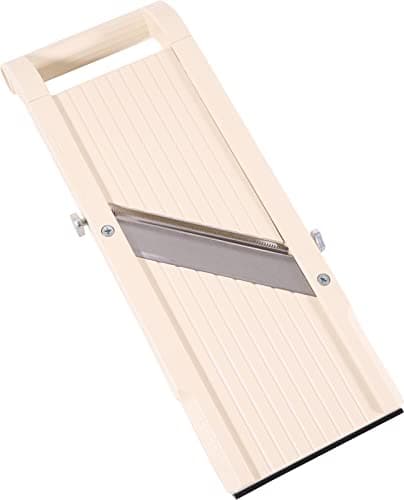
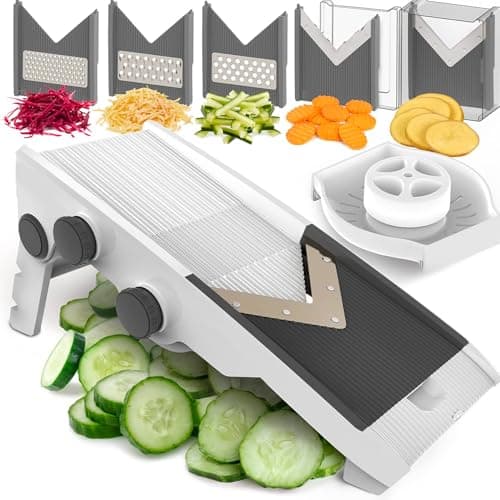
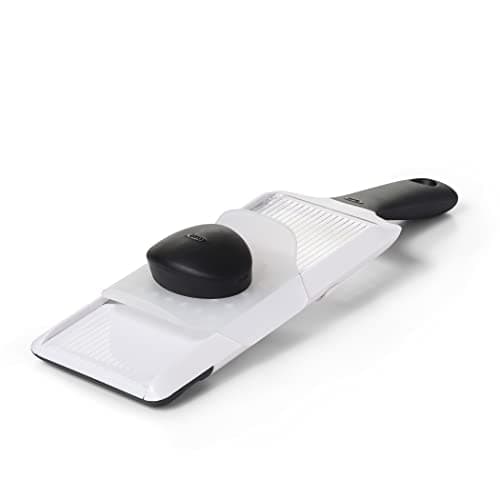
The OXO takes the top spot because its included food holder grips the vegetable firmly and keeps your hand a real distance above the blade, and because its dial steps through a wide run of thicknesses you can actually repeat. The Benriner Super Slicer (Japanese Mandoline)is the sharper, more precise cut — it is the slicer a lot of professional kitchens quietly rely on — but its guard is minimal and it is unforgiving of a careless hand, so it ranks second and belongs to cooks who will pair it with a cut-resistant glove. The Mueller Austria Multi-Blade Adjustable Mandoline is the value pick: five blades and an adjustable dial for roughly a third of the premium price, with a plastic frame that flexes a little under hard pressure. And the OXO Good Grips Hand-Held Mandoline Slicer is the drawer-sized option for a few quick slices over a bowl, when hauling out a full countertop slicer is more than the job needs.
The one rule that matters.Whichever you buy, use the hand guard from the first slice, and stop the moment the piece gets too small for the guard to hold — that stub is not worth a stitch. A cut-resistant glove on the guiding hand is cheap insurance the pros wear for a reason. The full method is in the safety guide.
What to match to your kitchen
Buy the OXO Good Grips Chef's Mandoline Slicer 2.0 if you want the best all-round balance of clean cuts, adjustability and a guard that works. Step up to the Benriner Super Slicer (Japanese Mandoline) if you slice often, want the sharpest possible result, and will respect it. Take the Mueller Austria Multi-Blade Adjustable Mandoline if you want most of the capability for a fraction of the outlay. And keep the OXO Good Grips Hand-Held Mandoline Slicerin a drawer for the small, occasional jobs. Every pick below carries its cut range and a plain line on who should skip it — and if you mostly need shredded cheese or grated vegetables rather than slices, a box grater is the safer, simpler tool.
If this would be your first mandoline, read the beginner pagebefore this ranking. It reorders these same slicers on a different criterion — how many times each one makes you handle a bare, loose blade — and it makes the case that a first mandoline is two purchases, not one.