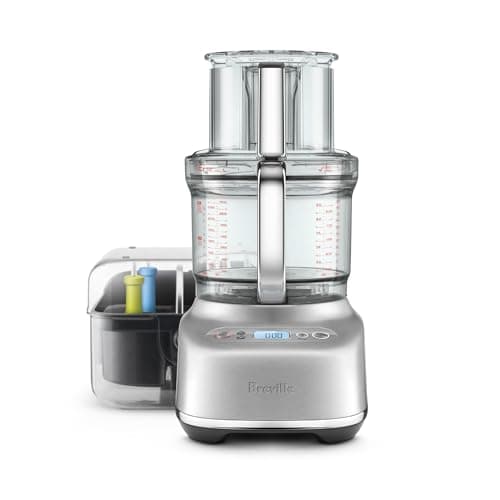
For nut butter at home, use the food processor — and if you are buying one for this job, the Breville Sous Chef 16 (BFP810) is the machine with the most headroom in this catalog, with a published 1,450-watt motor and a 16-cup bowl. The reason is not power. It is shape: a processor’s wide, flat bowl keeps a thickening paste spread across the blade’s path, while a blender’s tall, narrow jar lets the paste climb the walls and leaves the blade spinning in air. A high-powered blender with a tamper solves that and is genuinely excellent at nut butter; a blender without one is the single most common way this recipe goes wrong.
We do not stock countertop blenders, and we are not going to pretend otherwise. This site covers food processors, choppers, mandolines, immersion blenders and manual prep tools, so the four picks on this page are all processors. The blender half of the comparison below is a mechanism argument about jar geometry and tampers that you can check against any blender’s own manual — not a ranking of blenders we have not covered. If you already own a jug blender with a tamper, use it; the rest of this page tells you how.
The four stages, and where each machine struggles
Nut butter is not a blending job, it is a grinding job that passes through four textures with no shortcut. Nuts become crumbs. Crumbs become a dry, sandy meal that looks like it will never come together. The meal gathers into a stiff ball that climbs the side of the vessel and makes the motor labour — this is the stage people give up at. Then the oils release and it turns glossy and pourable, and another couple of minutes makes it genuinely smooth.
Stage three is where the two machines part company. In a processor, the ball climbs the bowl wall and sits there; you stop, scrape it down with a spatula and carry on, and because the bowl is wide the paste comes back into contact with the blade immediately. In a tall blender jar, the same ball wedges above the blade and forms an air pocket underneath it — the motor screams, nothing moves, and the mixture starts to scorch at the bottom. A tamper exists for exactly this moment: it pushes the mass back down past the blade while the machine runs.
Head to head, on the one recipe
| Factor | Food processor | Countertop blender |
|---|
| Vessel shape | Wide and flat — paste stays in the blade’s path | Tall and narrow — paste climbs and cavitates |
|---|
| Needs a tamper? | No — you stop and scrape down | Effectively yes, unless you like stopping every 20 seconds |
|---|
| Minimum batch | Works down to about a cup of nuts in an 8-cup bowl | Needs enough volume to reach the blade — usually more |
|---|
| Typical time | Longer: eight to fifteen minutes with scrape-downs | Shorter with a tamper and a high-speed motor |
|---|
| Main failure mode | Motor heat on a long continuous run | Air pocket under the blade; scorching |
|---|
| Also useful for | Slicing, shredding, dough, dicing | Smoothies, soups, drinks |
|---|
| Washing | Bowl, lid, blade — oily but simple | Tall jar, hard to reach the base by hand |
|---|
The processors worth using, and why in this order
The Breville Sous Chef 16 (BFP810) leads because the two things that fail on this recipe are heat and room, and it publishes the most of both: 1,450 watts and a 16-cup bowl, so a full pound of nuts has space to move rather than packing into a corner. It is also the most expensive machine in the catalog, which is the honest counterweight.
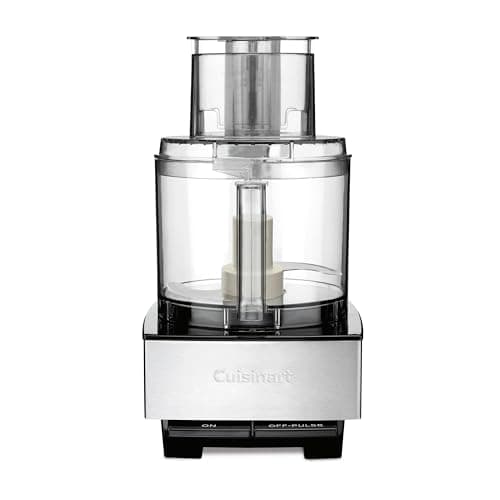
The Cuisinart 14-Cup Food Processor (DFP-14BCNY) is the one most people should actually buy for this: a published 720 watts and a 14-cup bowl, with only three parts to wash afterwards — which matters more than it sounds when the parts are coated in oily paste. It is the better value by a wide margin and the bowl is wide enough that scrape-downs are quick.
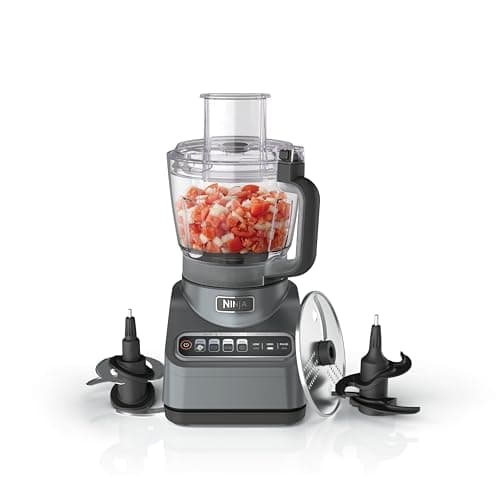
The Ninja Professional Plus Food Processor (BN601) publishes 1,000 peak watts on a 9-cup bowl. Read the word peak carefully: it is a momentary figure, not a continuous one, and the continuous rating is unpublished — which is precisely the number that matters on a twelve-minute grind. It is the value pick and it will make nut butter, in smaller batches, with more breaks.
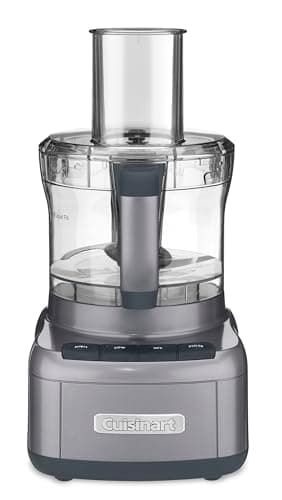
The Cuisinart Elemental 8-Cup Food Processor (FP-8SV) is here for the people making one jar at a time: 8 cups, a published 350 watts, and simple on/off/pulse controls. A smaller bowl is genuinely an advantage on a small batch, because a cup of nuts in a 16-cup bowl spreads too thin to be caught by the blade. It is the least motor on the page, so work in two-minute bursts and expect the thermal cut-out to be a real possibility if you push it.
The method that works in either machine
Roast the nuts first. Twelve minutes at 350 °F, cooled for five, then into the bowl. Warm nuts release oil more readily and this one step shortens the whole process more than any upgrade on this page.
Work in bursts, not one long run. Two to three minutes, then scrape down. Most manufacturers publish a maximum continuous run time and fit a thermal cut-out; if the machine stops and will not restart, it has protected itself and usually needs half an hour. Bursts with scrape-downs are also faster overall, because redistributing the paste puts fresh material against the blade.
Add nothing until the end. Nuts contain enough oil to do this unaided; a splash of neutral oil added early mostly makes the paste slippery and harder to grind. Salt, honey or oil go in once it is already glossy.
In a blender, use the tamper from stage two. Do not wait for the air pocket to form. And if your blender has no tamper, stop and use the processor instead — that is the whole recommendation on this page in one sentence.
What about an immersion blender?
No. A stick blender has a small open bell designed to pull thin liquid through it, and nut butter is neither thin nor liquid for most of the process. It will stall in the meal stage and the motor has no way to shed the load. Immersion blenders are excellent at the opposite problem — soups, emulsions, mayonnaise — and we cover what they are genuinely good at separately. For a paste from a hard, dry ingredient, you want a bowl and a flat blade.
Why this page is not the nut butter roundup
The best food processor for nut butter ranks processors against each other on thermal headroom and bowl seal, and food processor vs blender compares the two machine classes across every job in the kitchen. This page answers the single question people actually type — which of the two for this one recipe — and the answer rests on vessel geometry, which neither of those pages makes its spine. All three link to each other.
Which to use, in one line each
You own a processor. Use it. Roast the nuts, work in bursts, scrape down, and give it twelve minutes.
You own a high-powered blender with a tamper. Use it, tamping from the meal stage onward. It will be faster than the processor.
You own a jug blender with no tamper. Use the processor, or buy one. This is the combination that burns motors and scorches batches.
You own neither and want one machine. Buy the processor. It makes nut butter acceptably and it also slices, shreds and does dough; a blender makes better smoothies and cannot do any of those.
What we are not claiming
We have not tested these machines and we have not made nut butter in them. Every watt figure, bowl volume and control description above is the manufacturer’s own published wording, cited below — including Ninja’s “peak” qualifier, which we repeat rather than smooth over, and the absence of a published continuous rating, which we state rather than fill in. No blender is ranked here because this site does not cover countertop blenders. The stage-by-stage description and the tamper argument are mechanism, checkable against any blender manual. Prices come live from Amazon with the date attached.