An immersion blender — a stick blender, a hand blender — is the blender you bring to the food instead of pouring the food into a blender. You blitz soup smooth right in the pot, whip a small batch of mayo in a jar, or puree a sauce without decanting anything hot into a jug. It is the cheapest way to make soup, the safest way to blend something scalding, and — usefully for us — a category where the specs, not a test kitchen, decide the winner.
Why it beats a countertop blender for the jobs it is for
Pouring a pot of boiling soup into a sealed countertop blender is how people end up with soup on the ceiling and a burn on the wrist: hot liquid expands and can blow the lid off. An immersion blender removes the pour entirely — you blend in the pot the soup cooked in. It also washes in seconds (rinse the shaft, done) versus a jar, a lid and a gasket. What it gives up is the sheer smoothness a high-power jug blender achieves on a green smoothie; for soup, sauce and puree it is not just adequate, it is the better tool. If you are weighing the two, that trade-off is exactly what our comparison guides exist to settle.
The three specs that separate them
Powerdecides what it can handle: a 200–300 watt stick blitzes soup happily, while thick loads — hummus, nut butter, dense purees — want 500 watts or more before they stop bogging down. Shaft reach is the spec nobody prints on the box and everyone wishes they had checked: a short shaft cannot reach the bottom of a tall stockpot without tipping it, so if you make big batches, an 8-inch arm matters. And the guard shapeis what separates a clean job from a splattered one — a bell-shaped, belled base reduces suction and spatter and, on the better models, will not scratch a non-stick pot.
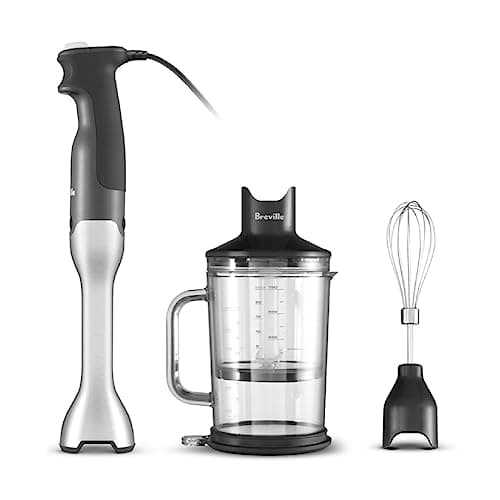
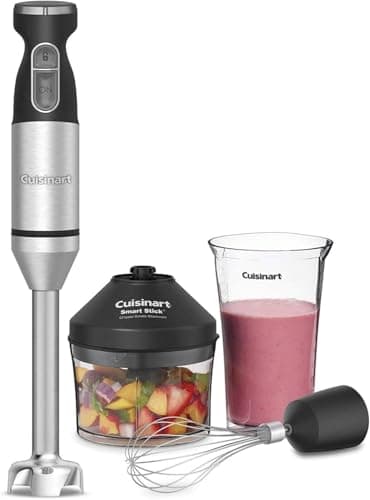
Attachments change the value.Many sticks include a whisk and a chopper bowl. If you would otherwise buy a separate mini chopper or a hand whisk, a blender that bundles them is doing three jobs for one price and one drawer slot — genuinely worth more than the raw motor spec suggests.
And if the cord itself is the problem — over a burner, across an island with no outlet — there is now a cordless answer. No cordless maker publishes a wattage, so the cordless immersion blender roundup ranks five on what they do state: whether the battery is in the box, whether it comes out, and what each runtime claim actually rests on.
One buyer reorders this entire hub. For weaning, watts stop mattering — a steamed carrot asks nothing of a motor — and splash control, whether the guard is safe in a non-stick pan, and how many parts you wash twice a day take over instead. The best immersion blender for baby food ranks four of the sticks below on those three things, and it is honest about the spec none of them publishes: a minimum volume.
How we rank them
We score power, reach and build, the attachment set, and how easy each one is to clean, then say plainly who each is not for. A powerhouse metal stick is wasted on someone who only makes thin soup twice a winter; a bargain plastic one is the wrong buy for a daily cook who wants it to last a decade. Prices are live from Amazon and dated on the page. Blending hot liquids has its own small set of rules worth knowing before your first pot — the short version lives in the roundup below, and the reachable-monetization line: every pick has a visible buy button with a live price.
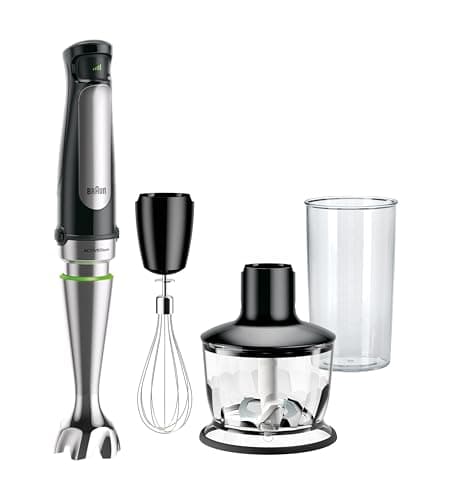
The Braun MultiQuick 7 is the best immersion blender for the most people, and the reason is not raw power. It is a smooth, trigger-controlled motor under a splash-control bell — you dial the speed with your finger and the shape of the guard keeps hot soup in the pot instead of on your arm. It does the common jobs to a high standard and it is genuinely pleasant to use. If you want one stick blender and you do not want to think about it, buy it and stop reading.
Why an immersion blender beats a countertop blender for hot soup
The case for a stick blender starts with a safety problem the countertop jug creates. To blend a pot of hot soup in a full-size blender you have to pourit in — ladling scalding liquid into a tall jug, then sealing a lid over steam that expands the moment the blades spin and can push the lid off. An immersion blender skips all of that: the shaft goes straight into the pot on the stove, so there is no dangerous transfer and no pressurized lid. You blend where the soup already is, purée it as smooth as you like, and wash one shaft instead of a jug, a lid and a gasket.
The countertop machine still wins for a few jobs — a truly silky restaurant purée, or anything that needs to move a lot of thick liquid around fast. But for the everyday job most people actually reach for a blender to do — soup, sauce, a smoothie for one, a bit of mayo — the stick is safer, faster to clean, and takes up a drawer instead of a shelf. That last job has its own ranking, decided by the jar each blender ships with rather than by watts: the best immersion blender for mayonnaise. We settle the wider question in food processor vs blender.
The three specs that separate a good stick blender from a poor one
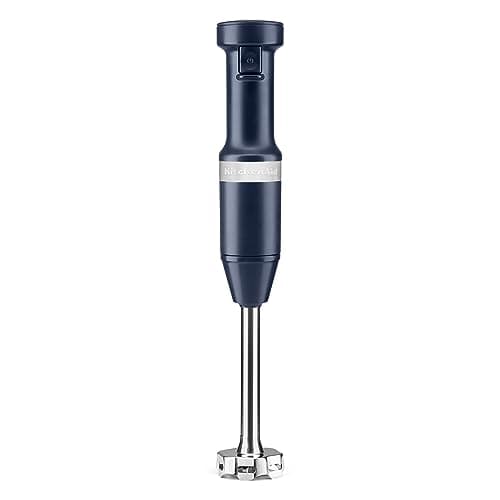
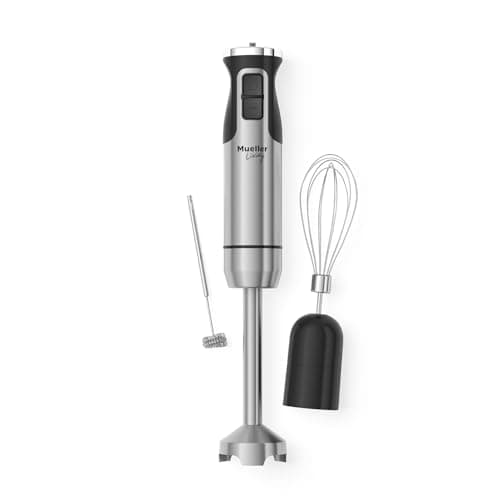
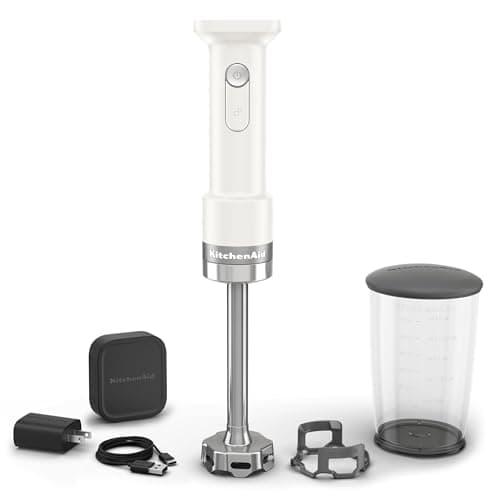
Almost every immersion blender looks the same in the box, so the differences come down to three things. Powerdecides what it can handle: 180–300 watts is plenty for soup and smoothies, but thick purées, nut butters and stiff hummus want the 500 watts of the Mueller or the 600 watts of the All-Clad before the motor bogs down. Shaft reachdecides which pots it fits: the KitchenAid’s 8-inch arm reaches the bottom of a tall stockpot without tilting it, where a short shaft leaves you fishing. And the guard or bell shapeat the business end decides how much it splatters and whether it scratches your pans — the belled Braun and Breville stay clean and are safe on non-stick, while an open, flat guard flings more up the sides.
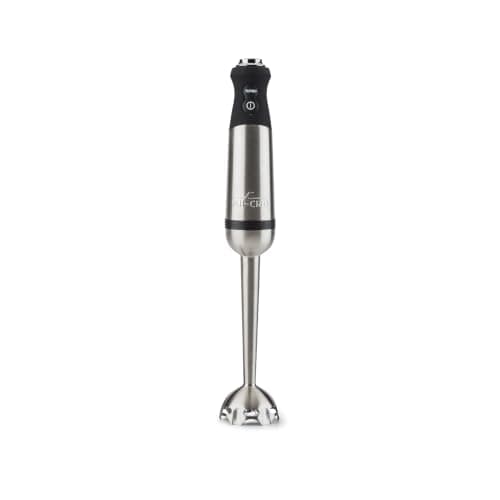
The flip conditions.If you make thick purées or nut butter, skip the control argument and buy on watts — the All-Clad Stainless Steel Immersion Blender is the strongest here. If you cook in tall stockpots, the KitchenAid Variable-Speed Corded Hand Blender (KHBV53) and its long arm is the practical pick. And if price is the whole decision, read the budget picks— a 500-watt stick costs remarkably little.
The table: published motor and what a year of use costs
Watts are printed in each manufacturer’s own words, because they are not measured the same way across brands and Braun does not publish a figure at all — where it is not published, the cell says so rather than carrying a guess. The last column is the honest answer to the wattage marketing: at normal use, a stick blender costs a dollar or two a year to run. It is not a reason to buy or skip anything.
Running cost assumes 3 minutes a day, 365 days a year, at 17.45¢ per kWh (US EIA, Electric Power Monthly — average residential price, US total, retrieved July 2026) — deliberately generous, since most kitchens run a stick blender for seconds at a time. Where a brand publishes no wattage, the cost cell reads “not published” rather than carrying a guess.| Machine | Published motor | Est. cost / year |
|---|
| Braun MultiQuick 7 (MQ7035X) | Not published | not published |
|---|
| Breville Control Grip Immersion Blender (BSB510XL) | 280 W | $0.89 |
|---|
| All-Clad Stainless Steel Immersion Blender | 600 W | $1.91 |
|---|
| Cuisinart Smart Stick Variable-Speed (CSB-179) | 300 W | $0.96 |
|---|
| KitchenAid Variable-Speed Corded Hand Blender (KHBV53) | 180 W | $0.57 |
|---|
| MuellerLiving Ultra-Stick 500W Immersion Blender | 500 W | $1.59 |
|---|
The takeaway from that last column is the point: electricity is not a factor in this purchase. Buy on control and guard design if you value a clean, easy blend, on genuine motor headroom if you make thick purées, and on shaft length if you cook in deep pots — not on a wattage number the marketing leans on.
Two jobs pull the ranking around enough to deserve their own pages. If you are buying for weaning, watts stop mattering almost entirely and splash control, pan safety and parts count take over — the best immersion blender for baby food reorders these same sticks on those criteria. And if the cord is your actual complaint, the cordless roundup is honest about what a battery costs you.