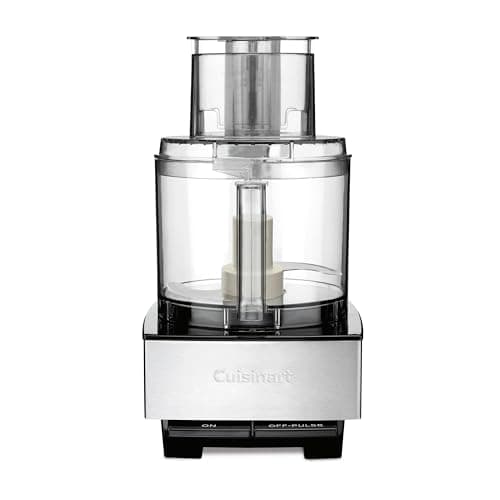
The best gift for a home cook is the tool they would buy for themselves and keep not buying. Our first choice is the Cuisinart 14-Cup Food Processor (DFP-14BCNY)— a big, simple, 720-watt processor that a family cook will use for a decade — but it is a large gift in every sense, and most of this list costs a fraction of it. Every pick below is a product one of our category rankings already put first or near it; here we explain each in the terms a gifter needs: why it lands, who it suits, and what to check before you order.
A note on method, because it matters for a gift: we do not own these tools and we have not tested them. The rankings come from the manufacturers’ published specifications, cited on every card below, and from a plain reading of what each tool is for. Prices are pulled live from Amazon and dated; where we have no verified price we show none. If you want a budget-first view instead, start with gifts under $50 or gifts under $150.
How to choose from this list
Match the tool to a job the recipient already does. If they feed a family or batch-cook, the processor. If they make soup, the immersion blender. If they cry over onions, the chopper. If they slice vegetables in quantity, the mandoline — with a glove. If they cook with lemons and garlic every night, the rasp and the press, which together cost less than a nice bottle of wine. If they make the mash at every holiday, the ricer. If they eat salad, the spinner. And if they own good knives, the board. You do not need to know what a “work bowl” is; you need to know what they cook.
| If the recipient… | Give them | Rough tier |
|---|
| Cooks for a family or batch-cooks | Cuisinart 14-Cup Food Processor (DFP-14BCNY) | Splurge |
|---|
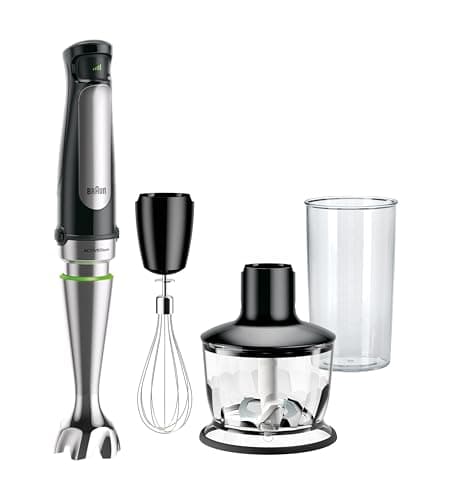
| Makes soup, sauces or smoothies | Braun MultiQuick 7 (MQ7035X) | Mid |
|---|
| Owns good knives and no wooden board | John Boos R-Board Reversible Maple Cutting Board (20×15) | Mid |
|---|
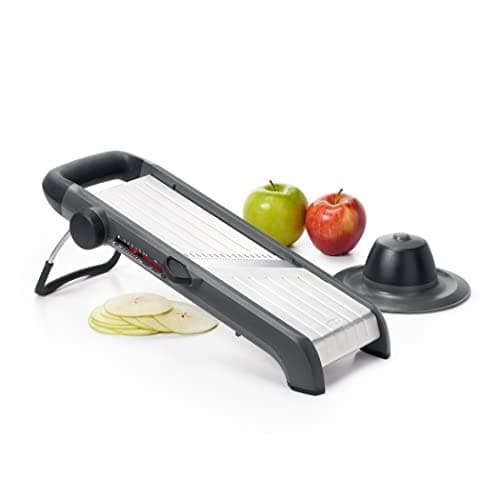
| Slices vegetables in quantity | OXO Good Grips Chef's Mandoline Slicer 2.0 (plus a cut glove) | Mid |
|---|
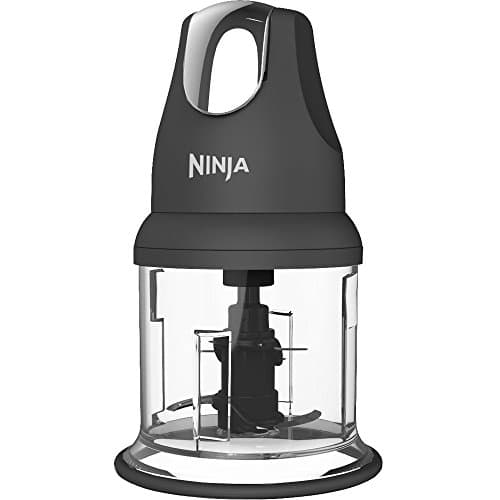
| Minces onions, garlic and herbs most nights | Ninja Express Chop (NJ110GR) | Under $50 |
|---|
| Makes the holiday mash | OXO Good Grips Stainless Steel Potato Ricer | Under $50 |
|---|
| Eats salad several times a week | OXO Good Grips Salad Spinner (Large) | Under $50 |
|---|
| Crushes garlic with the side of a knife | OXO Good Grips Garlic Press | Stocking |
|---|
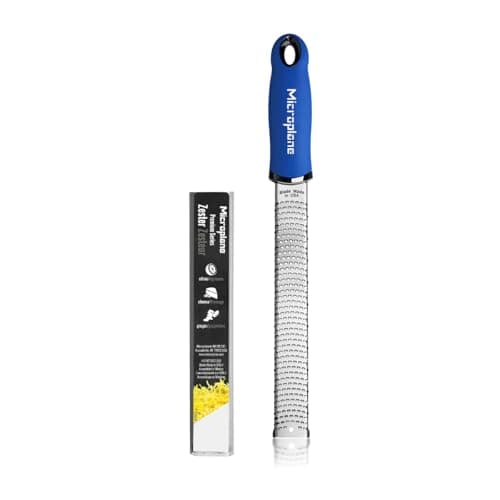
| Cooks with citrus, parmesan or ginger | Microplane Premium Classic Zester | Stocking |
|---|
Tiers are relative to each other, not price promises — the live price is on each card below and in the table above.
Why each one lands
Why it lands. The default full-size food processor: a 14-cup bowl, a 720-watt motor and only three parts to wash. It handles a whole batch of dough or a full head of cabbage without stopping to empty the bowl, and it has the shortest parts list to go wrong.
Who it suits. The cook who feeds a family or batch-cooks and has been making do with a blender or a knife. It is a big gift, and it is the one a serious home cook would choose for themselves.
Check before you buy. It is tall — assembled, it does not fit under most upper cabinets — and there is no smaller nested bowl for one shallot. A cook who lives alone and does small jobs should get the Mini-Prep instead. Full write-up in our Cuisinart 14-cup review.
Why it lands. Braun’s bell-shaped guard genuinely cuts splatter blending soup in the pot, and the trigger sets speed by pressure, which is the most intuitive control any stick blender has. The whisk and chopper bowl in the box make it three tools.
Who it suits. The cook who makes soup, sauces or smoothies and has no immersion blender, or has a cheap single-speed one they tolerate. It is the safest way to blend something hot, which matters for a cook who currently pours hot soup into a jug blender.
Check before you buy. It is pricier than the basic sticks and the attachments need a home. Someone who blends one pot of soup a month is honestly better served by the budget picks.
Why it lands. A 200-watt, one-touch chopper that turns an onion into an even mince in a couple of pulses and goes in the dishwasher. It is the cheapest electric tool on the site that changes how often someone cooks.
Who it suits. Anyone who cries over onions, minces garlic and herbs, or makes small batches of pesto and salsa. If they own no electric prep tool at all, this is where to start.
Check before you buy. Two cups is small — a big pot of soup means batches — and there is no pour spout. It minces rather than dices; a cook who wants neat cubes wants a push-dicer instead.
Why it lands. A stable, foldable mandoline with 21 thickness settings on a dial and — the part that matters for a gift — a food holder that actually works, so most home cooks can keep their fingers clear. It is the mandoline we would give to someone who has never used one.
Who it suits. The cook who slices vegetables in quantity for gratins, salads, chips or pickles and has been doing it with a knife. Safer than the Benriner for a less experienced hand.
Check before you buy. It is bulkier to store than a flat handheld slicer and one of the pricier mandolines. A recipient who slices a cucumber twice a year would be happier with a $20 handheld. Add a cut glove regardless — see the glove roundup.
Why it lands. It is the tool cooks mention when asked what they would replace first. Microplane publishes the process its blade is cut by (photo-etching), the steel, and where the blades are made, and the result takes the flavor off a lemon and leaves the bitter white pith behind. It also hangs on a magnetic knife strip, which is a small, daily pleasure.
Who it suits. Anyone who cooks with citrus, garlic, ginger, parmesan or nutmeg — which is most people who cook at all. If they already own a Microplane, buy something else; if they own a “zester” that came in a set, this is the upgrade they did not know existed.
Check before you buy. Microplane lists no blade cover for this model, so it should live on a strip or in a sleeve, not loose in a drawer. It is one grate size — fine rasp only — and does not shred; that is what a box grater is for.
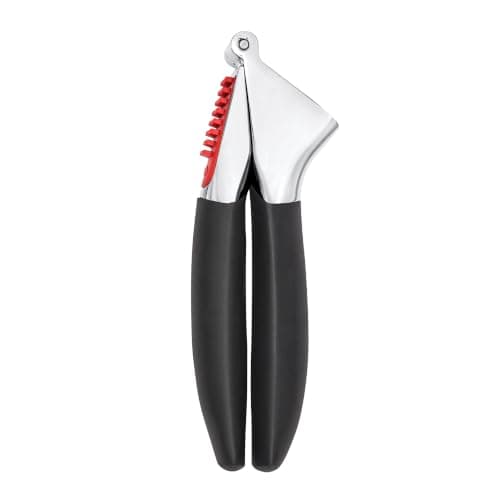
Why it lands. A die-cast press that takes unpeeled cloves and has a built-in cleaner that pushes the pulp back out of the holes. The peeling and the cleaning are the two reasons people stop using a garlic press; this one removes both.
Who it suits. The cook who crushes garlic most nights and does it with the side of a knife because the press they had was a chore. Not for a cook who makes garlic paste with salt on a board and likes it that way.
Check before you buy. It is bulkier in a drawer than a bare press because of the cleaner attachment. If the recipient has weak grip, the long-handled Kuhn Rikon in the splurge guide needs less force.
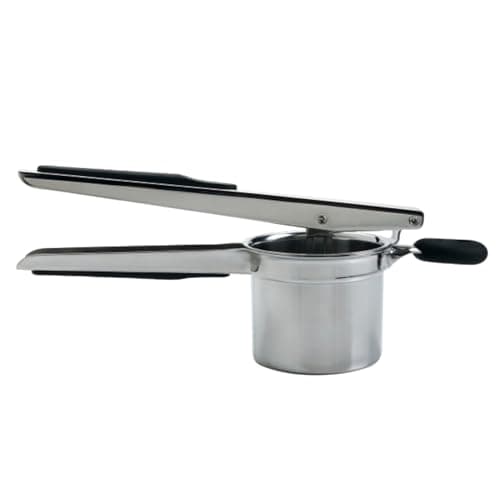
Why it lands. Lump-free mashed potatoes with almost no effort, and a hook that rests it on the rim of the pot so it can be worked one-handed. It also purees cooked cauliflower, apples and baby food.
Who it suits. The person who makes the mash at every holiday dinner. A ricer is also the tool a new parent did not know they wanted for baby food.
Check before you buy. One disc, one texture. A cook who wants coarse and fine options should get a ricer with interchangeable discs instead — compared in the ricer roundup. And if they mostly want sauces and skin-on purees, a food mill is the better gift.
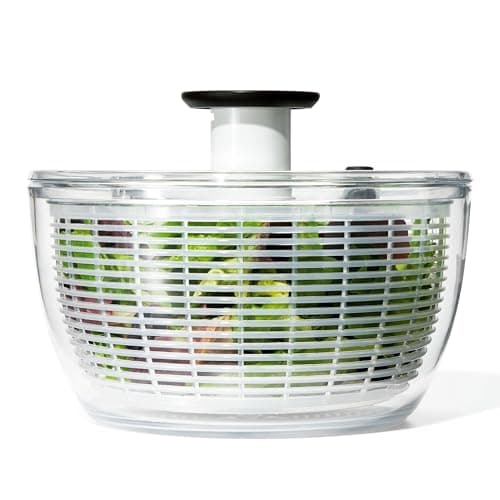
Why it lands. One-hand pump, a brake button, and a bowl nice enough to serve from. Wet greens are why dressing pools at the bottom of the bowl, and a towel never quite fixes that.
Who it suits. Anyone who eats salad more than once a week and has cupboard space for a large bowl. It also rinses and dries herbs and berries, which is where a lot of owners end up using it most.
Check before you buy. It is big. In a small kitchen with no storage it becomes the thing that lives on top of the fridge, and a clean towel dries greens for free. The pump is the part that wears over years.
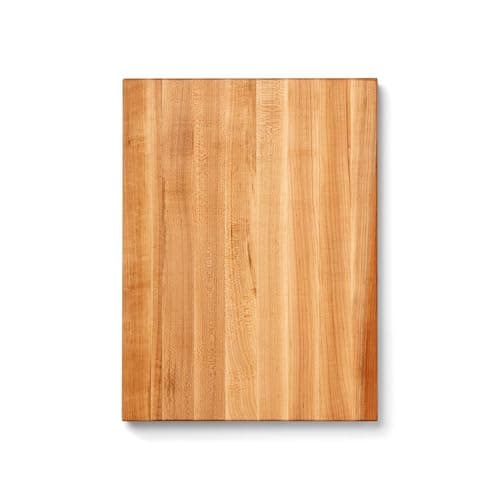
Why it lands. Twelve pounds of edge-grain maple, an inch and a half thick, reversible, made in the USA. It does not move on the counter, it is kind to knife edges in a way no plastic board is, and it is the kind of object people keep for thirty years.
Who it suits. A cook with good knives, a permanent spot on the counter for it, and the temperament to oil a board a few times a year. It is the classic serious-cook gift for a reason.
Check before you buy. Hand wash only, never the dishwasher, and it needs periodic oiling — a small ongoing commitment. A cook whose workflow is raw chicken straight into the dishwasher should get plastic instead; the boards are compared in the cutting board roundup.
What not to give a cook
Single-purpose electric gadgets: egg cookers, one-vegetable choppers, electric can openers. Bundled processor sets with fourteen accessories, eleven of which will never leave the box. And anything that duplicates what they own — a second box grater is the most common wasted kitchen gift there is. If you cannot tell what they own, the safe gifts are the ones that wear out or get lost: peelers, a rasp, a glove.