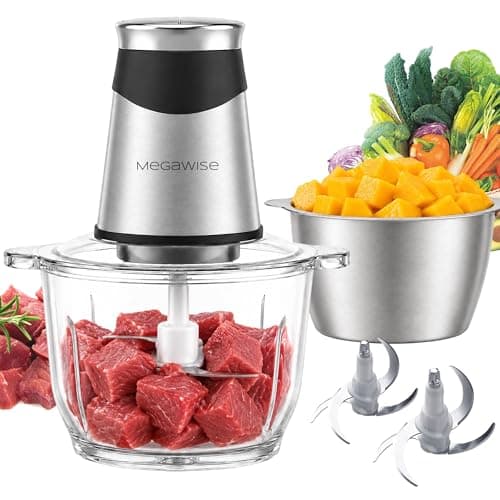
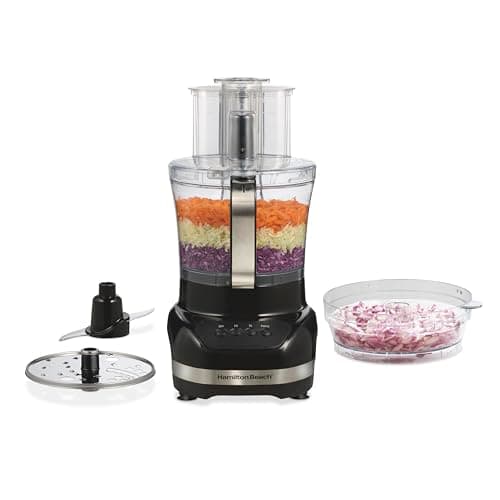
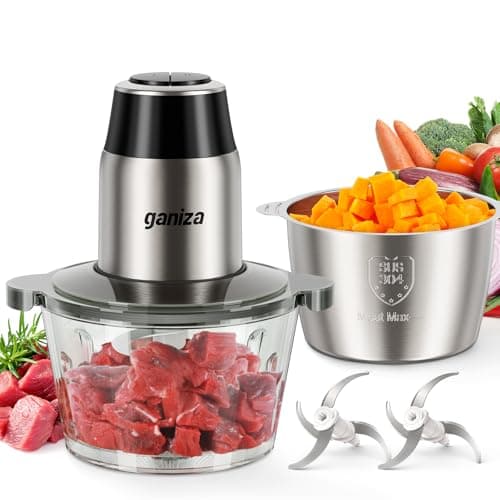
The Ganiza Dual-Bowl Food Processor, 8-Cup Glass + 8-Cup Stainless (GC10)is the dual-bowl processor to buy for most kitchens, and it is also the cheapest machine on this page — which is unusual enough that the reason matters. Its two bowls are the SAME size, one glass and one stainless, so the second bowl is not a smaller bowl for smaller jobs: it is a second full bowl you can dedicate to raw meat, garlic or chile and keep away from the one you make salsa and hummus in. If your budget is the whole question it is both our top pick and the budget pick here, and the Hamilton Beach Big Mouth Duo Plus 12-Cup is the one to buy instead if what you actually want is a big 12-cup bowl with a small chopper bowl nested inside it.
Every price in the table above is pulled live from Amazon and carries the date it was last checked. Where we have no verified live price we show none.
What the second bowl is really for
There are two completely different products being sold under the same phrase, and buyers get caught between them constantly.
The first is two bowls of the same size in different materials. That is the Ganiza, and the point is separation and staining: glass does not hold the smell of garlic or the color of turmeric, stainless does not scratch or craze, and having two means a raw-protein bowl and an everything-else bowl. Nothing about it gives you more capacity.
The second is a large bowl with a small bowl that nests inside it. That is the Hamilton Beach Big Mouth Duo Plus 12-Cup: 12 cups for a batch of slaw, and a 4-cup chopper bowl for a shallot, so you are not washing a 12-cup bowl to mince one thing. That is a capacity answer, and it is the one most people mean when they type “food processor with two bowls”.
Decide this before you compare specs. Same-size pair = cross- contamination and staining. Big-plus-small pair = not washing the big bowl for a small job. A machine that solves one does not solve the other, and no amount of wattage changes that.
What separates the three
The Ganiza Dual-Bowl Food Processor, 8-Cup Glass + 8-Cup Stainless (GC10)gives you the matched pair — 8 cups of glass, 8 cups of stainless — which is the cleanest version of the separation argument on this page and the reason it leads. The MEGAWISE 800 W Dual-Bowl Food Chopper, 2.2 L Glass + 1.2 L Stainless (AMJ-217A) is the harder-working one: a bigger published motor and a 2.2-liter glass bowl paired with a smaller 1.2-liter stainless bowl, so it is a hybrid of both ideas and the pick if you grind hard spices and nuts as well as chopping. The Hamilton Beach Big Mouth Duo Plus 12-Cupis the only full-size, name-brand machine of the three, with a wide feed chute and a reversible slicing and shredding disc that neither of the glass pairs can match — if you want to slice a bag of potatoes rather than pulse a bowl of them, it is the only real option here.
Note what none of them are. A dual-bowl processor is not a substitute for a premium full-size machine with an adjustable slicing dial and a dough blade; for that, the main food processor roundup and the mid-market picks under $200are the honest comparison. Nor are these mini choppers — for one-shallot jobs the mini roundup is cheaper and smaller.
Living with a two-bowl machine
- Storage is the real cost.A matched pair does not nest, so you are storing two bowls, two lids and two blade assemblies. Measure your cupboard before you commit — this is the single most common regret in the class.
- Glass is heavier than you expect. A full glass bowl of wet ingredients is a two-handed lift and will chip if you knock it against a tap. That is the trade for not having a plastic bowl that goes cloudy and smells of onion.
- Label the meat bowl. The whole benefit evaporates if the bowls get used interchangeably. A strip of tape on the base of one is the entire system.
- Check what each bowl ships with. On these machines the two bowls do not always take the same accessories, so a disc that fits one may not fit the other. The spec rows below list what each one comes with.
How we picked
Tools we claim to have lab-tested: 0
Every site in this category tells you they ran twenty machines through a lab. We have not, and we say so. Here is what we do instead: read the manufacturer's manual and spec sheet, record the published bowl capacity, motor rating, blade and disc counts and materials, cross-check the warranty against the manufacturer's own warranty document, and cite all of it so you can check the work. Prices come live from Amazon's API and disappear rather than go stale.
The scores above are judgments from that documented research — not test results. The full rubric, including what disqualifies a product, is published in full.