HUB 06 · Guides
Food Chopper vs Blender
These two get confused constantly, and they are barely related. One makes pieces, the other makes liquid, and the reason comes down to a single mechanical difference in the shape of the jar.
We earn a commission if you buy through our links. It does not change the price you pay, and it does not decide our picks — our selection criteria are published in full. How this works.
Buy a food chopper if you want your food in pieces, and a blender if you want it in liquid form. That is the whole answer, and it holds for every recipe. A chopper spins a blade through dry or barely-wet food and stops when you release the button, leaving pieces. A blender is built around a vortex that recirculates everything past the blades continuously until nothing is left to cut. Neither is a compromised version of the other.
The vortex is the entire difference
A blender jar is tall and narrow with a specific taper, and that shape is doing engineering work. Blades at the bottom throw liquid outward and up the sides; it falls back down the center and passes the blades again. The result is that everything in the jar gets cut repeatedly, which is how you get an even, smooth liquid — and why you cannot ask a blender for a coarse chop. It has no mechanism for stopping halfway.
A chopper bowl is short and wide, with no taper to speak of. Food is cut by the blade sweeping through it and then sits where it lands. Some of it gets hit more than the rest, which is why choppers give you an uneven result if you run them — and why every instruction for using one says pulse. It also means a chopper needs no liquid at all, which a blender very much does.
The test that decides it. Will the finished dish have visible pieces in it? Then it is a chopper job. Is it something you drink or pour? Then it is a blender job. Salsa, pesto and mirepoix have pieces. Smoothies, soups and nut milks do not.
Head to head
| Food chopper | Blender | |
|---|---|---|
| Makes | Pieces — mince to coarse chop | Liquid — smooth, aerated |
| Needs liquid? | No | Yes, or it will not circulate |
| Typical capacity | 1.5–4 cups | 4–8 cups |
| Control | Pulse — you decide when to stop | Run to completion |
| Ice, frozen fruit | No | Yes |
| Onions, garlic, herbs, nuts | Yes | Poorly — uneven, or paste |
| Washing | Bowl, blade, lid — about a minute | Jar, lid, blade assembly |
What each one gets wrong
Put dry onion in a blender and most of it sits above the blades untouched while the bottom layer turns to juice. Add liquid to make it circulate and you have onion soup, not chopped onion. This is the single most common disappointment with a blender, and it is not a quality problem — it is what the vortex does.
Put a smoothie in a chopper and you get a lumpy, splashy mess that leaks past the lid, because chopper bowls are not sealed for liquid and the blade cannot pull frozen fruit down. Ice will chip the blade on most models. Our electric chopper roundup is explicit that these are dry-and-damp tools.
Where the third tool comes in
For most of the jobs people are actually weighing these two for — soup, sauce, a puree — an immersion blender is the better answer than either. It blends in the pan, it handles hot liquid safely (see blending hot liquids safely), and many models, including the Braun MultiQuick 7 (MQ7035X), ship with a chopper bowl attachment — which makes it genuinely both tools in one purchase.
And if you find yourself wanting a chopper that also slices and shreds, what you actually want is a food processor. Our food processor vs chopper comparison covers where that line falls, and food processor vs blender handles the third pairing.
What to buy
If you cook — onions, garlic, herbs, salsa, pesto, mirepoix — buy a chopper first. The Ninja Express Chop (NJ110GR)is our overall pick and costs less than most blenders. If you drink — smoothies, shakes, frozen drinks — buy a blender; we do not rank countertop blenders on this site, because a prep bench is about cutting rather than liquefying. If you make soup, buy an immersion blender and get a chopper bowl with it.
The hardware
The hardware this guide is about
The products this guide refers to, with prices pulled live from Amazon and dated on every card. Full rankings live in the roundups linked above.
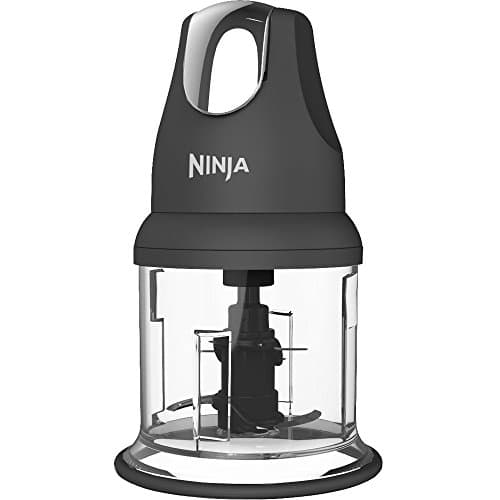
Fast electric chopping
Ninja Express Chop (NJ110GR)
The electric chopper to beat: a 200-watt, one-touch bowl that turns onions and nuts to an even mince in seconds.
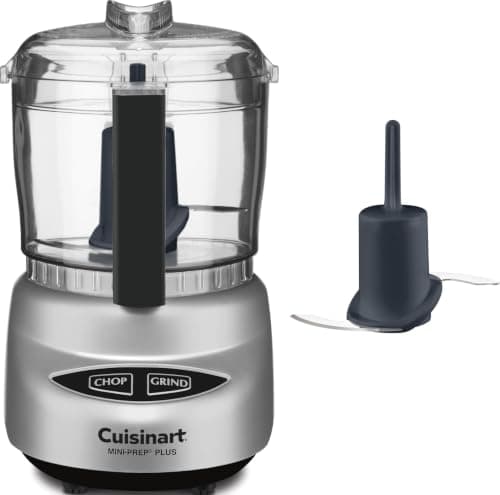
Small daily chopping
Cuisinart Mini-Prep Plus (DLC-2ABC)
The 3-cup workhorse for small jobs: chopping herbs, an onion, a bit of dressing — without hauling out a big bowl.
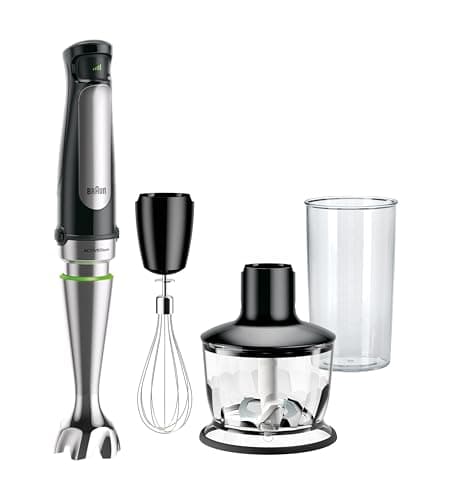
Most kitchens
Braun MultiQuick 7 (MQ7035X)
The one to own: Braun's anti-splash bell and smooth variable speed make it the most controllable stick blender here.
#ad · As an Amazon Associate we earn from qualifying purchases.
Questions
Frequently asked
Can a blender be used as a food chopper?
Can a food chopper make smoothies?
What is the difference between a food chopper and a blender?
Which is better for salsa, a chopper or a blender?
Keep reading