HUB 06 · Guides
How to Make Breadcrumbs in a Food Processor
It is the easiest thing a food processor does and the one people get subtly wrong, usually by using bread that is too fresh or by running the machine instead of pulsing it. Fresh crumbs and dry crumbs are two different ingredients, and the difference starts before the bread goes in.
We earn a commission if you buy through our links. It does not change the price you pay, and it does not decide our picks — our selection criteria are published in full. How this works.
Breadcrumbs are the job a food processor does best, because it is one where uneven results are actually desirable and the machine is fast enough that you make them on the day you need them. The whole technique is three decisions: how dry the bread is, which decides whether you get fresh crumbs or dry ones; whether the crust goes in, which decides the color; and pulse rather than run, which decides whether you get crumbs or a fine powder that behaves like flour.
Fresh crumbs and dry crumbs are not the same ingredient
This is the part most instructions skip, and it is why a recipe sometimes goes wrong with crumbs that looked fine. Fresh crumbs are made from soft, day-old bread. They are damp, light and irregular, they stay soft when they cook, and they are what you want in meatballs, in stuffing, as a binder, and scattered over a gratin where they should crisp at the edges and stay tender underneath.
Dry crumbs are made from bread that has been dried out properly — left uncovered for a day or two, or spread on a tray and dried in a low oven until it snaps rather than bends. They are sandy, they keep for months, and they are what you want for coating anything you are going to fry, because damp crumbs steam themselves off a cutlet instead of crisping onto it.
A processor makes both, but it cannot turn one into the other. Blitzing fresh bread finer does not make it dry; it makes a paste. If a recipe calls for dried breadcrumbs and you have a soft loaf, dry it first — the oven step is the recipe, not an optional extra.
The method
- Start with bread that is at least a day old. Really fresh bread is damp and elastic; it compacts under the blade and smears up the side of the bowl instead of breaking. If all you have is fresh, tear it and leave it out for an hour, or dry it in a low oven until it is firm.
- Tear it, do not cut it. Rough torn pieces the size of a large coin have uneven edges for the blade to catch, and they break up faster than neat cubes.
- Decide about the crust. Crust in gives you a darker, more textured crumb with more flavor and more chew. Crust out gives you the pale, even crumb that looks right on a fish fillet. Neither is wrong; just be consistent within one batch, because crust breaks down more slowly than crumb and a mixed batch processes unevenly.
- Fill the bowl no more than half. Bread is bulky and light. A full bowl means the pieces at the top never come down to the blade, and you run it longer to fix that, which over-processes everything at the bottom.
- Pulse in short bursts and stop early. Four or five one-second pulses gets most bread to a coarse, useful crumb. Look at it. Another two if you want it finer. The moment the noise changes from a clatter to a hum, you are past crumbs and into powder.
- Shake the bowl between pulses rather than running the machine longer. It redistributes the pieces and it is the single most effective thing you can do for an even batch.
The sound tells you when to stop. Dry bread rattles. As the crumb gets fine the rattle turns into a soft continuous hum, and that is the signal you have gone as far as you want. It is more reliable than a timer, because it adapts to how dry your bread actually was.
Which machine, and the honest small-batch answer
A full-size processor such as the Cuisinart DFP-14 does a whole loaf in two batches and is the right tool if you make crumbs to store. Its tall bowl is an advantage here: bread bounces, and a deep bowl keeps it under the blade.
An eight-cup machine like the Cuisinart FP-8SV is the sensible middle, and the budget full-size Hamilton Beach Stack & Snap is a genuinely good crumb machine for the money, because crumbs are one of the few jobs where a simpler motor and a plain chopping blade give away nothing at all.
For a handful of crumbs — enough to top one dish — a small electric chopper such as the Ninja Express Chop is faster than getting the big machine out, and there is much less to wash. Its two-cup bowl is the constraint, and bread fills a bowl quickly, so this is a one-dish tool rather than a batch tool. Our processor versus chopper comparison makes the general version of that argument.
What does not work well is a blender. A blender jar is narrow at the bottom and the blade is small; dry bread rides above it and never comes down, and you end up with powder underneath and whole pieces on top. If a blender is all you have, work in very small amounts.
The panko question
Panko is not simply a coarser breadcrumb. It is made from a crustless bread baked in a way that produces large, flat, shard-like flakes, and those flakes are why panko stays crisp — they have more surface area and absorb less oil than round crumbs. You cannot replicate that in a food processor, and anyone who tells you otherwise has not compared the two side by side.
What you can do is get closer. Use white bread with the crusts off, dry it without browning it, and pulse very few times so the pieces stay large and flaky rather than rounding off. The result is a coarse dry crumb that fries well. It is good. It is not panko, and we would rather say so.
Flavored crumbs, and when to add things
Dried herbs, garlic powder, lemon zest, grated hard cheese and black pepper all go in at the end, pulsed once or twice to distribute. Adding them at the start means they get milled to dust while the bread is still in pieces.
Fresh garlic and fresh herbs are a different matter: they are wet, and wet things turn dry crumbs damp, which ruins them for storage and for frying. If you want fresh garlic in a crumb topping, fry the crumbs in oil with the garlic just before they go on the dish. For zesting into a crumb, a fine rasp zester gives you the lightest, driest zest of any tool.
Storing them
Properly dried crumbs keep in an airtight jar in a cool cupboard for months, and the test is simple: if they are truly dry they pour, and if they clump they are not. Anything that clumps goes in the freezer instead.
Fresh crumbs freeze beautifully and that is the best thing about making them. Bag them flat, freeze, and use them straight from frozen — they do not need thawing for stuffing, for meatballs or for a gratin topping. It is also the most useful thing you can do with the end of a loaf nobody wants to eat, which is really what this whole page is about.
What matters in a machine for this job
Bowl depth more than bowl width. Bread is light and it bounces. A deep bowl keeps it circulating down onto the blade; a shallow wide one lets it ride around the rim.
A responsive pulse. This is a job decided in one-second increments. A pulse that coasts after you release it costs you the fine control that separates crumbs from powder.
Nothing else. No disc, no adjustable slicing, no dough blade, no extra wattage. Breadcrumbs are the job where the cheapest full-size processor in our budget roundup does exactly what the most expensive one does. If crumbs are the reason you are shopping, buy on bowl size and on how easy the machine is to wash, and spend nothing on power.
Easy cleaning, because bread dust gets everywhere. Dry crumb finds the groove in the lid and the well around the drive collar. The thirty-second rinse-and-pulse in our cleaning guide works as well for crumbs as it does for hummus.
What to do with the crumbs you have made
A gratin topping. Fresh crumbs, olive oil or melted butter, a little grated hard cheese, scattered over a bake for the last fifteen minutes. This is the single best argument for making your own, because bought dry crumbs go leathery here and fresh ones do not.
A binder. Meatballs, burgers, fish cakes and stuffing all want fresh crumbs, usually soaked briefly in milk or stock. Dry crumbs work but they draw moisture out of the mix, which is why a meatball made with packet crumbs can come out tight.
A coating. Dry crumbs only, and the standard three-stage route: flour, then beaten egg, then crumbs, pressing them on. Damp crumbs will not stick and will not crisp.
Pangrattato. Coarse dry crumbs fried in good oil with garlic and chili until crunchy, then scattered over pasta or greens. It is the reason to keep a jar, and it costs nothing but the end of a loaf.
Bread to use, and bread to avoid
Plain white bread, sourdough, ciabatta, baguette and most rustic loaves all work well. Sourdough gives the most flavor and the most irregular crumb. Baguette dries fastest, which makes it the easiest bread to turn into storable dry crumbs.
Avoid anything very soft and enriched — brioche, challah, most sliced sandwich bread — unless you dry it hard first. The sugar and fat in enriched bread make it gummy under a blade and it browns unpredictably when you fry it. Heavily seeded loaves are fine for rustic toppings and wrong for a coating, because the seeds burn before the crumb colors.
The hardware
The hardware this guide is about
The products this guide refers to, with prices pulled live from Amazon and dated on every card. Full rankings live in the roundups linked above.
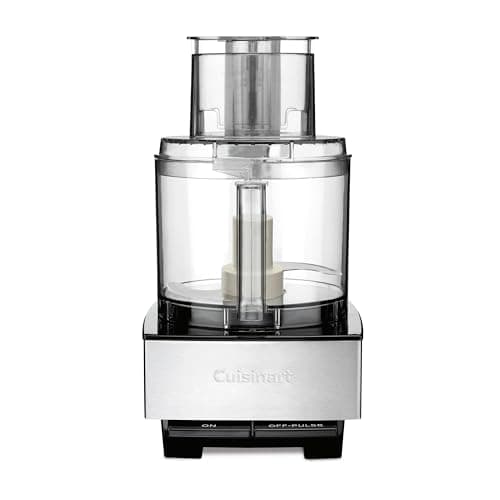
Most full-size kitchens
Cuisinart 14-Cup Food Processor (DFP-14BCNY)
The default full-size processor for a reason: a big, simple, 720-watt workhorse with the shortest parts list to go wrong.
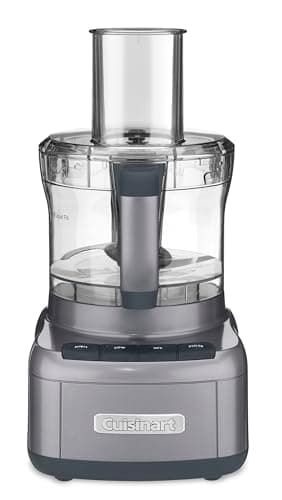
Small households
Cuisinart Elemental 8-Cup Food Processor (FP-8SV)
The right-size middle option: a 350-watt 8-cup that fits smaller kitchens and everyday jobs without going mini.
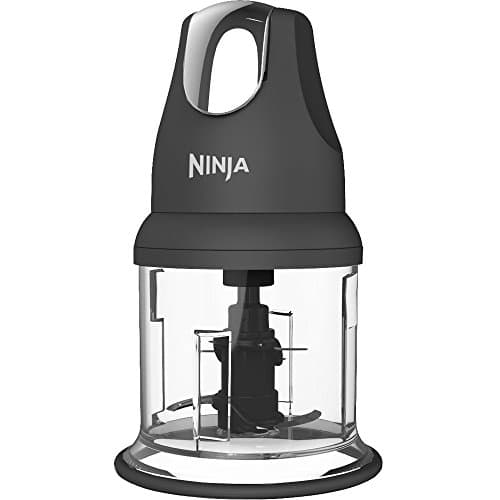
Fast electric chopping
Ninja Express Chop (NJ110GR)
The electric chopper to beat: a 200-watt, one-touch bowl that turns onions and nuts to an even mince in seconds.
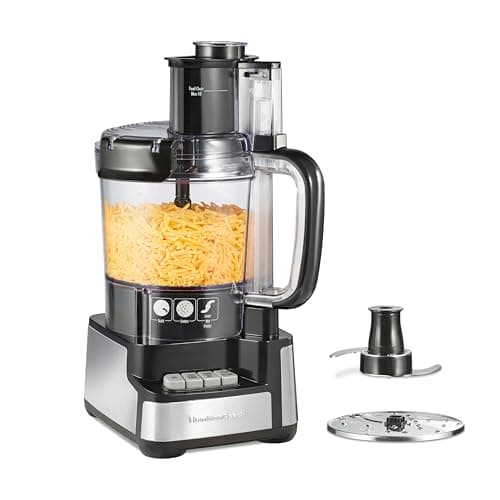
Budget full-size
Hamilton Beach Stack & Snap 12-Cup
The budget full-size pick: a 12-cup bowl and no-twist Stack & Snap assembly for well under a hundred dollars.
#ad · As an Amazon Associate we earn from qualifying purchases.
Questions
Frequently asked
How do you make breadcrumbs in a food processor?
Can you make breadcrumbs from fresh bread?
Should you take the crusts off?
Can you make panko in a food processor?
How long do homemade breadcrumbs keep?
Can you use a chopper or a blender instead?
Keep reading
Related
- Hamilton Beach Stack & Snap reviewA budget full-size machine that gives up nothing on crumbs.
- Food chopper vs blenderWhy a blender jar is the wrong shape for dry bread.
- Best electric food choppersThe small-batch route to a single dish of crumbs.
- How to clean a food processorWhere bread dust hides afterward.
- What a food processor actually doesThe full list of jobs, crumbs included.
- Best budget food processorsFor a job where power buys you nothing.