Skip to content
TheBench

HUB 05 · Prep Tools

The Best Apple Slicers and Corers

One search term covers three completely different tools. The wedger you press down, the corer that leaves the apple whole, and the crank that peels, cores and slices in one turn - and the number that decides whether the first kind works is one almost nobody publishes.

By Stephen V.Updated How we pick
#ad

We earn a commission if you buy through our links. It does not change the price you pay, and it does not decide our picks — our selection criteria are published in full. How this works.

The short answer

Quick picks

#ProductBest forScorePrice
01
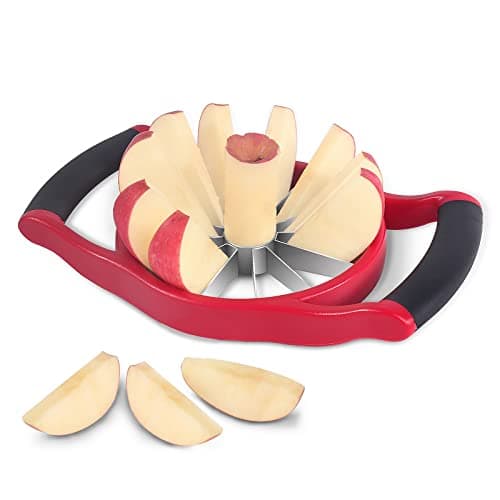
Newness Newness Extra Large Apple Slicer
Newness Extra Large Apple Slicer

The widest cutting ring with a published figure — 4.52 inches — which is what lets it clear the core of a big supermarket apple instead of jamming on it.

Large apples
8.2
$15.98Amazon
02
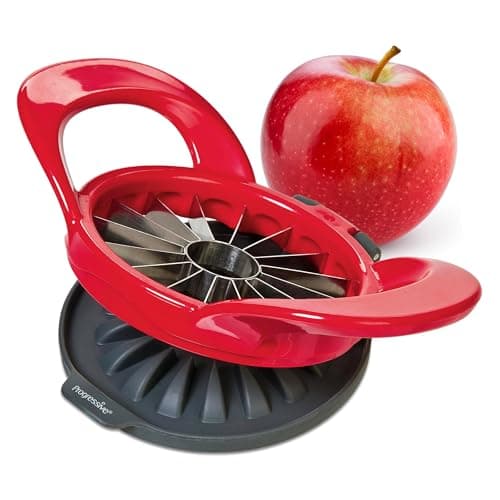
Progressive PrepWorks 16-Slice Apple Slicer and Corer
PrepWorks 16-Slice Apple Slicer and Corer

The one with a lid: an attached cover that pushes the wedges back out of the blades in use and caps them in the drawer.

Thin slices, and households with children
8.2
$13.99Amazon
03
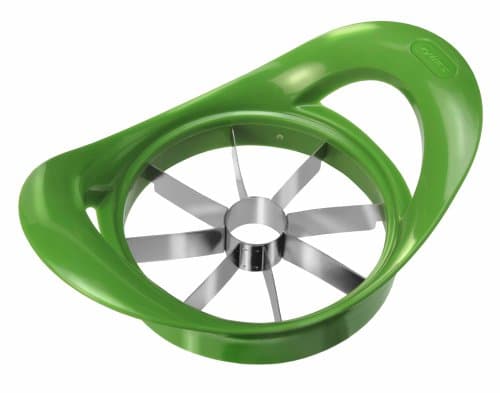
Zyliss Zyliss Apple Divider
Zyliss Apple Divider

The classic eight-wedge divider, and the only one here that publishes both a blade diameter and a blade thickness.

Eight even wedges from a medium apple
7.8
$14.95Amazon
04
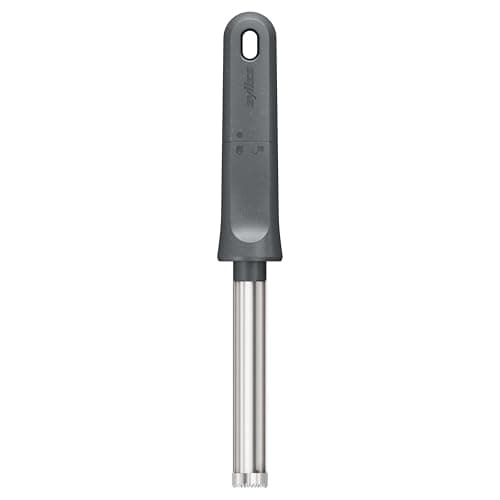
Zyliss Zyliss Easy Twist Apple Corer
Zyliss Easy Twist Apple Corer

Not a slicer at all: a corer that twists the core out and ejects it, leaving the apple whole for baking or stuffing.

Baked apples, and coring without slicing
8.2
$16.95Amazon
05
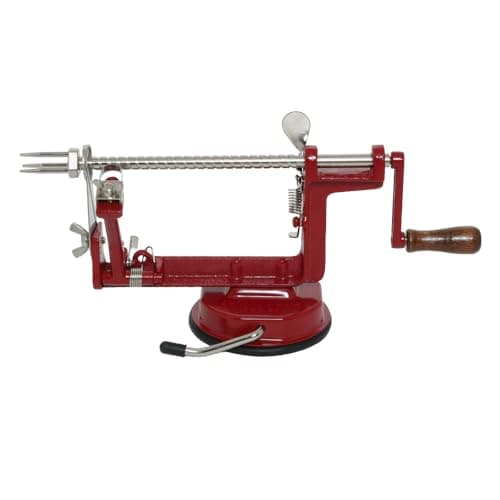
Johnny Apple Peeler Johnny Apple Peeler (VKP1010)
Johnny Apple Peeler (VKP1010)

The pie machine: a cast-iron crank that peels, cores and spiral-slices an apple in one turn, with an adjustable peel depth and a five-year warranty.

Pie, crisp and sauce by the bushel
8.1
$34.99Amazon
06
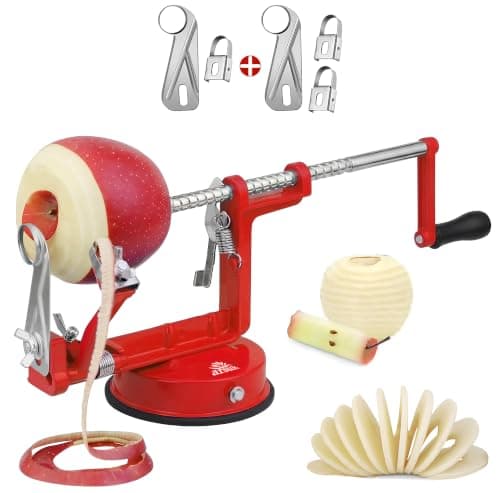
ARSUK ARSUK 3-in-1 Apple Peeler, Corer and Slicer
ARSUK 3-in-1 Apple Peeler, Corer and Slicer

The cheaper way into a crank peeler: the same peel-core-slice action on a suction base, at roughly two thirds the price of the cast-iron one.

Occasional batches of pie apples
8.1
$21.95Amazon

#ad · Prices pulled live from the Amazon Product API, last checked November 13, 2026. Where we have no verified live price we show none — we would rather leave a gap than print a number that has gone stale. Scores are our own, compiled from published specs; they are not test results.

For most people buying supermarket apples, the Newness Extra Large Apple Slicer is the pick, for one reason: it publishes a cutting diameter of 4.52 inches, and modern dessert apples are big. A standard divider is around three and three-quarter inches across, and a Honeycrisp that overhangs the ring does not get cored — it gets wedged, crushed and pushed back out at you. If you have children in the house, the PrepWorks 16-Slice Apple Slicer and Corer is the safer buy for the attached cover alone. If you are facing an actual tree’s worth of apples, skip the wedgers entirely and get the Johnny Apple Peeler (VKP1010).

Measure an apple before you buy a wedger. Put a tape across the widest part of the apples you actually buy. If it is under about 3.5 inches, almost any divider works. If it is pushing 4 inches — which Honeycrisp, Gala and most of the big modern varieties routinely are — you need a ring that states its diameter, and only two tools on this page do.

Three tools, one search term

A wedger (sold as an “apple slicer”, “apple divider” or “apple cutter”) is a fixed ring of blades radiating from a central hole. You center it on the apple and press straight down: the outer blades cut wedges, the central hole punches the core out. It is fast, it needs no setup, and its single limitation is that the ring is a fixed size.

A corer is a tube with a cutting tip. It removes the core and leaves the apple whole, which is what you need for a baked apple, a stuffed apple or a ring-cut apple for drying. It slices nothing.

A crank peeler mounts to the counter on a suction base or a clamp. You spike the apple on a fork, turn a handle, and the apple spirals past a peeling blade and through a coring-and-slicing head in one pass. It is the only tool here that peels, and it is the only sensible answer to a large quantity.

Buying the wrong one of those three is by far the most common mistake in this category, and it is not the buyer’s fault — all three get listed under the same words.

The four things that decide a wedger

1. The cutting diameter, which almost nobody publishes. This is the number. Newness states 4.52 inches (11.5 cm). Zyliss states 3.75-inch blades. PrepWorks states the tool’s overall footprint — 7 by 4.5 inches — but not the cutting ring, which is a different and smaller measurement. If a listing does not state one, you are guessing.

2. How many wedges. Eight is the traditional cut and the one most people want: substantial pieces that hold up in a lunchbox or on a roasting tray. Sixteen thin slices is a dipping-and-tart cut. More blades also means more force needed, because each blade is cutting at the same time.

3. Whether the blades are covered. A wedger lives in a drawer with its blades facing up. Exactly one pick here — the PrepWorks — has an attached cover that both pushes the wedges back out of the blades in use and caps them for storage. That is a meaningful safety difference, not a marketing one.

4. What the top bar feels like. You press down on it with real force. Newness puts soft silicone there; Zyliss uses ergonomic BPA-free handles. A bare metal bar on a dense apple is unpleasant, and if you have weak grip or sore hands it is the thing that will stop you using the tool at all.

The six picks

1. The widest published ring — Newness Extra Large Apple Slicer

Newness states a cutting diameter of up to 4.52 inches (11.5 cm) on a 5.12-inch tool, with a soft silicone grip over the bars and ultra-sharp stainless blades the listing says use an upgraded welding process. That diameter is the entire argument for it: it is the only tool we found that publishes a figure comfortably clear of the big modern dessert apples, and a ring that clears the fruit is a ring that actually cores it. Newness also states it works on potatoes and onions, which makes it more than a one-fruit drawer tool.

Two honest problems. The listing contradicts itself on slice count — the title says 12 slices and the feature text says 16, and Newness does not resolve it. And a big ring is genuinely the wrong tool for a small apple: a lunchbox-sized apple sits off-center in it and the wedges come out ragged. The blades are also uncovered in the drawer.

2. The safe one — PrepWorks 16-Slice Apple Slicer and Corer

Progressive’s PrepWorks cuts 16 thin slices and cores in the same push, and it is the only pick here with an attached safety cover: it clears the slices back out of the blades as you lift, and it covers the blades for storage. If this tool lives in a drawer that children open, or if you have ever cut yourself reaching past a bare wedger, that feature is worth more than any spec on this page. It is dishwasher safe, measures 7 by 4.5 inches, and Progressive states it also works on soft cored fruit like pears.

The catch is that Progressive publishes the footprint but not the cutting diameter, so whether it clears a very large apple is unknown until it arrives. Sixteen thin blades also need more downward force through a dense apple than eight do, and thin slices brown faster because you have made twice as much cut surface.

3. The classic eight-wedge divider — Zyliss Apple Divider

Eight uniform wedges, cored in one motion, on riveted 3.75-inch stainless blades that Zyliss states are 0.75 inches thick, with ergonomic BPA-free handles. This is the cut most people picture when they say “apple slicer”, and riveted construction addresses the joint that fails first on cheap wedgers. It publishes its blade diameter, which puts it in a minority of two.

That published diameter is also why it is third rather than first. 3.75 inches is a medium ring. On a standard apple it is perfect; on a large Honeycrisp the fruit overhangs and the core is not fully caught. Zyliss also says dishwasher safe and then recommends hand washing to maintain sharpness, which is two pieces of advice that cannot both be followed.

4. The one that leaves the apple whole — Zyliss Easy Twist Apple Corer

A corer, not a slicer. You push it through, twist, and slide the body to eject the core. That matters for a specific set of jobs no wedger can do: baked apples, stuffed apples, apple rings for drying or for fritters. Because nothing has to fit a ring, it works on any size of apple — and on pears, which Zyliss states explicitly. It is dishwasher safe.

It is on this page because “apple corer” and “apple slicer” are used interchangeably and a lot of people buy one expecting the other. If you want wedges, this is the wrong tool. Zyliss also publishes no barrel diameter, so how much flesh comes out with the core is something you discover on the first apple.

5. The harvest tool — Johnny Apple Peeler (VKP1010)

Cast iron body, stainless blades, suction base, and a five-year manufacturer warranty — the longest cover of anything on this page. It peels, cores and slices any apple variety in one pass, the coring and slicing blade is removable if you only want peeling, and the peeling blade adjusts for a thick or thin peel, which is the difference between losing a sliver and losing a third of the fruit.

If you are processing a bushel into pie filling, crisp or sauce, this is not a luxury, it is the only reasonable choice; a wedger on fifty apples is an afternoon. The honest limits are real though: the suction base needs smooth, clean, non-porous counter and will not hold on textured granite, tile grout or an oiled board. It is by far the most expensive tool here, it stores like a small appliance, and it produces spirals and rings — not wedges.

6. The cheaper crank — ARSUK 3-in-1 Apple Peeler, Corer and Slicer

The same three-in-one peel, core and slice action on a suction base, at roughly two thirds the price of the cast-iron machine. ARSUK states stainless steel blades and says it doubles as a potato peeler, which is the other job these cranks genuinely do well. If you want the mechanism for one weekend of apple sauce a year, this is the sensible version of it.

It is ranked last because of what the listing leaves out. It never states what the body is made of — only the blades are described as stainless — and it publishes no warranty at all, against five years on the Johnny. Suction bases are the weak point of every crank peeler, and a lighter body on a suction base is more likely to creep than a cast-iron one.

What each one publishes

PickTypePublished cutting sizeCutBlades covered?
Newness Extra Large Apple SlicerWedgerUp to 4.52 in (11.5 cm)Stated as 12 in the title, 16 in the featuresNo
PrepWorks 16-Slice Apple Slicer and CorerWedgerNot published (tool is 7 x 4.5 in)16 thin slicesYes — attached cover
Zyliss Apple DividerWedger3.75 in blade diameter8 wedgesNo
Zyliss Easy Twist Apple CorerCorerNot publishedCore only — apple stays wholeNo
Johnny Apple Peeler (VKP1010)Crank peelerNot applicable — any varietyPeeled spiral, cored and slicedNot applicable
ARSUK 3-in-1 Apple Peeler, Corer and SlicerCrank peelerNot applicablePeeled spiral, cored and slicedNot applicable

Four of the six publish no cutting diameter. That is the honest state of this category, and it is why we rank the two that do above the ones that do not.

Why apples got too big for apple slicers

The eight-wedge divider is an old design, and it was sized for the apples of its time. The varieties that now dominate supermarket shelves — Honeycrisp, Gala, Fuji, Envy, Pink Lady — were bred for size as well as flavor, and large grades routinely run close to or past four inches across. The ring did not change. That is the whole reason “best apple slicer for large apples” is a phrase people type into Google.

When a wedger is too small for the fruit, three things happen in order. The tool sits on the shoulders of the apple rather than seating on it. The central hole misses the core, so you get seeds and tough core material in your wedges. And the blades bind halfway down, which is the moment people push harder and hurt themselves. None of that is a quality problem with the tool; it is a sizing problem, and it is solved by measuring first.

Apple slicers and sore hands

A wedger is a pure downward-force tool: there is no leverage in the design, so whatever the apple resists, your hands and shoulders supply. That makes it a poor choice for weak grip or painful joints, and the usual advice to “just get a slicer” is often exactly wrong for the person who needs the most help.

Three things genuinely help. Pick the widest published ring you can, because a ring that clears the fruit binds less. Pick cushioned bars over bare metal. And for anyone who finds pressing hard painful at all, a crank peeler is the better answer — turning a handle is a rotational motion with mechanical advantage built in, and it is far gentler on wrists than leaning on a blade ring. We make the same argument across the kitchen in the best prep tools for arthritic hands.

What to do with the apples once they are cut

Cut apple browns because an enzyme in the flesh reacts with oxygen. Acid slows it: a squeeze of lemon, or a bowl of water with a splash of lemon juice, buys you a few hours for a lunchbox or a fruit platter. Cold slows it too. Thin slices brown faster than thick wedges for the obvious reason that there is more cut surface, which is a genuine argument for an eight-wedge divider over a sixteen-slice one if the apple is not being eaten straight away.

For cooking, the tool you use should match the dish: wedges for roasting and for a tarte Tatin, thin slices for a flat tart, spirals from a crank peeler for pie and crisp, and whole cored apples for baking. The crust is the other half of the job, and the best pastry blenders ranks the hand tools that cut cold butter into flour without melting it. If you are going on to a sauce or a butter, a food mill will separate skins and seeds from cooked fruit without peeling anything first, which makes the whole question of peelers moot for that one job.

Where this page stops

This page covers tools built for apples. A handheld peeler peels an apple perfectly well and is the right tool for three of them; a mandoline makes thinner, more uniform apple slices than any wedger if you want a fanned tart, with the safety rules that come with it. A spiralizer makes noodles, not apple rings, and the crank peelers here are a different mechanism despite the superficial resemblance.

In detail

The picks, in full

01
Newness Newness Extra Large Apple Slicer

Large apples

Newness Extra Large Apple Slicer

Publishes its cutting diameterSlice count stated two ways
8.2/10

The widest cutting ring with a published figure — 4.52 inches — which is what lets it clear the core of a big supermarket apple instead of jamming on it.

Fits big apples
9.5
Press effort
8
Safety
7
Cleaning
8
Value
8.5

What it gets right

  • 4.52 inches of cutting diameter is the figure that decides whether a big Honeycrisp goes through in one press
  • Silicone over the top bars, which is where your whole body weight lands
  • Newness states it also handles potatoes and onions, so it is not a single-fruit drawer tool

What it doesn't

  • The listing says 12 slices in the title and 16 in the feature bullets; one of those is wrong and Newness does not say which
  • A big ring is the wrong tool for a small apple — the wedges come out uneven and the core is not fully caught
  • No steel grade published, and the weld quality is a stated selling point rather than a measured one

What it costs to run

Newness publishes no usable wattage for this machine, so we do not show a running-cost figure for it. Here is the method we would have used.

Skip this if…

…You buy small apples for lunchboxes — a 4.52-inch ring leaves a small apple sitting off-center and the wedges come out ragged.

$15.98on Amazon

Price last checked November 13, 2026. Prices move constantly — Amazon's at checkout is the one that counts.

#ad · we may earn a commission from this link to Newness Extra Large Apple Slicer

02
Progressive PrepWorks 16-Slice Apple Slicer and Corer

Thin slices, and households with children

PrepWorks 16-Slice Apple Slicer and Corer

Blades covered in the drawerDishwasher safeNo cutting diameter published
8.2/10

The one with a lid: an attached cover that pushes the wedges back out of the blades in use and caps them in the drawer.

Fits big apples
7.5
Press effort
7
Safety
9.3
Cleaning
8.5
Value
8.5

What it gets right

  • The attached cover answers the two real hazards of a wedger: fingers in the blades, and reaching into a drawer that holds them
  • Sixteen thin slices is the right cut for dipping and for a tart, where eight fat wedges are not
  • Progressive publishes the overall footprint, so you know whether it fits the drawer

What it doesn't

  • No cutting diameter is published, so whether it clears a very large apple is unknown before you buy
  • Sixteen thin blades need more force through a dense apple than eight do
  • Thin wedges brown faster, because you have made twice as much cut surface

What it costs to run

Progressive publishes no usable wattage for this machine, so we do not show a running-cost figure for it. Here is the method we would have used.

Skip this if…

…You want chunky wedges to roast or to eat out of hand — sixteen thin slices is a snack-and-dip cut, not a cooking cut.

$13.99on Amazon

Price last checked November 13, 2026. Prices move constantly — Amazon's at checkout is the one that counts.

#ad · we may earn a commission from this link to PrepWorks 16-Slice Apple Slicer and Corer

03
Zyliss Zyliss Apple Divider

Eight even wedges from a medium apple

Zyliss Apple Divider

Publishes blade diameterRiveted, not crimped3.75 in ring is medium, not large
7.8/10

The classic eight-wedge divider, and the only one here that publishes both a blade diameter and a blade thickness.

Fits big apples
6.5
Press effort
8.5
Safety
7.5
Cleaning
8
Value
8.3

What it gets right

  • Publishes a 3.75-inch blade diameter, so you can measure an apple against it before you buy
  • Riveted blade construction, which is the joint that fails first on cheap wedgers
  • Eight substantial wedges is the cut most people actually want from an apple

What it doesn't

  • 3.75 inches is a medium ring: a large Honeycrisp or Gala will overhang it and the core will not be fully caught
  • Zyliss says dishwasher safe and then recommends hand washing to keep the edge — you have to pick one
  • Eight blades through a dense apple is real downward force, and there is no cover to push the wedges back out

What it costs to run

Zyliss publishes no usable wattage for this machine, so we do not show a running-cost figure for it. Here is the method we would have used.

Skip this if…

…You buy the biggest apples in the shop — measure one first, because this ring is 3.75 inches and large apples are wider.

$14.95on Amazon

Price last checked November 13, 2026. Prices move constantly — Amazon's at checkout is the one that counts.

#ad · we may earn a commission from this link to Zyliss Apple Divider

04
Zyliss Zyliss Easy Twist Apple Corer

Baked apples, and coring without slicing

Zyliss Easy Twist Apple Corer

Ejects the coreNot a slicerNo barrel diameter published
8.2/10

Not a slicer at all: a corer that twists the core out and ejects it, leaving the apple whole for baking or stuffing.

Fits big apples
9
Press effort
7.5
Safety
8
Cleaning
8.8
Value
7.5

What it gets right

  • Leaves the apple whole, which is the only way to make a baked apple or a stuffed one
  • The eject action means you are not digging a core out of a tube with a finger
  • Works on any size of apple, because nothing has to fit a ring

What it doesn't

  • It does not slice. If you wanted wedges, this is the wrong tool and no amount of twisting changes that
  • Zyliss publishes no barrel diameter, so how much flesh comes out with the core is unknown until you use it
  • A corer has to be pushed through the full depth of the fruit, which is more effort per apple than it looks

What it costs to run

Zyliss publishes no usable wattage for this machine, so we do not show a running-cost figure for it. Here is the method we would have used.

Skip this if…

…What you actually want is wedges for a lunchbox — buy a divider, and keep the corer for the baking tray.

$16.95on Amazon

Price last checked November 13, 2026. Prices move constantly — Amazon's at checkout is the one that counts.

#ad · we may earn a commission from this link to Zyliss Easy Twist Apple Corer

05
Johnny Apple Peeler Johnny Apple Peeler (VKP1010)

Pie, crisp and sauce by the bushel

Johnny Apple Peeler (VKP1010)

Peels, cores and slices in one pass5-year warrantyNeeds a smooth non-porous counter
8.1/10

The pie machine: a cast-iron crank that peels, cores and spiral-slices an apple in one turn, with an adjustable peel depth and a five-year warranty.

Fits big apples
9
Press effort
9.5
Safety
8.5
Cleaning
6
Value
7.5

What it gets right

  • One crank replaces peeling, coring and slicing — on a bushel of apples that is the difference between an afternoon and twenty minutes
  • The peel depth adjusts, so you are not throwing away a third of the apple
  • Five years of warranty on a cast-iron body, the longest cover of any tool on this page

What it doesn't

  • The suction base needs a smooth, non-porous counter — it will not hold on textured granite, tile grout or an oiled board
  • It is the most expensive tool here by a wide margin and it stores like a small appliance, not like a gadget
  • It spiral-cuts: you get rings or a long spiral, not the wedges a divider makes

What it costs to run

Johnny Apple Peeler publishes no usable wattage for this machine, so we do not show a running-cost figure for it. Here is the method we would have used.

Skip this if…

…You do three apples a week — this is a harvest tool, and for a lunchbox it is slower than a wedger once you count mounting and washing it.

$34.99on Amazon

Price last checked November 13, 2026. Prices move constantly — Amazon's at checkout is the one that counts.

#ad · we may earn a commission from this link to Johnny Apple Peeler (VKP1010)

06
ARSUK ARSUK 3-in-1 Apple Peeler, Corer and Slicer

Occasional batches of pie apples

ARSUK 3-in-1 Apple Peeler, Corer and Slicer

Peels, cores and slices in one passNo body material publishedNo warranty published
8.1/10

The cheaper way into a crank peeler: the same peel-core-slice action on a suction base, at roughly two thirds the price of the cast-iron one.

Fits big apples
8.5
Press effort
9.3
Safety
8
Cleaning
6.5
Value
8

What it gets right

  • Gets you the one-pass crank action for substantially less than the cast-iron machine
  • ARSUK states it handles potatoes too, which is the other job these cranks are genuinely good at
  • A suction base rather than a clamp, so it does not need a counter edge to grip

What it doesn't

  • The listing never says what the body is made of — only the blades are described as stainless
  • No warranty is published at all, against five years on the cast-iron alternative
  • Suction bases are the weak point of every crank peeler: on anything but a smooth, clean, non-porous counter they creep

What it costs to run

ARSUK publishes no usable wattage for this machine, so we do not show a running-cost figure for it. Here is the method we would have used.

Skip this if…

…You will do several bushels a year — pay once for the cast-iron body and the five-year warranty instead.

$21.95on Amazon

Price last checked November 13, 2026. Prices move constantly — Amazon's at checkout is the one that counts.

#ad · we may earn a commission from this link to ARSUK 3-in-1 Apple Peeler, Corer and Slicer

Which one should you buy?

You buy big supermarket apples. Buy the Newness. 4.52 inches of published cutting diameter is the only figure on this page that is comfortably clear of a large Honeycrisp.

Children open the drawer this lives in. Buy the PrepWorks. The attached cover is the only one here, and it does double duty — blade guard in the drawer, slice ejector in use.

You want eight proper wedges from normal apples. Buy the Zyliss Divider. Riveted blades, a published 3.75-inch diameter, and the cut most people actually want.

You bake apples whole, or dry apple rings. Buy the Zyliss corer. It is the only tool here that leaves the fruit intact, and no wedger substitutes for it.

You are processing a tree, or you make pie every week in the fall. Buy the Johnny Apple Peeler. Cast iron, adjustable peel depth, five-year warranty, and it does in twenty minutes what a wedger does in an afternoon.

You want the crank action for one weekend a year. Buy the ARSUK and accept that the body material and the warranty are not stated.

What these cost, and what the money buys

The wedgers and the corer are all inexpensive drawer tools, clustered close enough together that price should not be your deciding factor — ring diameter and blade cover should be. The crank peelers are a different purchase entirely: the cast-iron one costs several times what a wedger does, and what that premium buys is a stated body material, an adjustable peel depth and five years of warranty. The cheaper crank gets you the mechanism and none of those three.

What we are not claiming

We have not tested these six on apples or on anything else. Every diameter, slice count, dimension, blade material, mounting method, warranty and care instruction above is the manufacturer’s own published wording on the listing the buy button points at, cited below — including the Newness listing’s own contradiction about whether it cuts 12 slices or 16, which we have reported rather than resolved, and including the four tools that publish no cutting diameter at all. Apple sizes are a general observation about modern supermarket varieties, not a measurement we took, which is exactly why the advice is to put a tape across your own apples. Prices come live from Amazon with the date attached.
How we picked

Tools we claim to have lab-tested: 0

Every site in this category tells you they ran twenty machines through a lab. We have not, and we say so. Here is what we do instead: read the manufacturer's manual and spec sheet, record the published bowl capacity, motor rating, blade and disc counts and materials, cross-check the warranty against the manufacturer's own warranty document, and cite all of it so you can check the work. Prices come live from Amazon's API and disappear rather than go stale.

The scores above are judgments from that documented research — not test results. The full rubric, including what disqualifies a product, is published in full.

Questions

Frequently asked

What is the best apple slicer?
The Newness Extra Large Apple Slicer, because it publishes a cutting diameter of up to 4.52 inches and that is the single figure that decides whether a wedger clears a big modern apple or jams on it. If you want eight wedges rather than thin slices and your apples are standard-sized, the Zyliss Apple Divider at a published 3.75 inches is the better cut.
What is the best apple slicer for large apples?
Measure yours first, then match it to a published diameter. Of the tools here, only two state one: Newness at up to 4.52 inches and Zyliss at 3.75 inches. A large Honeycrisp or Gala can approach four inches across, which is why the wider ring is the safer buy for big fruit. For apples bigger than any ring, a crank peeler has no size limit at all.
What is the difference between an apple slicer and an apple corer?
A slicer (or divider) cuts the apple into wedges and punches the core out at the same time; you end up with pieces. A corer removes only the core and leaves the apple whole, which is what a baked or stuffed apple needs. Both get listed under both names, which is the single most common reason people end up with the wrong tool.
Are apple peeler corer slicer machines worth it?
For quantity, yes — one crank peels, cores and slices in a single pass, and on a bushel of apples nothing else comes close. For three apples a week, no: clamping it, cranking it and washing three blade assemblies is slower end to end than a wedger. The other thing to check before you buy is your counter, because these mount on a suction base and that needs a smooth, clean, non-porous surface.
Can you use an apple slicer on other fruit?
On firm cored fruit, yes. Progressive states its slicer works on soft cored fruit such as pears, and Zyliss states its corer handles pears as well as apples. Newness states its slicer also works on potatoes and onions. Stone fruit is a different matter — a wedger’s central hole is sized to punch a core out, not to cut around a pit.
How do you keep cut apples from browning?
Toss them in a little lemon juice or hold them in cold water with a squeeze of lemon in it. Browning is an enzyme reacting with oxygen, acid slows the reaction and cold slows it further. Thicker wedges also brown more slowly than thin slices, simply because there is less cut surface exposed.

Keep reading

Receipts

Sources

We do not run a testing lab and we do not pretend to. Specifications come from the manufacturer's own published documents and from published standards; prices come from the live Amazon API. Where a figure is not published, the page says “not published” rather than guessing. Read the full method.