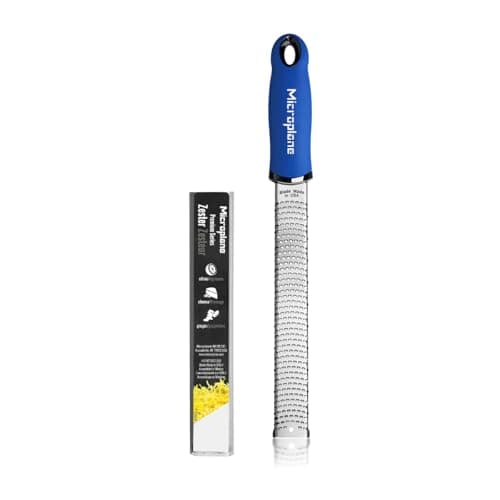
For most kitchens the best zester is the Microplane Premium Classic Zester: it is the only tool here whose maker publishes how the blade is cut (photo-etched), what it is cut from (surgical grade stainless) and where that happens. If you would rather have the accessories than the paperwork, the OXO Good Grips Etched Zester & Grater costs less and is the only pick that ships with both a blade cover and a non-slip foot. And if you want the Microplane blade without the soft-grip handle, the Microplane Classic Zester Grater is the same published blade claim for less money — a distinction almost nobody points out.
The blade is the entire product
A rasp grater has no moving parts, no settings and nothing to adjust. It is a strip of metal with teeth in it and something to hold it by. That means the only real question is how those teeth were made, and it splits the category cleanly in two.
Photo-etched blades are cut chemically. The teeth are etched rather than punched, which leaves a genuinely fine edge that shaves the surface off whatever you drag across it. This is the mechanism that made the category exist: Microplane states in its own listing that it uses photo-etched technology and surgical grade stainless steel, and that the blades are made in the USA. That is three checkable claims in one bullet, which is three more than most of this shelf offers.
Stamped or pressed blades are punched out mechanically. The hole is formed by pushing metal aside, which leaves a raised lip rather than a shaved edge. A pressed blade still grates, but it tears at the food instead of slicing it, and it needs pressure to do it. Pressure is the thing you feel: if a grater makes you lean on it, that is the blade telling you what it is.
Here is the awkward part. Almost no listing uses either word. The listings for the OXO and the Zulay both say etched, which is the right family of claim, but neither states a steel grade or where the blade is made. The Cuisipro calls its blade “Surface Glide Technology” and says it grates more with less effort, which is a brand name and a benefit rather than a process. None of that makes them bad tools — two of them are on this list precisely because they are good buys — but it does mean that when we rank on published specification, as how we pick commits us to, the Microplane wins the part of the argument that matters most.
A zester is not a box grater and not a rotary. A rasp makes one thing: a fine, fluffy shave. If you want coarse shreds of cheddar or a pile of grated carrot, that is a box grater. If you want hard cheese ground onto a plate at the table with your knuckles nowhere near the blade, that is a rotary grater. This page is about the third tool, the one both of those pages keep telling you to go and buy for the fine jobs they are clumsy at.
What the words on the box mean
Zester.The finest cut in the category, designed for citrus. The tooth set is shallow enough to take the colored outer rind and leave the bitter white pith on the fruit — Microplane describes exactly that mechanism in its listing, and it is the reason a zester and a knife do not produce the same thing. The same cut handles hard cheese, nutmeg, cinnamon sticks, garlic and ginger.
Fine grater. Broadly the same cut on a wider blade, sold for cheese rather than fruit. Powder-fine parmesan that melts on contact rather than sitting in shreds.
Coarse or ribbon. Bigger teeth for soft cheese, chocolate curls and vegetables. This is the side a box grater already does better on a bigger surface, which is why it only earns its place on a handheld tool when it comes attached to a fine side, as it does on the Cuisipro.
One genuinely useful habit before you buy anything: pick the three foods you would actually use it on this month. If they are all lemon, parmesan and ginger, you want a fine rasp and nothing else, and the extra surfaces are money spent on drawer bulk.
The five picks
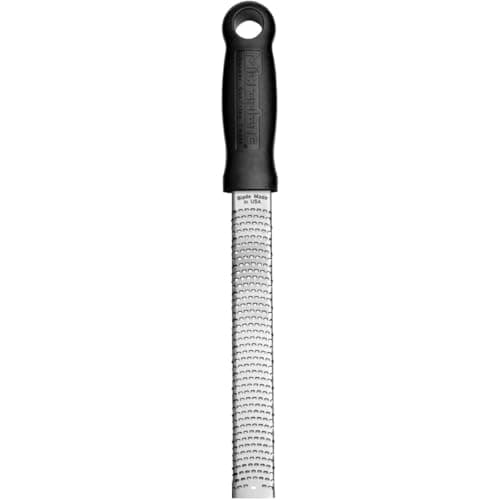
The Microplane Premium Classic Zester is the pick because it is the one that shows its working. Photo-etched blade, surgical grade stainless, blades made in the USA, a tooth set specifically designed to leave the pith behind, dishwasher safe, and a magnetic body that can hang on a knife strip rather than sitting loose among the spoons. Microplane also mentions non-scratch end tabs so it does not mark a counter. The honest marks against it: the listing names no blade cover and no non-slip foot, which two cheaper tools here do include; it is a fine rasp only, so it never replaces a shredding tool; and the money buys the handle, not a better blade, because the cheaper Classic version claims exactly the same blade.
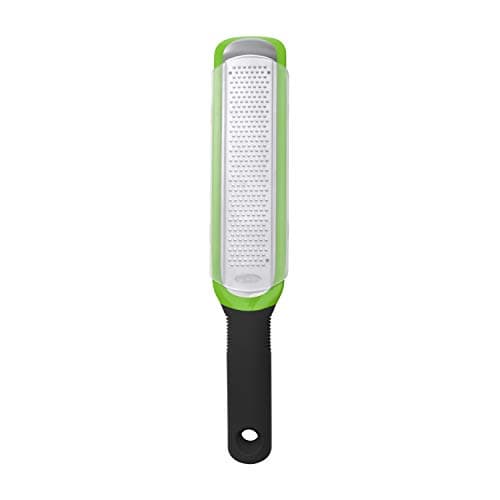
The OXO Good Grips Etched Zester & Grateris the one to buy if this tool is going to live in a drawer with everything else. It is the only pick here that publishes all three practical fixes at once: an etched grating surface, a non-slip foot so it does not skate on a wet counter, and an included blade cover, plus a hanging hole in the handle. It is also cheaper than the Premium Classic. What you give up is documentation. OXO says etched, which is the right claim, but publishes no steel grade and no blade origin, so on paper the blade is less knowable than the Microplane’s. The bright color is listed as a feature too, which is a storage answer rather than a cutting one.
The Microplane Classic Zester Grateris the value play, and it is the most useful thing on this page. Microplane’s listing for it makes the same blade claims as the Premium Classic — photo-etched, surgical grade stainless, made in the USA, dishwasher safe, magnetic — on a plain BPA-free plastic handle instead of the soft-grip one, for less money. If your hands are fine and the grip is not the thing you are buying, this is the same cut for less. The trade is real but narrow: a hard plastic handle is less comfortable on anything that needs pressure, there is no cover or foot listed either, and Microplane sells enough near-identical black-handled models that the model name needs checking rather than the photograph.
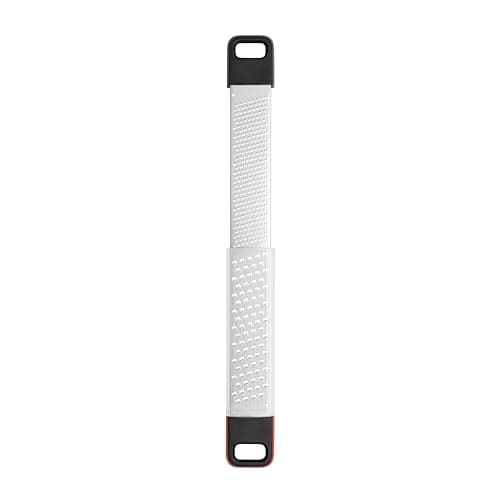
The Cuisipro Surface Glide Dual Grater (Coarse & Fine)is the one that genuinely replaces two tools. Cuisipro puts a fine side for citrus zest, parmesan, cinnamon and nutmeg and a coarse side for soft cheeses and vegetables on one stainless body, adds non-slip ends with feet so it can rest across a bowl, and gives it a sliding cover that stays attached to the tool rather than being lost in a drawer. Three honest limits. It costs more than the single-surface rasps and more than several full-size box graters. “Surface Glide Technology” is a brand name with nothing published behind it, so the blade cannot be compared with a photo-etched one on paper. And if you already own a box grater, you are buying a coarse side you will not use on a much smaller surface.
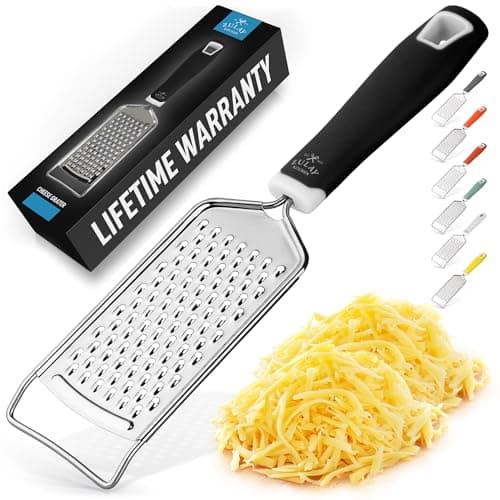
The Zulay Kitchen Professional Cheese Grater & Zesteris the cheap one that still tells you something. At the bottom of this market most listings say “stainless steel” and stop; Zulay publishes 18/10, says the blades are etched, describes a soft thermoplastic rubber handle and a raised support frame, adds a hanging hole and dishwasher safety, and states a lifetime warranty. For a tool that costs less than half the Microplane, that is a lot of disclosed detail. What is missing is a blade cover — the one accessory a cheap rasp most needs — and any statement of how the etching is done or where. The raised frame that lets you press harder is itself a quiet hint about how much force this blade expects compared with a photo-etched one.
The same blade, two handles
It is worth staying on this, because it is the one place in the category where the money genuinely does not buy sharpness. The Premium Classic and the Classic carry identical blade language in Microplane’s own listings: photo-etched, surgical grade stainless, made in the USA. The published difference is the handle — soft-grip with non-scratch end tabs on one, BPA-free plastic on the other — and a few dollars.
Who should pay the difference? Anyone who grates hard cheese in quantity, anyone with grip or joint problems, and anyone who will use it several times a week, because that is a tool you press on and a handle you feel. Who should not? Someone zesting a lemon for a cake once a fortnight. Both answers are defensible; what is not defensible is a roundup that quietly sends everybody to the more expensive one.
How they compare
| Zester | Published blade claim | Cover / foot | Best for |
|---|
| Microplane Premium Classic Zester | Photo-etched, surgical grade stainless, US-made | Neither listed | Most kitchens |
|---|
| OXO Good Grips Etched Zester & Grater | Etched surface, no grade published | Both | A shared drawer |
|---|
| Microplane Classic Zester Grater | Photo-etched, surgical grade stainless, US-made | Neither listed | The same blade for less |
|---|
| Cuisipro Surface Glide Dual Grater (Coarse & Fine) | Surface Glide Technology, no process published | Sliding cover and feet | Fine and coarse in one |
|---|
| Zulay Kitchen Professional Cheese Grater & Zester | Etched blades, 18/10 stainless | Frame feet, no cover | Spending as little as possible |
|---|
Which one to buy
Buy the Microplane Premium Classic Zester unless something below describes you. On a tool that is nothing but a blade, buying the one blade whose maker publishes its process, its steel and its origin is the whole of the reasoning.
Buy the OXO Good Grips Etched Zester & Grater if it is going in a drawer with other utensils and you want the cover and the foot included rather than bought later. Buy the Microplane Classic Zester Grater if you want the Microplane blade and the handle is not what you are paying for. Buy the Cuisipro Surface Glide Dual Grater (Coarse & Fine) if you do not own a box grater and want one handheld tool to cover both fine and coarse. Buy the Zulay Kitchen Professional Cheese Grater & Zester if the budget is the constraint and you would rather have a published steel grade than a brand name.
And buy none of them if the only fine grating you do is a little parmesan on pasta once a week — the fine side of a box grater you already own will cover that. A rasp earns its drawer space on the jobs a box grater is genuinely bad at: zest without pith, a clove of garlic turned to paste, whole nutmeg, fresh ginger, and hard cheese fine enough to melt on contact.
Using a rasp so it actually cuts
None of what follows is a test result — this site runs no kitchen lab, and how we pick says so plainly. It is standard technique, included because it changes the result more than the choice between these five tools does.
Let the blade do it. The single most common mistake with an etched rasp is pressing. Photo-etched teeth shave; force just mashes food into the blade and makes it clog. Long, light strokes in one direction, and let the weight of your hand be the pressure.
Move the food, not the grater— or brace the grater and do both. Rest the tool on a board or across a bowl, blade side down if it has feet, hold the handle firmly, and pass the food over it. That is why the non-slip foot on the OXO and the feet on the Cuisipro are more than a nicety: a tool that skates mid-stroke is a tool your knuckles arrive at.
Zest citrus in strips, not circles.Turn the fruit as you go and stop the moment you see white. The colored layer is a fraction of a millimeter thick and the bitter pith is directly under it; going around a lemon once, taking only color, gets you everything worth having. Zest before you juice, always — a squeezed half is impossible to hold against a blade, which is also the order the citrus juicer roundup recommends.
Freeze the awkward things. Soft cheese, butter and chocolate all smear on a fine blade. Twenty minutes in the freezer firms them enough to shave cleanly. Ginger is the opposite trick: frozen ginger rasps beautifully and does not need peeling first.
Garlic is the underrated use. A rasp turns a clove into a paste that dissolves into a dressing rather than sitting in it, which is a different result from a garlic press and a very different one from chopping. Hold the clove flat and stop while there is still something to hold.
Knuckles, and the last inch
A rasp is not a mandoline and the injuries are not comparable — nobody is losing a fingertip to a zester. But etched teeth take skin off knuckles very efficiently, and it almost always happens at the same moment: the end of the piece, when there is not enough food left to keep your hand clear.
The rule is the same one the mandoline safety guidegives, scaled down: stop while there is still something to hold. A stub of parmesan or the last of a lime is not worth a grazed knuckle, and it goes in the stock pot or the bin. If you grate in real volume — a wedge of parmesan at a time, every week — a cut-resistant glove costs a few dollars and removes the question entirely.
The other moment worth naming is the drawer. A bare rasp face-up among the utensils will catch a hand reaching in without looking, which is exactly why the OXO ships a cover, the Cuisipro slides one along the blade, and why a magnetic Microplane on a knife strip is a genuinely better home than any drawer.
Cleaning: immediately, and from the back
Zest and cheese dry into the teeth within minutes and then cement there. Rinse the tool the moment you put it down and most of the job is already done.
For anything stuck, work from the undersidewith a brush, pushing debris out the way it came in — Microplane’s own guidance is exactly this, a kitchen brush on the underside of the blade. Never run a finger or a sponge along the cutting face; a sponge shreds and leaves fibers in the teeth, and a finger does what you would expect. All five picks here state that they are dishwasher safe, which is the easy answer, though a rinse and a shake dries a thin blade faster than a cycle does.
Dry it before it goes away. Standing water on a thin etched edge is how a cheap stainless blade starts spotting, and it is the one bit of care that costs nothing.
When it stops working
An etched rasp does not really blunt in the way a knife does — it wears, gradually, and the tell is that you find yourself pressing. If the tool needs force it did not need a year ago, that is the blade, not the cheese, and no sharpener will fix it: the teeth were etched, and they cannot be re-etched at home. That is a genuine argument for buying either the documented blade or the one with the lifetime warranty, which is why the Microplane pair and the Zulay both sit on this list.
It is also an argument against washing it with anything abrasive. A scouring pad on an etched blade takes the edge off the teeth directly.
What a zester will not do
It will not shred cheddar for a bake, grate potato for rösti, or produce anything in volume. Ask a fine rasp for two cups of shredded cheese and you will be there a long time with a sore arm — that is a box grater job, or, past about a pound, a food processor with a shredding disc. It will not slice, so it is no substitute for a mandoline. And it will not grate soft cheese without a spell in the freezer first.
What it does that nothing else in the drawer does: citrus zest with no pith, whole nutmeg, hard cinnamon, garlic paste, fresh ginger, chocolate dust and parmesan fine enough to melt on contact with hot pasta. That is a short list, and it is why almost every kitchen ends up owning one alongside a bigger grater rather than instead of it.
One step up from this page: if what you typed was “best cheese grater” rather than the name of a mechanism, our cheese grater pagesorts all four — box, rotary drum, fine rasp and dual-surface handheld — by the cheese you actually buy, then sends you back to the roundup for whichever one wins.