HUB 06 · Guides
How to Shred Chicken in a Food Processor
It works, it is fast, and the margin for error is about two seconds wide. Here is the blade to use, why warm chicken shreds and cold chicken smears, and the honest case for doing it a different way.
We earn a commission if you buy through our links. It does not change the price you pay, and it does not decide our picks — our selection criteria are published in full. How this works.
Yes, a food processor shreds cooked chicken, and it does it in about five seconds instead of five minutes with two forks. The catch is the failure mode: the same machine turns shredded chicken into an emulsified paste almost immediately after it finishes shredding it, and there is no undo. The whole technique is about staying on the right side of that line. Use the plastic dough blade if your machine has one, work with warm chicken, fill the bowl no more than half, and pulse in bursts rather than running the motor.
The method, in order
- Cook the chicken and let it rest until it is warm, not hot and not cold. Warm meat is relaxed and the fibers pull apart. Straight from the fridge, the same chicken is firm and the blade cuts it rather than tearing it, which is what produces mince instead of shreds.
- Cut it into pieces roughly the size of a large walnut. Whole breasts spin around the bowl untouched while whatever is under the blade gets destroyed. Even-sized pieces are the difference between an even shred and a bowl with paste at the bottom.
- Fit the dough blade if you have one. This is the single biggest improvement available. A dough blade is blunt plastic with a shallow profile; it drags and tears meat apart instead of slicing it. If your machine came with one you have almost certainly never used it, and this is what it is for.
- Fill the bowl no more than half. A crowded bowl means the pieces at the bottom get worked while the ones on top do nothing, and then you run it longer to catch up. Two small batches beat one big one every time.
- Pulse in one-second bursts, three or four of them, and look. Then decide whether it needs another. Do not set it running. The visual you want is loose strands with a few larger pieces left, because those larger pieces are what stops the rest turning to paste.
- Tip it out and finish by hand. Pull the remaining big pieces apart with two forks. That takes fifteen seconds and it is the step that keeps the texture honest.
The failure is not recoverable. Over-processed chicken is a smooth, pale paste with the texture of pâté, and no amount of further work brings shreds back. If it happens, it is not wasted — it is the basis of a sandwich filling, a croquette mix or a chicken salad — but it is not going into tacos.
Why the dough blade works and the S-blade fights you
An S-blade is designed to cut. It is sharp, it sits close to the bowl wall, and it makes a great many cuts per second. Given cooked chicken, it does exactly what it was built to do: it minces. Shredding is a different action — it is tearing along the grain rather than cutting across it — and a blunt plastic blade with a wide profile is much better at it.
Our guide to blades and discs runs through what each one in the box is for, and the dough blade is the one most people never take out of the drawer. This job and bread dough are its two uses.
If your machine has no dough blade, the S-blade still works — you just have less margin. Cut the pulse count in half, use colder-but-not-cold chicken, and accept that you will be finishing more of it with forks.
Which machines suit this, and which do not
Bowl size is the main constraint, because this job wants a bowl you can half-fill with a useful amount of chicken. A full-size processor such as the Cuisinart DFP-14 handles a few breasts in one go. The KitchenAid 13-cup is the same story with more accessories in the box. The Ninja BN601 is the value pick of the three and it is the one that ships a dough blade as standard, which is directly relevant here.
A mini processor is the wrong tool. A three-cup bowl means four batches for two breasts, and small bowls concentrate the work in a tiny space, which is exactly where paste comes from. If a mini chopper is what you own, use forks — genuinely.
A bladed electric chopper is the wrong tool for the same reason and more so: stacked sharp blades in a small bowl is the fastest route to mince in this entire category. Its own strength — even mincing — is the thing you are trying to avoid.
The honest alternatives
A stand mixer with the flat paddle is the most forgiving method there is. Warm chicken in the bowl, paddle on low, twenty to thirty seconds, done, and it is very hard to overshoot because the paddle tears rather than cuts. We do not sell stand mixers and none is in our catalog, so we have no reason to tell you this except that it is true. If you own one, use it. Our food processor versus stand mixer comparison covers where else the two diverge.
Two forks takes a few minutes and gives the best texture of any method, with long irregular strands that hold sauce. For one or two breasts it is genuinely competitive on total time once you count washing a work bowl.
Hands, in disposable gloves, while the chicken is still warm, is what most restaurant kitchens do. It is the fastest of all and it gives you complete control over the size of the shreds.
The food processor wins on volume. If you are shredding six breasts for a batch of enchiladas or a week of lunches, it is the right tool and the technique above is what keeps it honest. For one chicken breast on a Tuesday, it is a work bowl to wash.
Grinding raw chicken is a different question
People often arrive at this page looking for the other job: turning raw chicken breast into ground chicken. A processor does that too, with the S-blade, in short pulses, with the meat partly frozen so it stays firm — but there are real food-safety and texture reasons to think about it separately, and a dedicated grinder produces a much better result. Our food processor versus meat grinder comparison sets out where the processor stops being the right answer, and our meat grinder roundup covers the machines built for it.
Whichever you do, the same rule applies afterward: anything that touched raw chicken goes in the dishwasher, including the work bowl and the blade, and the board it sat on. Our cutting board roundup is blunt about why the raw-protein board should be the dishwasher-safe one.
What to look for if you are buying for this job
A dough blade in the box. It is the difference between a technique with margin and one without. Check the accessory list before you buy rather than assuming: plenty of good machines do not include one.
A bowl of at least nine cups. You want to half-fill it with a real batch. Below that, the batches multiply and each one is a fresh chance to overshoot. Our food processor size guide works through what each capacity is genuinely good for.
A pulse button that responds immediately. Every machine has one; they are not equal. A pulse that takes a moment to stop after you let go is a pulse you cannot count in one-second bursts.
Dishwasher-safe bowl and blades. This is a raw-and-cooked-protein job and it is the argument for putting the parts through a hot cycle rather than a sink. Check the manual — on some machines the bowl is top-rack only and on a few it is hand-wash, which our cleaning guide covers.
Common problems, and what causes them
Paste instead of shreds. Too long, too sharp a blade, too small a batch, or chicken that was too cold. Next time: dough blade, warm meat, half-full bowl, three pulses and a look.
Half shredded, half untouched. The pieces going in were not a consistent size, or the bowl was overfilled. Cut to an even size and do two batches.
Dry, stringy shreds. That is a cooking problem, not a processing one. Meat that was cooked past done shreds into dry threads whatever you use. Poaching and letting the chicken cool in its own liquid is the usual fix, and shredding it while it is still warm and damp helps a great deal.
Chicken climbing the blade column. Too full, or pieces too large. Stop, push it back down with a spatula — motor off, machine unplugged — and take some out.
Storing it afterward
Shredded chicken is at its best warm and it dries out fast, so if it is not going straight into something, toss it with a spoonful of its cooking liquid or stock before it cools. It refrigerates well for a few days and freezes well in portions; freeze it in the sauce it is destined for if you know what that is, because sauce protects the texture far better than a bare bag does.
And if you have made paste: stop trying to rescue it. Add mayonnaise, mustard and celery and call it a sandwich filling, or bind it with breadcrumbs and egg and make croquettes. Both are better than the trash, and neither is what you set out to make.
The hardware
The hardware this guide is about
The products this guide refers to, with prices pulled live from Amazon and dated on every card. Full rankings live in the roundups linked above.
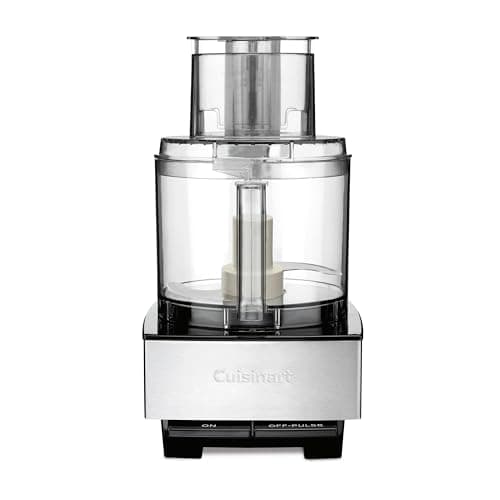
Most full-size kitchens
Cuisinart 14-Cup Food Processor (DFP-14BCNY)
The default full-size processor for a reason: a big, simple, 720-watt workhorse with the shortest parts list to go wrong.
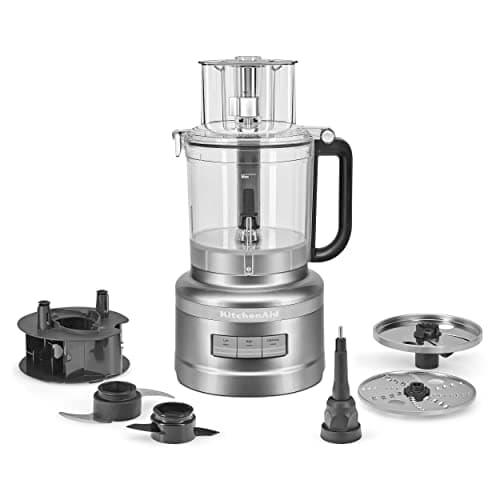
Dicing and prep variety
KitchenAid 13-Cup Food Processor (KFP1318)
A 13-cup KitchenAid with a 3-in-1 feed tube and an included dicing kit — the widest job range in the roundup.
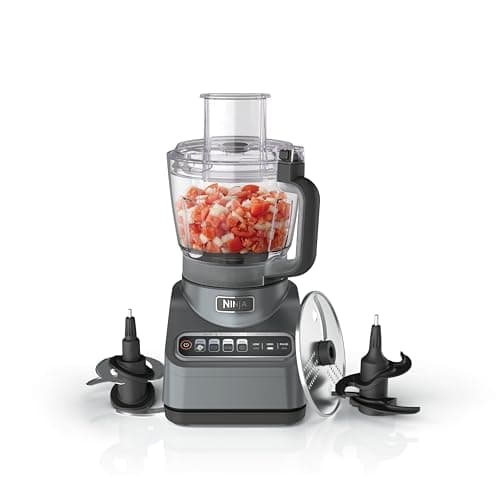
Value and dough
Ninja Professional Plus Food Processor (BN601)
The value pick: a 1,000-peak-watt motor and a dough blade for well under half the price of the premium machines.
#ad · As an Amazon Associate we earn from qualifying purchases.
Questions
Frequently asked
Can you shred chicken in a food processor?
Which blade do you use to shred chicken in a food processor?
Why did my chicken turn to paste in the food processor?
Is a stand mixer better than a food processor for shredding chicken?
Should the chicken be hot or cold when you shred it?
How much chicken can you shred at once?
Keep reading
Related
- Food processor blades and discs explainedWhat the dough blade is actually for.
- Ninja BN601 reviewThe value machine that ships a dough blade.
- Food processor vs meat grinderFor the raw-meat version of this job.
- Food processor vs stand mixerWhere the two machines genuinely diverge.
- How to clean a food processorThe thirty-second self-clean, and the parts that hide food.
- Best large food processorsThe bowls big enough to batch this properly.