HUB 06 · Guides
What Can You Make in a Food Processor?
Twelve jobs it does better than anything else in the kitchen, five it does badly, and the blade or disc each one needs. The honest scope of the machine.
We earn a commission if you buy through our links. It does not change the price you pay, and it does not decide our picks — our selection criteria are published in full. How this works.
A food processor does one thing: it moves food past a cutting edge, fast. Everything it is good at follows from that, and so does everything it is bad at. The twelve jobs below are the ones where that mechanism beats every other tool in the kitchen — and the five after them are the jobs people buy one for and end up disappointed by.
The twelve it does better than anything else
- Shredded cheese. The shredding disc turns a block into a bowlful in about ten seconds, and block cheese costs less and melts better than the pre-shredded bags that carry anti-caking starch.
- Coleslaw and shredded vegetables.A whole cabbage, a bag of carrots, a celeriac — the disc handles volume no knife can match.
- Even slices. Potatoes for a gratin, cucumber for pickles, apples for a tart. The slicing disc gives a uniformity that matters for even cooking.
- Pie and pastry dough. Butter is cut into flour in seconds, before it has time to warm. This is the job where a processor genuinely beats a mixer.
- Pizza and bread dough. Kneaded in under a minute with the dough blade; see the best food processor for dough.
- Hummus and thick dips.The wide bowl keeps a stiff paste circulating without extra liquid — the technique is in our hummus guide.
- Nut butter. Ten to fifteen minutes of running turns roasted nuts to butter. Nothing else at home does this.
- Pesto and herb sauces. Coarse, textured, and not the smoothie a blender would make of them.
- Breadcrumbs. Stale bread to crumbs in five seconds, fresh or dry.
- Compound butters and cookie dough. Cold fat and dry ingredients combined without creaming.
- Grinding meat.Partly frozen cubes, pulsed carefully, give you a burger grind — not as clean as a meat grinder, but capable.
- Emulsified dressings and mayonnaise. Provided the lid lets you add oil slowly while it runs.
The five it does badly
- Smoothies.The wide, shallow bowl cannot form a vortex, so fruit and ice end up unevenly chopped rather than liquefied. This is a blender’s job — see food processor vs blender.
- Anything very liquid. Bowls leak past the lid seal at roughly half capacity. Soup belongs in a pot with an immersion blender.
- Mashed potato. The blade ruptures the starch cells and turns potato to glue within seconds. Use a ricerinstead — this is the single most common food processor mistake.
- A neat dice. Blades mince; they do not cube. Only a dicing kit or a push-dicer makes an even cube.
- Whipping cream or egg whites.The blade shears the air out rather than beating it in. A whisk, a mixer or a stick blender’s whisk attachment does this.
Which attachment does which job
| Attachment | What it does | Typical jobs |
|---|---|---|
| S-blade (steel) | Chops and purees in the bowl | Dips, pesto, breadcrumbs, pastry, nut butter, mincing |
| Shredding disc | Grates food passed through the feed tube | Cheese, carrots, cabbage, potato for rösti |
| Slicing disc | Cuts even slices at a set or adjustable thickness | Gratins, pickles, apples, cucumber, onion |
| Dough blade (plastic) | Folds and pushes rather than cutting | Bread and pizza dough |
| Dicing kit | Pushes food through a grid after slicing | The only true cube a processor makes |
The habit that changes the results
Pulse, do not run. Almost every disappointing food processor result — watery salsa, gluey potato, pastry that will not flake — comes from holding the button down. Short one-second pulses let the food fall back under the blade between cuts, which is what produces an even texture. Continuous running is for exactly three things: dough, nut butter, and emulsifying a dressing. Everything else is pulses.
The second habit is loading in size order: put the hardest and largest pieces at the bottom near the blade, softer things above. And do not fill past about two-thirds, or the top of the load never reaches the blade at all — the sizing arithmetic is in our food processor size guide.
The job most owners underrate is the simplest one on the list. Breadcrumbstake about ten seconds, turn the end of a loaf into something worth keeping, and are the one task where the cheapest full-size machine does exactly what the most expensive one does — as long as you pulse rather than run it.
The hardware
The hardware this guide is about
The products this guide refers to, with prices pulled live from Amazon and dated on every card. Full rankings live in the roundups linked above.
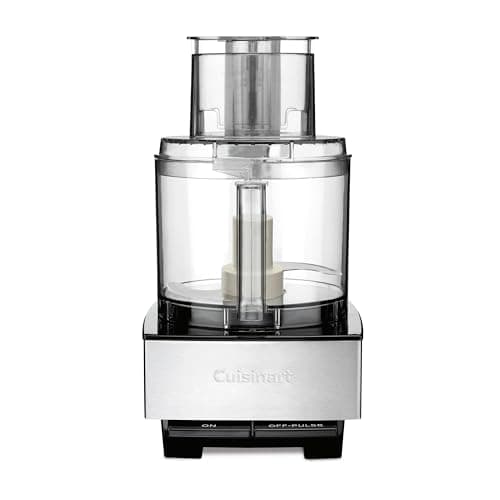
Most full-size kitchens
Cuisinart 14-Cup Food Processor (DFP-14BCNY)
The default full-size processor for a reason: a big, simple, 720-watt workhorse with the shortest parts list to go wrong.
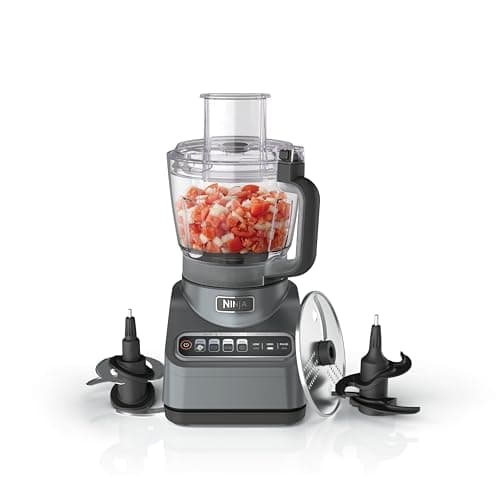
Value and dough
Ninja Professional Plus Food Processor (BN601)
The value pick: a 1,000-peak-watt motor and a dough blade for well under half the price of the premium machines.
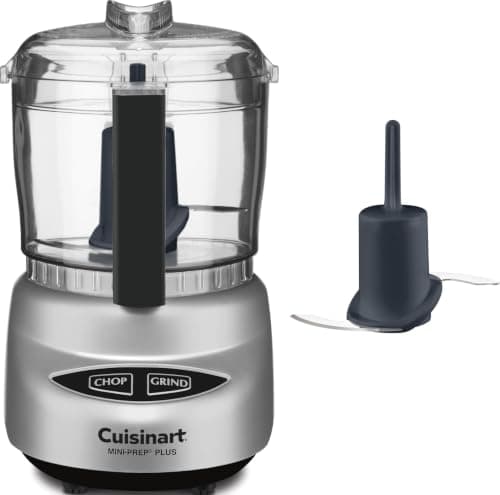
Small daily chopping
Cuisinart Mini-Prep Plus (DLC-2ABC)
The 3-cup workhorse for small jobs: chopping herbs, an onion, a bit of dressing — without hauling out a big bowl.
#ad · As an Amazon Associate we earn from qualifying purchases.
Questions
Frequently asked
Can you make smoothies in a food processor?
Can you make mashed potato in a food processor?
Can you whip cream in a food processor?
What is the plastic blade in my food processor for?
Keep reading