Nut butter is the hardest thing you will ask a food processor to do, and it is hard in an unusual way. It is not a momentary load like a stiff dough — it is eight to fifteen minutes of continuous grinding, during which the motor has nowhere to shed heat. That is why the machine that makes good nut butter is not necessarily the one with the highest number on the box; it is the one with genuine thermal headroom.
Why the process takes so long
Nuts go through four stages and there is no shortcut. First they become crumbs. Then a dry, sandy meal that looks like it will never come together. Then a stiff ball that climbs the side of the bowl and makes the motor groan — this is the stage people give up at, and it is the stage where a weak machine overheats. Then, quite suddenly, the oils release and it turns glossy and pourable. From that point another two minutes makes it genuinely smooth.
Roasting the nuts first shortens all of it, because warm nuts release their oil more readily. Twelve minutes at 350°F, cooled for five, then straight into the bowl. That single step does more for the result than any upgrade in this catalog.
Stop when it says to.Most manufacturers publish a maximum continuous run time and a thermal cut-out. If your machine stops mid-batch and will not restart, it has not broken — it has protected itself, and it usually needs half an hour to reset. Working in two- to three-minute bursts with a scrape-down between them is both easier on the motor and, because the scrape-downs redistribute the paste, faster overall.
The three worth using
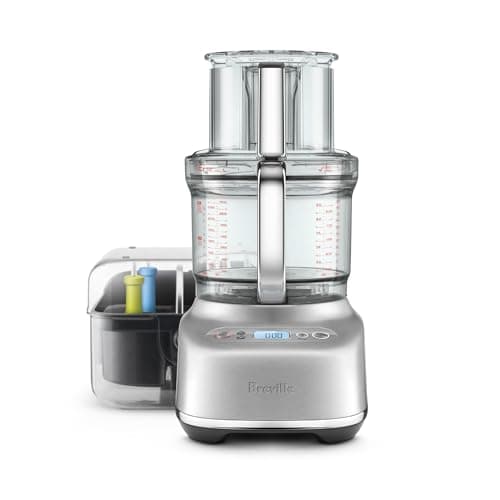
The Breville Sous Chef 16 (BFP810) is the machine to buy if you make nut butter regularly. A published 1450 watts is the most motor in this catalog, the bowl is 16 cups so a full pound of nuts has room to move, and the running cost of all that power is about $4.62 a year at 3 minutes a day, 365 days a year. Power costs nothing to own here; it buys you the ability to run for ten minutes without anxiety.
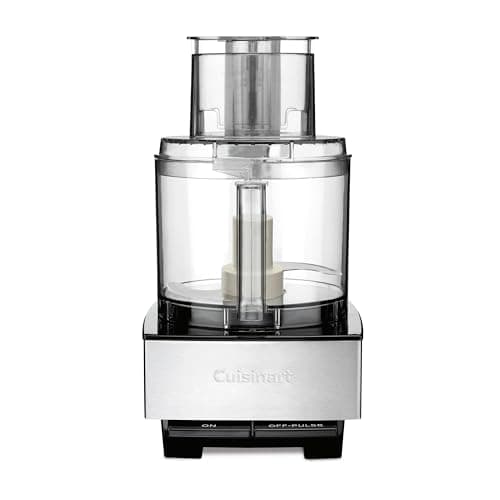
The Cuisinart 14-Cup Food Processor (DFP-14BCNY) is the sensible answer for most kitchens. At a published 720watts it has less headroom than the Breville and you will hear it working at the stiff-ball stage, but it gets there, and it is the machine with the fewest parts to wash afterwards — which matters more than you would think when the bowl is coated in oily paste.
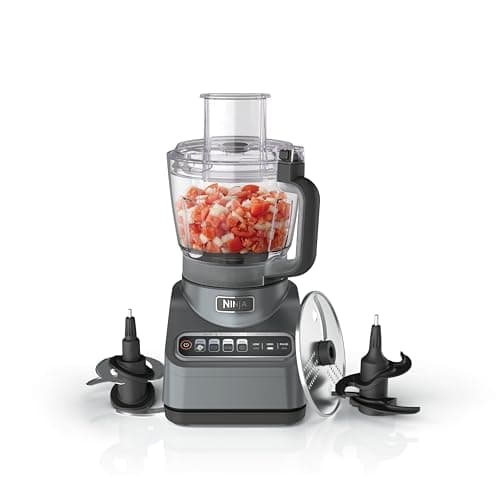
The Ninja Professional Plus Food Processor (BN601) is the value option with an asterisk. Its 1000 watts is a peakfigure rather than a continuous one, and Ninja does not publish the continuous number — so the honest read is that it has less sustained grunt than the headline suggests. It still makes nut butter well. Work in bursts, and do not do it three times a week.
How they compare for this job
| Machine | Published motor | Bowl | Annual running cost | Verdict for nut butter |
|---|
| Breville Sous Chef 16 (BFP810) | 1450 W | 16 cups | $4.62 | The one to buy if you make it often |
| Cuisinart 14-Cup Food Processor (DFP-14BCNY) | 720 W | 14 cups | $2.29 | Gets there; fewest parts to wash |
| Ninja Professional Plus Food Processor (BN601) | 1000 W peak | 9 cups | $3.18 | Fine in bursts; peak watts overstate it |
Running costs are calculated from each manufacturer’s published wattage at 17.45¢ per kWh (US EIA, Electric Power Monthly — average residential price, US total, retrieved July 2026), assuming 3 minutes a day, 365 days a year— a deliberately generous assumption. The point of the column is that electricity is never the reason to buy a smaller motor.
What will not work
Two things people try. A food chopper has neither the bowl volume nor the run time; it will heat up and stall in the sandy-meal stage. An immersion blendercannot do it at all, because nut butter never becomes fluid enough to circulate around the bell — see food processor vs immersion blender for why thickness, not power, is the dividing line between those tools.
A high-powered blender cando it, with a tamper, and produces a slightly smoother result. It also needs a much larger minimum batch to reach the blades, and it is harder to scrape out. For a jar at a time, the processor is the better tool — food processor vs blender covers the wider comparison.
How we picked
Tools we claim to have lab-tested: 0
Every site in this category tells you they ran twenty machines through a lab. We have not, and we say so. Here is what we do instead: read the manufacturer's manual and spec sheet, record the published bowl capacity, motor rating, blade and disc counts and materials, cross-check the warranty against the manufacturer's own warranty document, and cite all of it so you can check the work. Prices come live from Amazon's API and disappear rather than go stale.
The scores above are judgments from that documented research — not test results. The full rubric, including what disqualifies a product, is published in full.