Skip to content
TheBench

HUB 01

The Best Food Processors

One ranked list built from published specifications rather than a weekend of chopping. Each pick carries its bowl capacity, its motor, what it actually does well, and a live price that disappears rather than go stale.

By Stephen V.Updated How we pick
#ad

We earn a commission if you buy through our links. It does not change the price you pay, and it does not decide our picks — our selection criteria are published in full. How this works.

Chopped vegetables and herbs spread across a wooden cutting board.

The short answer

Quick picks

#ProductBest forScorePrice
01
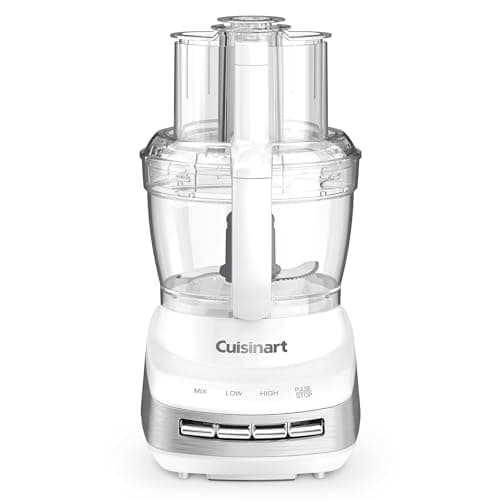
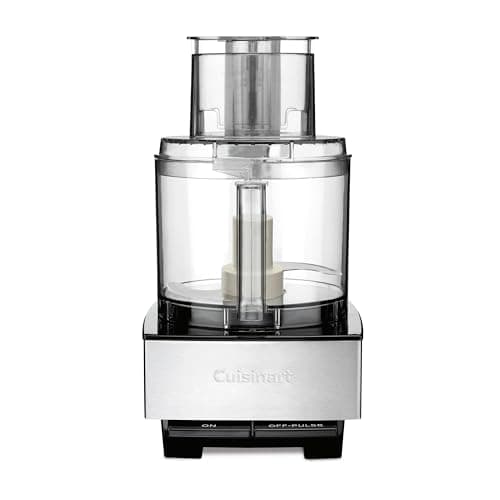
Cuisinart Cuisinart 14-Cup Food Processor (DFP-14BCNY)
Cuisinart 14-Cup Food Processor (DFP-14BCNY)

The default full-size processor for a reason: a big, simple, 720-watt workhorse with the shortest parts list to go wrong.

Most full-size kitchens
8.7
$319.95Amazon
02
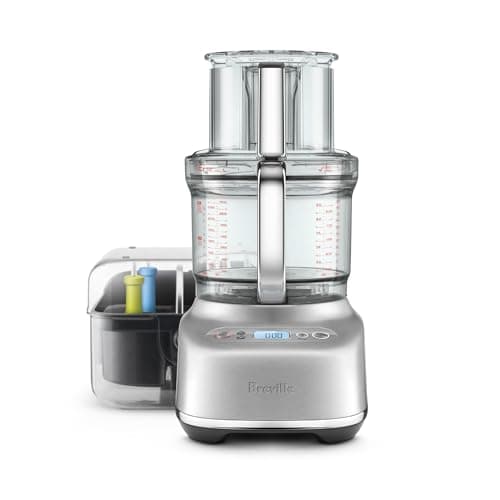
Breville Breville Sous Chef 16 Pro (BFP810)
Breville Sous Chef 16 Pro (BFP810)

The one to buy if you actually use a processor daily: an adjustable slicing dial and a 1,200-watt motor that never flinches.

Serious, frequent cooks
9.1
$499.95Amazon
03
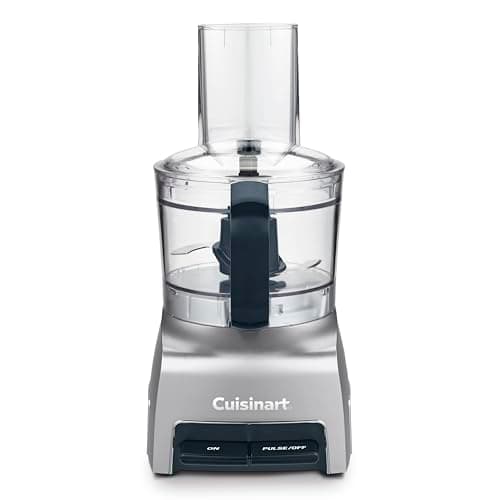
Cuisinart Cuisinart Core Custom 13-Cup (FP-130)
Cuisinart Core Custom 13-Cup (FP-130)

A modern 13-cup Cuisinart with a SealTight bowl and adjustable slicing — more feature per dollar than the classic DFP-14.

Newer full-size buyers
8.5
$329.99Amazon
04
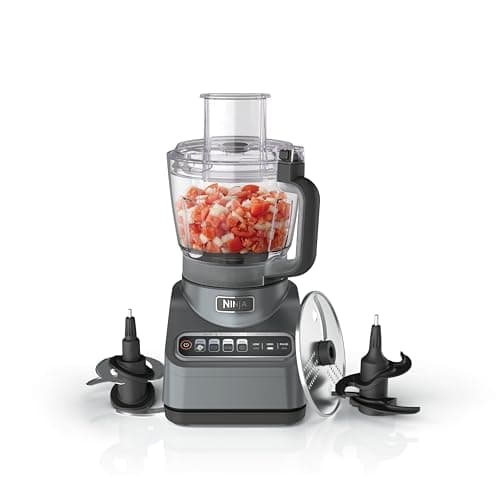
Ninja Ninja Professional Plus Food Processor (BN601)
Ninja Professional Plus Food Processor (BN601)

The value pick: a 1,000-peak-watt motor and a dough blade for well under half the price of the premium machines.

Value and dough
8.3
$129.99Amazon
05
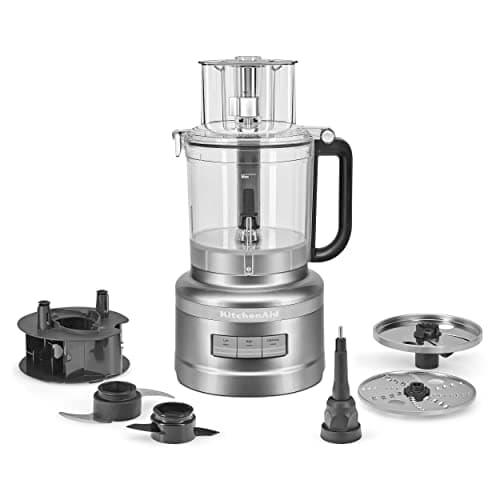
KitchenAid KitchenAid 13-Cup Food Processor (KFP1318)
KitchenAid 13-Cup Food Processor (KFP1318)

A 13-cup KitchenAid with a 3-in-1 feed tube and an included dicing kit — the widest job range in the roundup.

Dicing and prep variety
8.4
Check priceAmazon
06
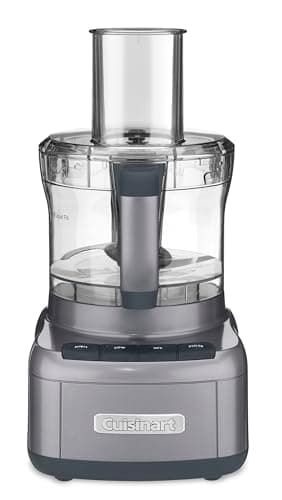
Cuisinart Cuisinart Elemental 8-Cup Food Processor (FP-8SV)
Cuisinart Elemental 8-Cup Food Processor (FP-8SV)

The right-size middle option: a 350-watt 8-cup that fits smaller kitchens and everyday jobs without going mini.

Small households
7.6
$119.95Amazon
07
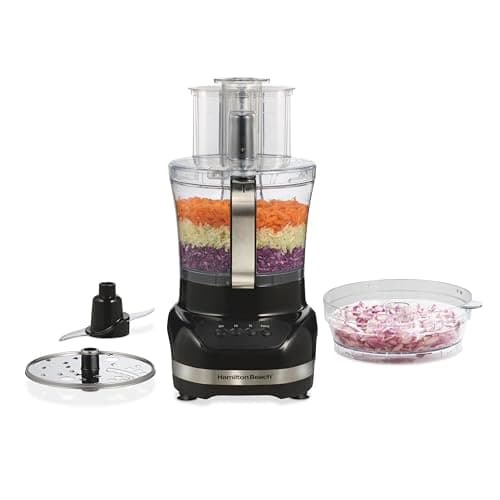
Hamilton Beach Hamilton Beach Stack & Snap 12-Cup
Hamilton Beach Stack & Snap 12-Cup

The budget full-size pick: a 12-cup bowl and no-twist Stack & Snap assembly for well under a hundred dollars.

Budget full-size
7.6
$69.99Amazon

#ad · Prices pulled live from the Amazon Product API, last checked Jul 21, 2026. Where we have no verified live price we show none — we would rather leave a gap than print a number that has gone stale. Scores are our own, compiled from published specs; they are not test results.

Almost every “best food processor” list is built the same way: someone runs a few machines through a batch of pie dough over a weekend, ranks them by how the dough turned out, and publishes. We have not done that. We do not own these processors and we have no test kitchen, and we are not going to pretend otherwise. What we do instead is line up the numbers the manufacturers already publish, in one table, so you can see what actually separates a $50 machine from a $500 one.

The one spec that decides everything: capacity

A food processor is sized in cups, and the cup number is not marketing — it is the single most consequential choice you make. A 14-cup bowl chops a full head of cabbage or a double batch of dough in one go. A 3-cup mini chops one onion and a handful of herbs, and washing a 14-cup bowl to do that is a genuine chore that ends with the machine living in a cupboard. Most kitchens want a mid-to-large bowl (11–14 cups) as the main machine, and a lot of two-person households are honestly better served by a 7–8 cup unit that they will actually leave on the counter and reach for.

The trap is buying big “to be safe”. Capacity you do not use is capacity you have to store and wash. Size the bowl to your normal week, not to the one Thanksgiving where you wished it were bigger.

Power matters, but only past a threshold

Wattage is the number brands shout loudest, and it matters least — up to a point. For chopping, slicing and shredding, almost any modern processor has enough motor. Watts start to matter when you ask the machine to do the two genuinely hard jobs: kneading stiff dough and grinding nut butter. There, a 700–1,200 watt motor pushes through where a 350-watt one strains, overheats and trips its thermal cutout. If you will never make dough, do not pay for power. If you will make it weekly, treat wattage as a real spec and buy up.

The “peak watts” footnote.Some brands headline a peak-watt figure — the draw in the first split-second of spin-up — because it is a bigger number than the continuous wattage that actually does the work. We print the figure the manufacturer states and label it. A 1,000-peak-watt Ninja and a 720-watt Cuisinart are closer in real power than the numbers suggest.

What actually goes wrong, and the parts count

The two complaints that dominate owner reviews are not about power. They are about leaking bowls and about the sheer number of parts to wash. A processor that seals properly lets you puree a soup base without liquid weeping out of the bottom; one that does not will annoy you every week for years. And every extra disc, every dicing kit, every nested small bowl is one more thing to rinse, dry and find drawer space for. The classic Cuisinart DFP-14 has stayed a default recommendation for decades precisely because it has almost nothing to it — a bowl, a lid, a blade, two discs — and that simplicity is a feature.

So our ranking leans on capacity first, then on genuine motor headroom for the hard jobs, then on how sealed and how simple the machine is to live with. Prices are pulled live from Amazon and dated on the page; where a number is not published, we leave it out rather than guess. If you are still deciding whether you need one of these at all, start with do I need a food processor, and if you are choosing between a processor and a blender, we settle that in food processor vs blender.

The Cuisinart 14-Cup DFP-14 is the best food processor for the most people, and the reason is not power. It is a big, sealed, 720-watt bowl with almost nothing to it — a bowl, a lid, a blade and two discs — which is exactly why it has stayed a default recommendation for decades. It does the common jobs to a high standard and gives you very little to wash, store or break. If you want one machine and you have the counter space, buy it and stop reading.

Why a plain Cuisinart beats a machine that costs ten times more

Because the question a ranking answers is not “which of these is the finest machine”. On that question the Breville Sous Chef 16 Pro (BFP810) wins and it is not close: a 16-cup bowl, a 1,200-watt motor, and an external dial that adjusts slice thickness across two dozen settings without opening the lid. If you use a processor most days and you slice a lot, it is the better object, and it is second here for exactly that reason.

The question a ranking has to answer is which machine most people should put money on, and that turns on how often the extra capability gets used. The adjustable dial and the extra 400 watts earn their keep on daily slicing and weekly dough. They do nothing extra on the jobs a processor mostly does — chopping an onion, shredding a block of cheese, pulsing a pesto — which the Cuisinart does just as well for a fraction of the outlay and half the parts to wash.

The flip condition. If you slice vegetables daily or knead stiff dough every week, the ranking inverts and the Breville is your first pick. If you want to dice into neat cubes, only the KitchenAid 13-Cup Food Processor (KFP1318) here does that, thanks to its dicing kit. And if you mostly do small jobs, skip the whole top of this list and read the budget picks or the mini options below.

The table: capacity, motor and what a year of use costs

Capacity is the spec that decides everything, so it leads the table. Motor wattage matters only past a threshold — for dough and nut butter, not for chopping — so it is printed in each manufacturer’s own words, because peak watts and continuous watts are not the same thing. And the last column is the honest answer to the wattage marketing: at normal use, a food processor costs pennies a year to run. It is not a reason to buy or skip anything.

Running cost assumes 3 minutes a day, 365 days a year, at 17.45¢ per kWh (US EIA, Electric Power Monthly — average residential price, US total, retrieved July 2026) — deliberately generous, since most kitchens run a processor for seconds. Where a brand publishes no wattage, the cost cell reads “not published” rather than carrying a guess.
MachineBowlPublished motorEst. cost / year
Cuisinart 14-Cup Food Processor (DFP-14BCNY)14 cups720 W$2.29
Breville Sous Chef 16 Pro (BFP810)16 cups1,200 W$3.82
Cuisinart Core Custom 13-Cup (FP-130)13 cups550 W$1.75
Ninja Professional Plus Food Processor (BN601)9 cups1,000 W peak$3.18
KitchenAid 13-Cup Food Processor (KFP1318)13 cupsNot publishednot published
Cuisinart Elemental 8-Cup Food Processor (FP-8SV)8 cups350 W$1.11
Hamilton Beach Stack & Snap 12-Cup12 cupsNot publishednot published

The takeaway from that last column is the point: electricity is not a factor in this purchase. Buy on capacity, on genuine motor headroom if you make dough, and on how simple the machine is to seal and wash — not on a wattage number the marketing leans on.

In detail

The picks, in full

01
Cuisinart Cuisinart 14-Cup Food Processor (DFP-14BCNY)

Most full-size kitchens

Cuisinart 14-Cup Food Processor (DFP-14BCNY)

Big-batch capacityOnly 3 parts to wash
8.7/10

The default full-size processor for a reason: a big, simple, 720-watt workhorse with the shortest parts list to go wrong.

Capacity
9.5
Power
8.5
Versatility
8
Ease of clean
9
Build & warranty
8.5

What it gets right

  • Genuinely large 14-cup bowl handles a whole batch of dough or a full head of cabbage without stopping to empty it
  • Only three washable parts — no fiddly interlocking accessories to store or lose
  • 720-watt motor pushes through pie dough and hard cheese without bogging down

What it doesn't

  • No smaller nested bowl — dicing a single shallot in a 14-cup bowl is wasteful and messy
  • Tall footprint does not fit under most upper cabinets when assembled

What it costs to run

About $2.29 a year in electricity, at 3 minutes a day, 365 days a year and 17.45¢ per kWh.

720 W, the figure Cuisinart publishes for the DFP-14 series and shown on the listing. The full arithmetic is published.

Skip this if…

You cook for one or two and mostly do small jobs — a 14-cup bowl is a chore to wash for half an onion, and a mini processor will serve you better and cost a third as much.

$319.95on Amazon

Price last checked Jul 21, 2026. Prices move constantly — Amazon's at checkout is the one that counts.

#ad · we may earn a commission from this link to Cuisinart 14-Cup Food Processor (DFP-14BCNY)

02
Breville Breville Sous Chef 16 Pro (BFP810)

Serious, frequent cooks

Breville Sous Chef 16 Pro (BFP810)

Micro-adjustable slicing1,200 W motor
9.1/10

The one to buy if you actually use a processor daily: an adjustable slicing dial and a 1,200-watt motor that never flinches.

Capacity
9.6
Power
9.6
Versatility
9.5
Ease of clean
8
Build & warranty
8.8

What it gets right

  • External slicing dial gives you 24 thickness settings without swapping discs
  • 1,200-watt motor is the strongest here and handles nut butter and stiff dough easily
  • Wide feed chute takes a whole tomato or potato without pre-cutting

What it doesn't

  • The most expensive food processor on this page by a wide margin
  • Large storage box of discs and accessories takes real cabinet space

What it costs to run

About $3.82 a year in electricity, at 3 minutes a day, 365 days a year and 17.45¢ per kWh.

1,200 W, the figure Breville lists for the Sous Chef and shown on the listing. The full arithmetic is published.

Skip this if…

You reach for a processor a few times a month — you will not use the adjustable dial enough to justify paying two to three times what a very good Cuisinart costs.

$499.95on Amazon

Price last checked Jul 21, 2026. Prices move constantly — Amazon's at checkout is the one that counts.

#ad · we may earn a commission from this link to Breville Sous Chef 16 Pro (BFP810)

03
Cuisinart Cuisinart Core Custom 13-Cup (FP-130)

Newer full-size buyers

Cuisinart Core Custom 13-Cup (FP-130)

SealTight leak-resist bowl
8.5/10

A modern 13-cup Cuisinart with a SealTight bowl and adjustable slicing — more feature per dollar than the classic DFP-14.

Capacity
9
Power
8
Versatility
8.8
Ease of clean
8.5
Build & warranty
8.3

What it gets right

  • Adjustable slicing disc built in — no separate discs to buy for different thicknesses
  • SealTight bowl seals fully so you can fill it with liquid without it leaking at the base
  • Cheaper than the DFP-14 while adding the adjustable disc

What it doesn't

  • 550-watt motor is less muscular than the DFP-14's 720 W on very stiff dough
  • More small parts than the bare-bones DFP-14 means more to wash

What it costs to run

About $1.75 a year in electricity, at 3 minutes a day, 365 days a year and 17.45¢ per kWh.

550 W, the figure Cuisinart lists for the Core Custom 13-cup and shown on the listing. The full arithmetic is published.

Skip this if…

You make heavy bread or pizza dough weekly — the lower-wattage motor works but you will feel it strain, and the 720 W DFP-14 or 1,200 W Breville is the more comfortable long-term choice.

$329.99on Amazon

Price last checked Jul 21, 2026. Prices move constantly — Amazon's at checkout is the one that counts.

#ad · we may earn a commission from this link to Cuisinart Core Custom 13-Cup (FP-130)

04
Ninja Ninja Professional Plus Food Processor (BN601)

Value and dough

Ninja Professional Plus Food Processor (BN601)

Dough blade includedBest value
8.3/10

The value pick: a 1,000-peak-watt motor and a dough blade for well under half the price of the premium machines.

Capacity
7.8
Power
9
Versatility
8.5
Ease of clean
8.2
Build & warranty
7.8

What it gets right

  • 1,000 peak watts is a lot of motor for the money and pushes through dough easily
  • Includes a dedicated dough blade — genuinely useful for pizza and bread bases
  • Auto-iQ preset programs take the guesswork out of chopping and mixing

What it doesn't

  • 9-cup bowl is smaller than the full-size Cuisinart and Breville
  • "Peak" watts overstate steady power — the continuous figure is lower and unpublished

What it costs to run

About $3.18 a year in electricity, at 3 minutes a day, 365 days a year and 17.45¢ per kWh.

1,000 peak watts, printed in the product title and listing (peak, not continuous). The full arithmetic is published.

Skip this if…

You want the biggest possible bowl for batch cooking — 9 cups fills faster than the 13–16 cup machines, so a big-batch cook should size up.

$129.99on Amazon

Price last checked Jul 21, 2026. Prices move constantly — Amazon's at checkout is the one that counts.

#ad · we may earn a commission from this link to Ninja Professional Plus Food Processor (BN601)

05
KitchenAid KitchenAid 13-Cup Food Processor (KFP1318)

Dicing and prep variety

KitchenAid 13-Cup Food Processor (KFP1318)

Dicing kit included
8.4/10

A 13-cup KitchenAid with a 3-in-1 feed tube and an included dicing kit — the widest job range in the roundup.

Capacity
9
Power
8
Versatility
9.2
Ease of clean
7.5
Build & warranty
8.2

What it gets right

  • One of the few processors here that actually dices, thanks to the included dicing kit
  • ExactSlice external lever adjusts thickness without opening the bowl
  • 3-in-1 feed tube handles anything from a single carrot to a whole potato

What it doesn't

  • The dicing kit is fiddly to assemble and clean — plan on rinsing several parts
  • KitchenAid does not headline a wattage, so raw power is harder to compare

What it costs to run

KitchenAid publishes no usable wattage for this machine, so we do not show a running-cost figure for it. Here is the method we would have used.

Skip this if…

You never dice and just want to chop and slice — the dicing kit is the main reason to pay for this one, and without it a simpler Cuisinart does the rest for less.

Check price on Amazon →

No buyable offer at the last price check (Jul 21, 2026). We show nothing rather than a stale number.

#ad · we may earn a commission from this link to KitchenAid 13-Cup Food Processor (KFP1318)

06
Cuisinart Cuisinart Elemental 8-Cup Food Processor (FP-8SV)

Small households

Cuisinart Elemental 8-Cup Food Processor (FP-8SV)

Compact footprint
7.6/10

The right-size middle option: a 350-watt 8-cup that fits smaller kitchens and everyday jobs without going mini.

Capacity
7
Power
6.8
Versatility
7.2
Ease of clean
9
Build & warranty
8

What it gets right

  • 8-cup bowl is big enough for a household's dinner prep but small enough to store easily
  • Simple three-button control is almost impossible to get wrong
  • Much cheaper than the full-size machines

What it doesn't

  • 350-watt motor labors on stiff dough and hard blocks of cheese
  • No adjustable slicing — one disc thickness only

What it costs to run

About $1.11 a year in electricity, at 3 minutes a day, 365 days a year and 17.45¢ per kWh.

350 W, printed in the product title and listing. The full arithmetic is published.

Skip this if…

You batch-cook or knead dough regularly — 8 cups fills quickly and the 350 W motor is the weakest here for heavy loads.

$119.95on Amazon

Price last checked Jul 21, 2026. Prices move constantly — Amazon's at checkout is the one that counts.

#ad · we may earn a commission from this link to Cuisinart Elemental 8-Cup Food Processor (FP-8SV)

07
Hamilton Beach Hamilton Beach Stack & Snap 12-Cup

Budget full-size

Hamilton Beach Stack & Snap 12-Cup

No-twist assembly
7.6/10

The budget full-size pick: a 12-cup bowl and no-twist Stack & Snap assembly for well under a hundred dollars.

Capacity
8.5
Power
7
Versatility
7
Ease of clean
8.5
Build & warranty
6.8

What it gets right

  • 12-cup capacity at a genuine budget price
  • Stack & Snap design snaps together without lining up and twisting the bowl
  • Big feed chute reduces pre-cutting

What it doesn't

  • Build quality is plainer plastic than the Cuisinart and KitchenAid
  • No adjustable slicing and fewer discs in the box

What it costs to run

Hamilton Beach publishes no usable wattage for this machine, so we do not show a running-cost figure for it. Here is the method we would have used.

Skip this if…

You want a processor that lasts a decade of heavy use — this is built to a price, and a heavy daily cook will be happier spending more on a Cuisinart or Breville.

$69.99on Amazon

Price last checked Jul 21, 2026. Prices move constantly — Amazon's at checkout is the one that counts.

#ad · we may earn a commission from this link to Hamilton Beach Stack & Snap 12-Cup

Questions

Frequently asked

What size food processor do I need?
For most households a 11–14 cup bowl is the right main machine — big enough for dough, cabbage and batch prep without being a chore. Two-person kitchens that mostly do small jobs are often happier with a 7–8 cup model they will actually leave out, plus a cheap mini chopper for herbs and a single onion. Buying bigger “to be safe” just means more to wash and store.
Does food processor wattage really matter?
Only past a threshold. For chopping, slicing and shredding, almost any modern processor has enough motor. Wattage starts to matter for the two hard jobs — kneading stiff dough and grinding nut butter — where a 700–1,200 watt motor pushes through and a 350-watt one strains and can trip its thermal cutout. If you never make dough, do not pay for power.
Can a food processor replace my blender?
Not really — they do different jobs. A processor cuts solids (chopping, slicing, shredding, dough) and a blender moves liquid (smoothies, purees). A processor makes a coarse salsa or a thick hummus well but a lumpy smoothie; a blender does the reverse. We settle it in full in food processor vs blender.
Which food processor actually dices into cubes?
Very few. Most processors chop, slice and shred but do not produce neat cubes. In this roundup the KitchenAid 13-Cup Food Processor (KFP1318) is the one that dices, using its included dicing kit. If dicing is your main need and you do not want a full processor, a manual push-dicer from our chopper roundup is cheaper and just as tidy.

Receipts

Sources

We do not run a testing lab and we do not pretend to. Specifications come from the manufacturer's own published documents and from published standards; prices come from the live Amazon API. Where a figure is not published, the page says “not published” rather than guessing. Read the full method.

Everything in this hub

All of Food Processors

Filed elsewhere, written for you

Also worth reading

These live under a different section of the site but answer the same question a food processors buyer is actually asking.