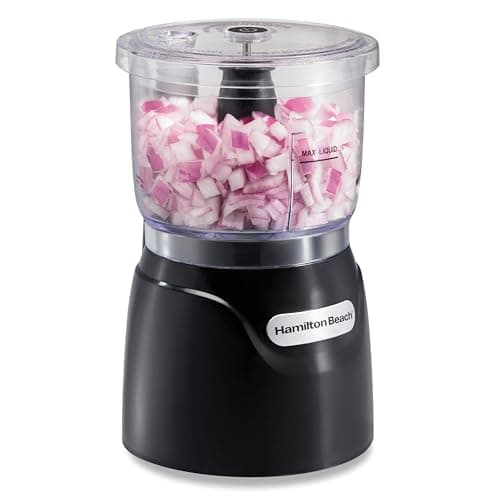
The Hamilton Beach 3-Cup Electric Vegetable Chopper is the value pick among electric choppers, and its case is simple: a real 3-cup bowl and one-touch chopping for about the price of a couple of takeout coffees. If you want a cheap, no-fuss gadget for onions and herbs and nothing more, it does that job honestly.
What the low price buys
Plenty, for the money. The 3-cup bowl holds more than the pocket-sized 2-cup choppers, so you batch less. Operation is one button — press to chop, release to stop — with nothing to learn. And the bowl, blade and lid all lift out for the dishwasher, which is the part of chopping everyone actually dreads. For soft and medium foods — onions, garlic, peppers, soft herbs, a quick salsa — it keeps pace with choppers that cost noticeably more.
Where it gives up ground
Two places, both predictable at the price. There is no speed control: it is on or off, so you meter texture by tapping the button rather than dialing it in. And the motor base is lighter-duty, happiest with soft-to-medium loads rather than a daily grind of hard almonds or parmesan. If you chop hard items often, the stronger Ninja Express Chop (NJ110GR) or Cuisinart Elemental 4-Cup Chopper/Grinder (ECH-4SV) will hold up better over the years. If you mostly chop soft vegetables and want to spend the least, this is the sensible buy.
Who it is for.The occasional chopper — someone who dices an onion a few times a week and wants the cheapest tool that does it without a fight. Heavy daily users, or anyone who chops hard nuts and hard cheese, should read the electric chopper roundup and spend a little more.
How we picked
Tools we claim to have lab-tested: 0
Every site in this category tells you they ran twenty machines through a lab. We have not, and we say so. Here is what we do instead: read the manufacturer's manual and spec sheet, record the published bowl capacity, motor rating, blade and disc counts and materials, cross-check the warranty against the manufacturer's own warranty document, and cite all of it so you can check the work. Prices come live from Amazon's API and disappear rather than go stale.
The scores above are judgments from that documented research — not test results. The full rubric, including what disqualifies a product, is published in full.