Potatoes are the reason most people buy a mandoline, and they are also the ingredient that exposes a bad one fastest. A potato is dense, so it resists; it is round, so it rolls; and it gets slippery the moment it is cut, because starch and water come to the surface. What you need from the tool is a thin setting that is genuinely thin, a bed wide enough for the whole face, and something that holds the potato other than your fingers.
Three jobs, three thicknesses
It helps to name what you are actually making, because the settings are not close together.
- Crisps and chipswant the thinnest setting the tool has — roughly a millimeter or under. Thicker than that and they go leathery in the middle rather than crisp. This is the setting a knife cannot reach.
- Gratin and scalloped potatoeswant around 2–3 mm. Thin enough to soften and layer tightly, thick enough to hold their shape rather than dissolving into the cream.
- Fries and batonsare not a slicing job at all — they need a julienne or French-fry blade, which cuts a slice and then divides it in one pass.
That last point is the one that decides the shortlist: if fries are on your list, you need a mandoline that carries a French-fry or julienne blade, not just a thickness dial — or a dedicated french fry cutter, which pushes a whole potato through a fixed grid in one stroke and makes thicker batons than any mandoline blade will.
The three worth using
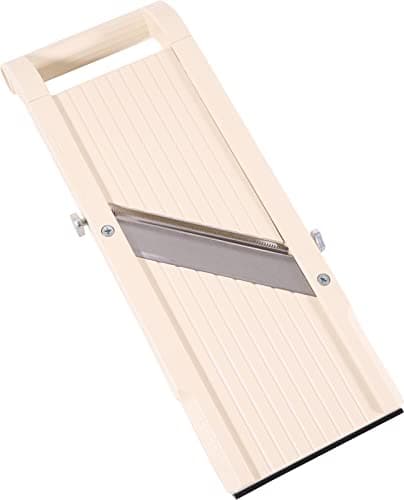
The Benriner Super Slicer (Japanese Mandoline)is the pick for crisps and for anyone who wants the thinnest cut available. It is the plain Japanese design that professional kitchens use: an extra-wide bed, a screw-set thickness adjustment and blades sharp enough that a potato needs almost no pressure. Its own listed weakness is the relevant one here — the included guard is minimal, and a potato that has been sliced down to a fist-sized lump is exactly when that matters.
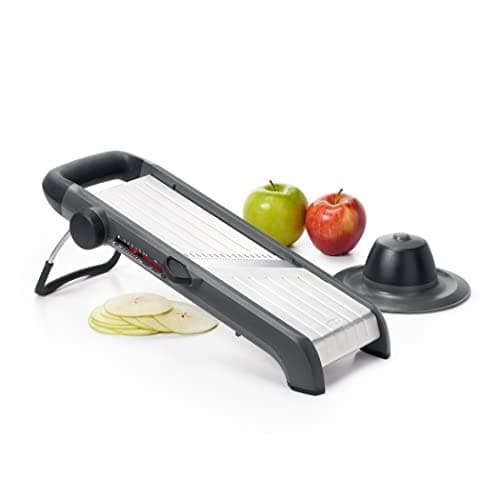
The OXO Good Grips Chef's Mandoline Slicer 2.0 is the pick for most kitchens doing most potato jobs. OXO publishes 21 thickness settings from a dial, plus julienne and French-fry cuts, so it covers crisps, gratin and fries from one tool without swapping anything but the blade selector. Its food holder is the best-designed here, which is worth more on potatoes than on anything else.
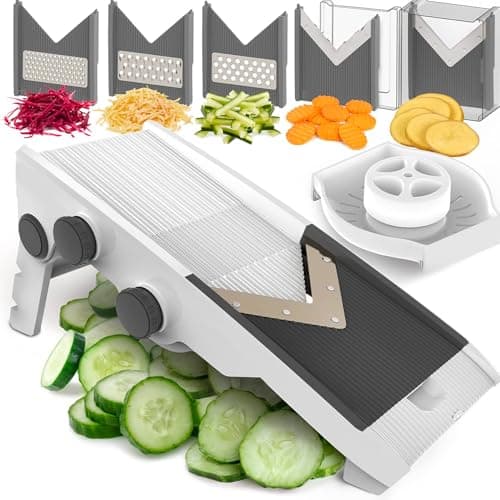
The Mueller Austria Multi-Blade Adjustable Mandoline is the budget route in: five interchangeable stainless blades and an adjustable dial for a fraction of the price of the other two, with a hand-guard included. It is the right answer for someone who will make gratin four times a winter and does not want a lifetime tool.
The potato-specific safety rule: flatten it first.A round potato rolls, and a rolling potato is how hands end up on the blade. Cut a thin slice off one side with a knife and put that flat face down before you start — it stabilizes the potato, gives the food holder something to grip, and costs you one slice. Then stop while there is still a piece to hold. The last centimeter is not worth it; keep it for stock.
How they compare for potatoes
| Mandoline | Thickness control | Fries / julienne | Best potato job |
|---|
| Benriner Super Slicer (Japanese Mandoline) | Screw-set dial | 3 interchangeable julienne blades | Crisps and the thinnest cuts |
|---|
| OXO Good Grips Chef's Mandoline Slicer 2.0 | 21 settings via dial | Julienne and French-fry cuts | All three jobs from one tool |
|---|
| Mueller Austria Multi-Blade Adjustable Mandoline | Adjustable dial | 5 interchangeable blades | Occasional gratin on a budget |
|---|
Technique that changes the result
Slice potatoes into water if you are not cooking them immediately — cut surfaces oxidize and go gray within minutes. For crisps, that soak does a second job: it rinses off surface starch, which is what makes the difference between crisp and chewy. Dry them properly afterwards, because water and hot oil do not mix.
For gratin, do the opposite. Do not rinse: the starch that comes off the slices is what thickens the cream and holds the layers together. Slice straight into the dish, season as you go, and press the layers down.
Keep the blade sharp. A dull mandoline is more dangerous than a sharp one, because it needs force to push through a dense potato and force is what makes a hand slip. Most mandoline blades are not user-sharpenable; when the cut stops being clean, replace the blade.
When to use a food processor instead
Volume. If you are slicing five pounds of potatoes for a party gratin, a food processor with a slicing disc is faster and considerably safer, because the blade is enclosed and the feed tube does the holding. It will not go as thin, and it will not make a fry, but for a large gratin it is the sensible tool. The full argument is in mandoline vs food processor.
For anything at the very thin end — crisps, a potato pave, a raw shaved salad — the mandoline stays the only home tool that does it, and that is why it is worth owning despite the risk. Read the safety guide before the first use, and buy a cut-resistant glove at the same time as the mandoline rather than after the first incident.