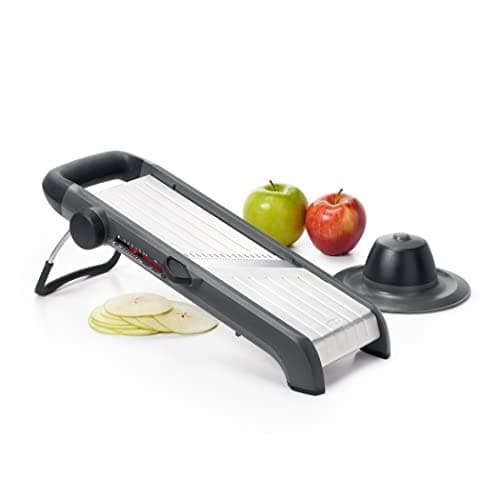
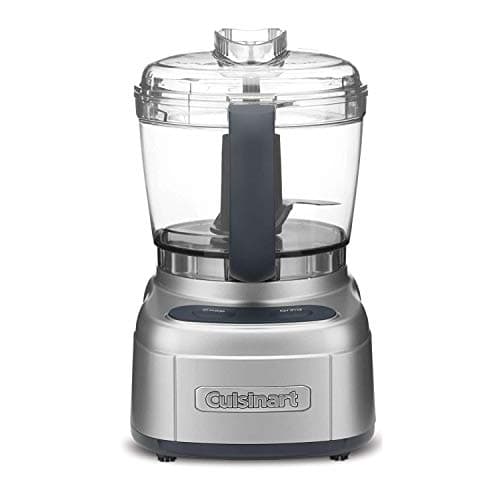
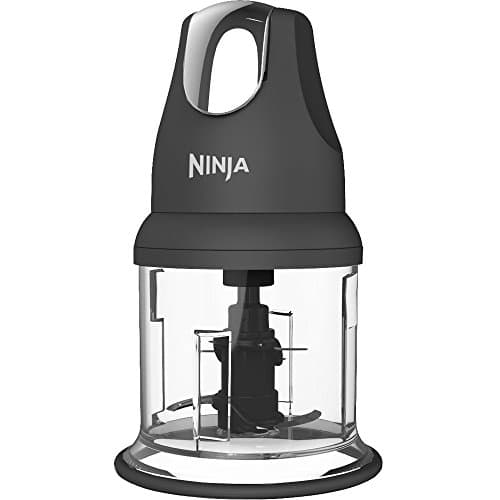
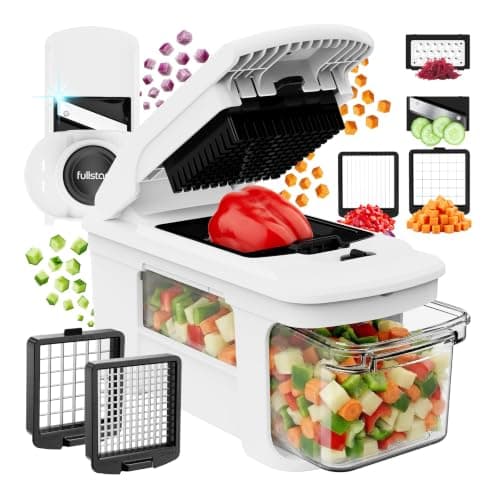
If you want even tomato cubes — for a kachumber, a bruschetta, a pico de gallo — buy the Fullstar Pro XL Vegetable Chopper & Mandoline and use a firm tomato, not a soft one. If you want slices for a sandwich or a tart, no chopper will do it and the OXO Good Grips Chef's Mandoline Slicer 2.0 is the answer. If you want salsa, where pulp is the point, the Cuisinart Elemental 4-Cup Chopper/Grinder (ECH-4SV) takes a 4-cup batch in one go. If you want a fine mince for a sauce base, the 2-cup Ninja Express Chop (NJ110GR) does it in two pulses. Four different outputs, four different tools, and the one thing none of them fixes is a tomato that is too ripe.
Ripeness is the variable, not the brand. Every complaint about a chopper and tomatoes comes down to the same thing: a dead-ripe tomato has no structure to push against. Press it through a dicing grid and it bursts; spin a blade through it and you get juice with lumps in. A firm, slightly under-ripe tomato — a Roma or a plum tomato especially, because the walls are thicker and the gel pockets smaller — cuts cleanly in all four of the tools below. Chill it for twenty minutes first and it cuts better still.
Sorted by what you want out of the tomato
Even cubes: a push-down dicer
A push-dicer presses the tomato through a fixed grid in one stroke, so the cube is decided by the grid rather than by your knife skills. On the Fullstarthat is a choice between a fine and a medium dicing grid, and for tomato the medium one is right — a fine grid asks the walls to survive twice as many cuts and they usually do not. Core it, halve it skin-side up, and press in one committed motion rather than two tentative ones. The 1.8 L catch container underneath is what makes this the meal-prep answer: the cubes land in a lidded box that goes straight into the fridge.
The limitation is honest and worth stating: the grid is a field of exposed edges and tomato skin lodges in it, so this is the slowest of the four to wash. Our guide to cleaning a vegetable chopper exists largely because of jobs like this one.
Slices: a mandoline, not a chopper
No chopper on the market slices a tomato, because slicing needs one blade moving in one direction across a supported surface. That is a mandoline’s entire job. The OXOhas a 21-setting thickness dial, which matters more on tomato than on anything else: thick enough and the slice holds together, thin enough and it falls apart on the plate. Wear a cut glove — a tomato is slippery and the blade does not care. Our mandoline safety guide is the five-minute read to do before the first slice.
Salsa: a bladed chopper with a real bowl
Salsa is the one tomato job where pulp is not a failure. Here the unevenness that makes a bladed chopper a bad dicer is exactly right — you want some pieces and some liquid. The Cuisinart’s 4-cup bowl is the smallest one here that takes a full batch of tomato, onion, chilli and coriander without stopping to empty it, and the auto-reversing blade keeps the mix moving instead of letting it pack into the base. Two or three short pulses, not a continuous run, or you will end up with soup. Our best food processor for salsa page covers the step up for anyone making it by the jar.
Fine mince for a sauce: the small blade
For a sauce base, where the tomato is going to collapse into the pan anyway, a 2-cup bladed chopper is faster than anything and has the least to wash. The Ninja takes roughly two medium tomatoes at a time at 16 oz, and two one-second pulses is the whole job. It has no pour spout, which on a wet mixture like this is its one genuine annoyance — tip it into the pan over the sink the first time and you will see why.
What each one publishes
| Pick | Mechanism | Published capacity | Output on a tomato | Washing |
|---|
| Fullstar Pro XL Vegetable Chopper & Mandoline | Hand press through a fixed grid | 1.8 L container, 8-cup XL body | Even cubes, if the tomato is firm | Slowest — skin lodges in the grid; brush included |
|---|
| OXO Good Grips Chef's Mandoline Slicer 2.0 | Single blade across a runway | Not stated; 21 thickness settings | Slices, from paper-thin to sandwich-thick | Fast, but a bare blade — wear a glove |
|---|
| Cuisinart Elemental 4-Cup Chopper/Grinder (ECH-4SV) | Powered blade in a bowl | 4 cups | Salsa-grade pulp and pieces | All removable parts dishwasher safe |
|---|
| Ninja Express Chop (NJ110GR) | Powered stacked blades | 16 oz (2 cups) | Fine mince, some juice | Bowl, blades and lid dishwasher safe; no pour spout |
|---|
The tomato nothing on this page will cut
A heirloom or beefsteak at peak ripeness — the kind that weeps when you look at it — is a knife job and only a knife job, on a serrated edge, in one pass per slice. Every machine here applies pressure in some form, and pressure is precisely what that tomato cannot take. We would rather say that than sell you a tool for it.
Cherry and grape tomatoes are the other exception, for the opposite reason: they are small enough to roll out from under a blade and round enough to sit on top of a dicing grid instead of going through it. A pair of kitchen shears over a bowl, or the flat of a knife, beats every machine on this page for those.
Why this page is not the dicer page
The best vegetable dicers ranks push-dicers against each other on the general dicing job, and the best vegetable choppers ranks the whole field. This page answers a narrower question — which tool for a tomato specifically — and the answer is different because tomato is the one common vegetable where the correct tool depends on the output rather than on the machine’s quality. That boundary is deliberate and stated on all three pages.
Four habits that matter more than the tool
Buy firmer tomatoes for machine work. Roma and plum varieties have thicker walls and less gel, which is why restaurant kitchens dice those and slice the soft ones by hand.
Chill before you cut. Twenty minutes in the fridge firms the flesh enough to change the result in a dicing grid. This is the single cheapest improvement available.
Core first, always. The stem core is the toughest part of the fruit and the thing that jams a grid or stalls a blade. Cut it out before anything else.
Rinse the tool immediately. Tomato acid and skin dry onto stainless and plastic faster than almost anything else in the kitchen, and dried skin in a dicing grid is a ten-minute job instead of a ten-second one.
What we are not claiming
We have not tested these four tools on tomatoes or on anything else. The capacities, mechanisms, blade counts and care instructions above are each maker’s published wording, cited below; the recommendation is a mechanism argument you can check for yourself. Prices come live from Amazon with the date attached.