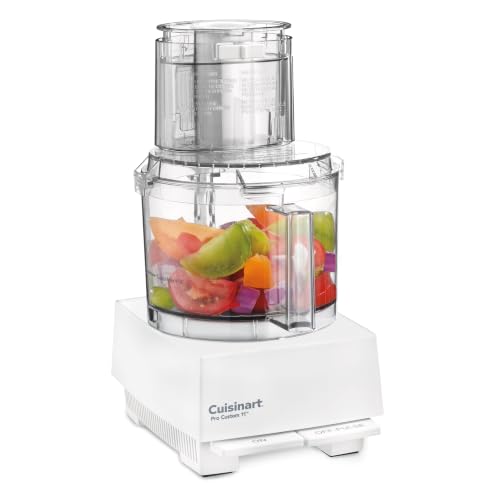
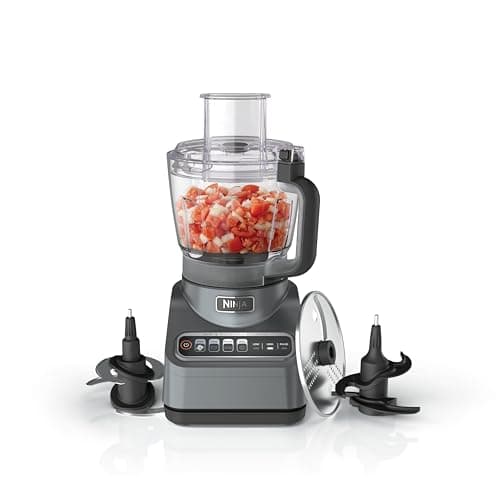
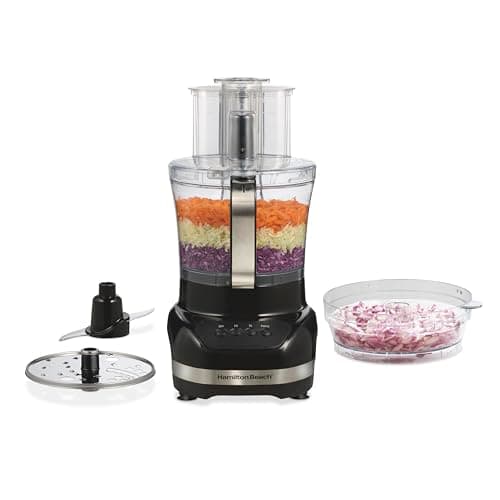
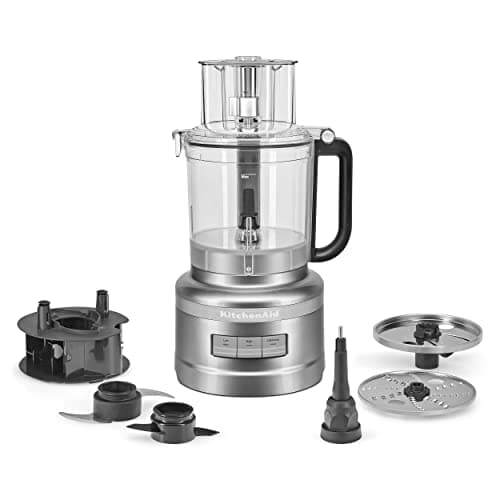
The KitchenAid 13-Cup Food Processor (KFP1318)is the food processor to buy under $200, and it is for the cook who wants prep VARIETY rather than raw power — it is the only machine in this band that dices as well as slices and shreds. The budget pick is the Hamilton Beach Big Mouth Duo Plus 12-Cup, the cheapest machine here that still gives you a genuinely full-size bowl, and it is the right buy if all you need is capacity and you do not care about disc choice. In between, the Cuisinart Pro Custom 11-Cup Food Processor (DLC-8SY) is the durability answer and the Ninja Professional Plus Food Processor (BN601) is the one with a dough blade.
All five prices in the table above come live from Amazon with the date they were last checked. We do not print a number we cannot verify, so a blank price means “check” and never a stale figure. The $200 line is our editorial band, not a claim about today’s price — read the live figure before you buy.
What $200 buys that $80 does not
Our budget roundup covers the floor of this market, and the honest answer there is that a cheap processor chops, slices and shreds perfectly well. What the extra hundred dollars buys is narrower and more specific than the marketing suggests:
- Disc variety, not disc quality. At this level you start getting a dicing kit, a julienne disc or an adjustable slicer rather than one reversible slice/shred plate. That is the single biggest functional difference in the band.
- A motor rated for stiff work. Published wattage is the only figure anyone discloses and it is a rough proxy, but the step from a 450-watt budget machine to a 700-watt-plus one is what you feel in pie dough and hard cheese.
- A wider feed chute. Fewer halved tomatoes and trimmed potatoes before they will go in. This is the quality-of-life spec nobody shops for and everybody notices.
- A warranty worth reading.The spec rows below carry each manufacturer’s own published term. It is the only durability evidence any of them will commit to in writing.
Which one, for which kitchen
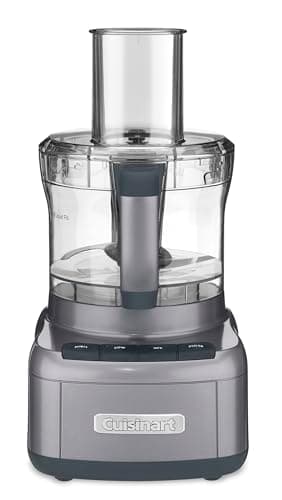
Buy the KitchenAid 13-Cup Food Processor (KFP1318)if you want the widest range of cuts from one machine — it is the dicing-and-prep-variety pick, and the reason to choose it over a Cuisinart at the same money is the kit, not the motor. Buy the Cuisinart Pro Custom 11-Cup Food Processor (DLC-8SY) if you are buying for a two-to-four-person kitchen and want the simplest, longest-lived build in the band: fewer parts and the shortest parts list to go wrong. Buy the Ninja Professional Plus Food Processor (BN601)if dough is on the list — it is the only pick here that ships a dough blade with a motor rated to use it, and it is also the cheapest way into real power. Buy the Cuisinart Elemental 8-Cup Food Processor (FP-8SV) for a small kitchen where the 8-cup footprint matters more than the bowl size.
And buy the Hamilton Beach Big Mouth Duo Plus 12-Cup— the budget pick — if you want the most bowl for the least money. Twelve cups plus a nested 4-cup chopper bowl is more capacity than anything else on this page, and you give up disc choice and motor headroom to get it. If that trade sounds right, it is also the big-plus-small option in our dual-bowl ranking for the same reason.
Where the band stops making sense
Above $200 the market changes character rather than degree: an induction motor, a sealed bowl, an adjustable slicing dial with a published millimeter range. If you knead weekly or run a processor daily, the premium machines in the main roundup are a different class of tool and the extra money is defensible. Below about $80 you are into the budget band, where the honest advice is that it still chops onions fine. The $200 ceiling is the sweet spot precisely because it is where disc variety arrives and before premium engineering starts charging for itself.
How we picked
Tools we claim to have lab-tested: 0
Every site in this category tells you they ran twenty machines through a lab. We have not, and we say so. Here is what we do instead: read the manufacturer's manual and spec sheet, record the published bowl capacity, motor rating, blade and disc counts and materials, cross-check the warranty against the manufacturer's own warranty document, and cite all of it so you can check the work. Prices come live from Amazon's API and disappear rather than go stale.
The scores above are judgments from that documented research — not test results. The full rubric, including what disqualifies a product, is published in full.