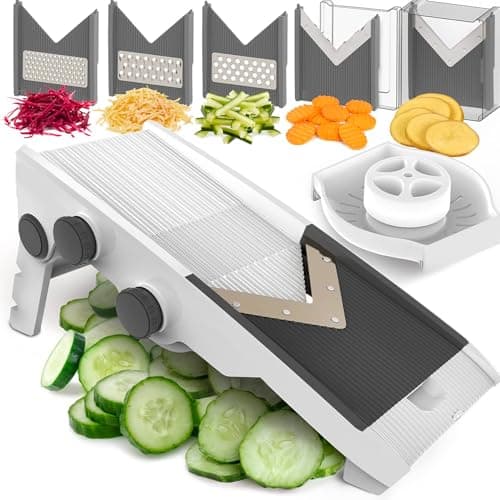
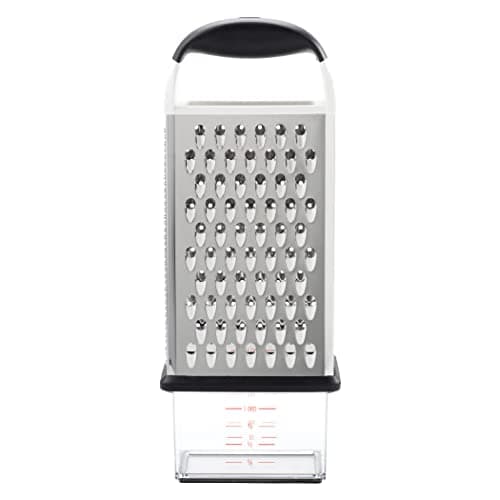
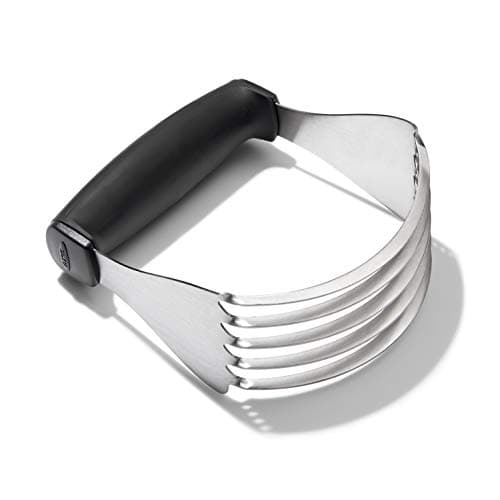
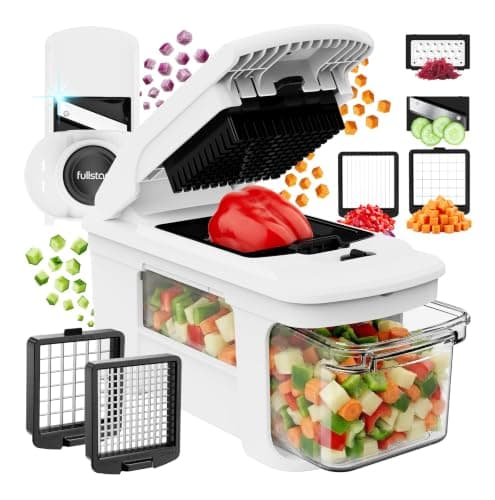
The tool that replaces the most food processor work for the least money is the Fullstar Pro XL Vegetable Chopper & Mandoline: it dices, it stores flat, it has no motor to burn out, and the cubes come out more even than a bladed electric chopper manages. Add the Mueller Austria Multi-Blade Adjustable Mandoline for slicing and julienne and the OXO Good Grips Box Graterfor shredding, and between them those three cover most of what a mid-range processor is bought to do. The budget pick — and the direct answer to the most common version of this search, pie crust — is the OXO Good Grips Dough Blender With Blades.
Prices above are read live from Amazon with the date they were last checked. Where we have no verified live price we show none rather than printing a figure that has gone stale.
What a food processor is genuinely best at, first
Nothing on this page replaces a processor outright, and a page that opened by pretending otherwise would be useless to you. So here is what the machine has that none of these five tools do.
It does four different jobs with one motor. Chop, slice, shred and puree, by changing a blade or a disc. The five tools below are five separate objects with five separate washing-up problems, and that is the real cost of substituting.
It processes volume without tiring you out. A 12-cup bowl of coleslaw is a thirty-second job in a processor and a twenty-minute job with a box grater, and the difference is not skill, it is your forearm.
It is the only tool here that makes nut butter.Grinding roasted nuts into a smooth paste takes sustained high-speed shearing for several minutes. No manual tool gets there, and a stick blender cannot either — the argument is in processors for nut butter and processor vs blender for nut butter.
It emulsifies at volume. A dressing or a mayonnaise for a crowd, built by dripping oil into a running bowl, is a processor job. A stick blender does small jars brilliantly and a whisk does not scale.
The ranking below is ordered by how much of a processor’s work each tool takes over— not by which tool is best, because they are not interchangeable and nobody needs all five.
The ranking, and why it is in this order
1. Fullstar Pro XL Vegetable Chopper & Mandoline — the biggest single share of the work. Chopping is what most people use a processor for most of the time: onions, peppers, carrots, celery, the base of everything. A push-through grid chopper does that job and does one part of it betterthan the machine — it produces genuinely even cubes, where a spinning blade in a bowl gives you a mix of mince and chunks because the pieces nearest the blade get cut repeatedly. It has no motor to fail, it stores flat, and the catch container keeps the counter clean and holds the leftovers. The limits are real: you supply the force, which a tray of root vegetables will remind you about, and it will not puree or make a paste. The full field is on our vegetable chopper ranking, and the dicing mechanism specifically on best dicers.
2. Mueller Austria Multi-Blade Adjustable Mandoline — the slicing disc, without the machine. A slicing disc is the processor attachment people underuse and then miss. A mandoline does the same job with more control and a thinner, more consistent cut: five blades here cover slicing, julienne and grating for very little money, it folds reasonably flat, and the hand guard is included. Two things to be straight about. First, it is slower per kilo than a processor on a gratin. Second, a mandoline is the most dangerous tool in a domestic kitchen and we treat it that way — read the safety guide, and treat a level-5 cut-resistant glove as part of the purchase price rather than an accessory.
3. OXO Good Grips Box Grater — the shredding disc, for a tenth of the money. Grating cheese is the second job a processor earns its storage space on, and a four-sided box grater covers coarse shreds, fine shreds, a slicing side and a zesting side on one frame. It is sharp from the start, the container catches what you grate and has measurement markings, and the non-slip foot keeps it still. What it cannot do is volume without effort — a kilo of cheddar is a workout — and it is bulky to store. Ranked in full on our box grater page.
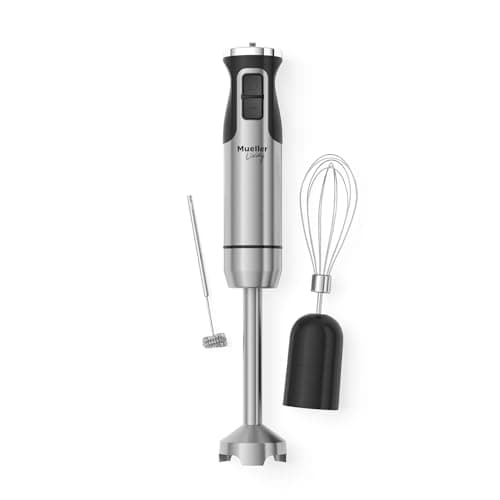
4. MuellerLiving Ultra-Stick 500W Immersion Blender — everything smooth, plus a chopper cup. This is the pick that covers the processor’s wet work: soup, sauce, smoothies, baby food, mayonnaise in a jar. Nine speeds plus turbo is finer control than most sticks offer, and crucially this one ships with a chopper bowl as well as a whisk, which is a small food processor in all but name for herbs, nuts and a single onion. Honest limits: it is plastic-heavy next to metal-bodied sticks, it will not slice or shred anything at all, and it will not make nut butter. Our immersion blender alternatives page runs the same argument from the other side, and processor vs immersion blender is the head-to-head.
5. OXO Good Grips Dough Blender With Blades — the budget pick, and the pie crust answer. A large share of this search is one specific job: cutting cold butter into flour for pastry, which is what most recipes tell you to use a processor for. A pastry blender does it with rigid blades that cut straight-from-the-fridge butter instead of bending around it, and the broad soft handle is the part your palm presses for two minutes straight. It is also the one tool here that is better than the machine for a nervous baker, because a processor goes from pea-sized butter to paste in about two pulses and you cannot un-blend it. It does exactly one job. Full field on our pastry blender ranking, and the wider case in processor vs stand mixer.
Four jobs that go back to the processor.Nut butter, which needs minutes of sustained shearing. A large emulsified dressing or mayonnaise built by dripping oil into a running bowl. Anything in genuine volume — a 12-cup batch of slaw, two kilos of sliced potato. And bread or pizza dough kneaded by machine, which is the one job where a dough blade in a bowl beats both your hands and everything on this page. If any of those four is why you were looking at processors in the first place, buy the machine: our under-$50, budget and under-$200 bands cover the whole realistic price range.
The substitutes we did not rank, and why
A blender. For soup and smoothies a jug blender is an excellent processor substitute and for everything dry it is a bad one: the narrow base and the vortex want liquid, so chopping an onion in a blender gives you onion puree at the bottom and whole pieces at the top. The division of labor is worked through in processor vs blender.
A stand mixer. It kneads dough better than any processor, and it chops, slices and shreds nothing at all without buying attachments that cost more than a processor. The comparison covers it.
A knife.Said without irony: for one onion, a sharp knife on a decent board is faster than any machine once you count the washing up, and it is the reason a processor sits in a cupboard in so many kitchens. If your honest answer is “I chop one or two things at a time”, a board and a knife plus the chopper ranked first here is the whole solution. Boards are on our cutting board ranking.
A mortar and pestle.For pesto and curry pastes — two of the queries that bring people to this page — a mortar is not a downgrade but a different and arguably better result. See mortar and pestle vs food processor and processors for pesto.
Which to buy, in one paragraph
If your cooking is vegetable prep, buy the chopper and stop there; it is the cheapest tool on this page that replaces a real share of the machine. If you slice or shred in quantity, add the mandoline or the box grater — mandoline for thin even slices, grater for cheese. If your cooking is soup, sauce and smoothies, buy the stick blender instead of any of the above, because it is the only tool here that does wet work. If you came for pie crust, buy the pastry blender and spend nothing else. And if you want one object that does all four, that object is a food processor, which is the honest conclusion of this page — our do I need one guide is the right next read.