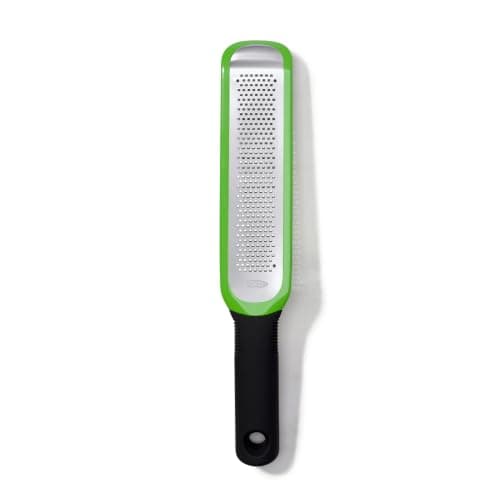
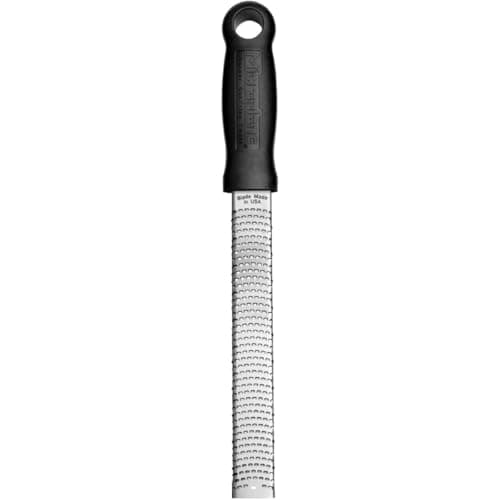
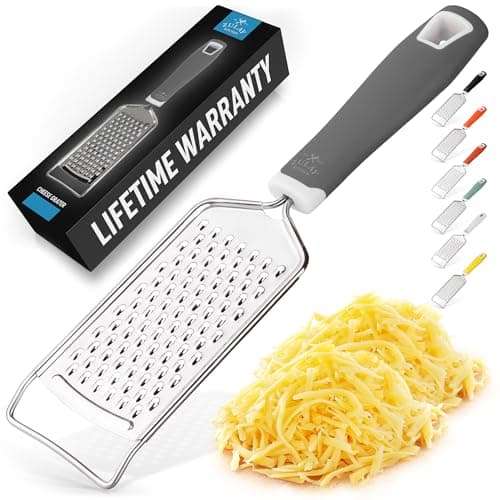
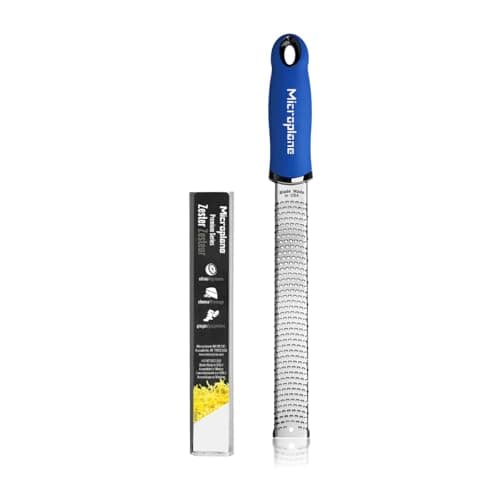
For ginger, buy the Microplane Premium Classic Zester. It is the only tool in this group whose maker publishes all three of the things that decide how a rasp behaves on a fibrous root — that the teeth are photo-etchedrather than stamped, that the steel is surgical grade stainless, and where the blades are made — and etched teeth shear ginger fiber instead of dragging it into strings. If the tool will live in a shared drawer, the OXO Good Grips Etched Zester & Grater is the better buy because it ships with the blade cover and a non-slip foot. The budget pick is the Zulay Kitchen Professional Cheese Grater & Zester, the cheapest rasp here that publishes an actual steel grade.
Prices in the table above come live from Amazon with the date they were last checked, and where we have no verified live price we show none rather than a stale figure.
Why ginger is a different problem from cheese or citrus
A rasp grater is usually sold on citrus and parmesan, and both of those are easy materials in their own way. Citrus rind is thin and sits on a soft layer, so the job is a shallow cut that stops before the bitter pith. Parmesan is brittle: it fractures into crumbs under almost any tooth.
Ginger is neither.A ginger rhizome is a bundle of long tough fibers held in soft, wet, starchy flesh. Put it against a tooth and one of two things happens. Either the tooth cuts cleanly through the fiber — and you get the fine, wet, almost paste-like pulp that dissolves into a stir-fry or a dressing — or it pushes the fiber aside and tears the flesh off around it, and you are left with a tangle of stringy threads on the grater and a wet smear underneath. The second outcome is what people mean when they say their grater “does not work on ginger”. The grater is working. It is tearing.
Which means the specification that matters most for ginger is the one almost nobody prints: how the teeth were made.
Etched teeth versus stamped teeth
There are two ways to put teeth on a sheet of steel. Stamping punches them out, which deforms the metal around each tooth and leaves a raised, rounded edge: cheap, fast, and the profile that tends to tear a fiber rather than slice it. Photo-etching uses a chemical process to remove metal, which leaves a sharp, flat, consistent edge with no deformation around it. That is the profile that cuts across a fiber.
Both Microplanes on this page state photo-etched surgical grade stainless and name the United States as where the blades are made. OXO says its surface is etched but publishes no steel grade and no blade origin. Cuisipro calls its surface Surface Glide Technology, which is a brand name with no published measurement behind it. Zulay publishes 18/10 steel and says etched without saying how.
We have ranked on exactly that: who documents the thing that decides the cut. We have not printed a tooth count, a tooth angle or a steel hardness figure for any of these five, because nobody in this category publishes one, and a number we cannot point at a document for does not belong on this site.
Grate across the grain, not along it. Look at the cut end of a piece of ginger and you can see the fibers running the length of the rhizome. Hold it so you are moving the rasp acrossthose fibers — broadly, across the short dimension of the piece — and the teeth get to cut them. Run it lengthways and you are dragging the teeth along the fibers, which is exactly how you get strings. This matters more than which of these five tools you own.
How we ranked these five
- Published tooth process first. Etched beats stamped on fiber, and a maker that names the process is a maker whose claim can be checked.
- A single fine surface, not a coarse one. Ginger wants the finest teeth on the tool. A coarse side shreds it into exactly the strings you are trying to avoid, which is why the dual grater here is ranked third rather than first despite doing more jobs.
- Somewhere for the juice to go. Grated ginger is half liquid and the juice is the most flavorful part of it. A rasp held over a bowl keeps it; a rasp held over a board loses it. Tools with feet that sit across a bowl have a real advantage here, and Cuisipro and OXO both state non-slip feet.
- Safe storage. A bare rasp in a utensil drawer is the most reliable way to cut a finger in a kitchen. A supplied cover is worth more than a slightly better blade.
- No invented durability claims. None of these five publishes a blade hardness or an expected life. We have not scored them as though one did.
Which one, for which kitchen
Buy the Microplane Premium Classic Zester if ginger is a regular ingredient rather than an occasional one. Photo-etched surgical grade stainless, US-made blades, and a magnetic body so it can live on a knife strip rather than loose among the spoons. Its honest limits: Microplane lists no blade cover and no non-slip foot for this model, both of which cheaper tools here include, and it is one grate size only.
Buy the OXO Good Grips Etched Zester & Graterif the tool shares a drawer with other people’s hands. It ships with the cover a rasp genuinely needs, it has a non-slip foot and a soft grip so it stays put on a wet counter, and OXO names garlic and ginger in its own list of what the surface is for. What you give up is documentation: OXO says etched and publishes no steel grade and no blade origin, so the blade itself is less specified than the Microplane’s.
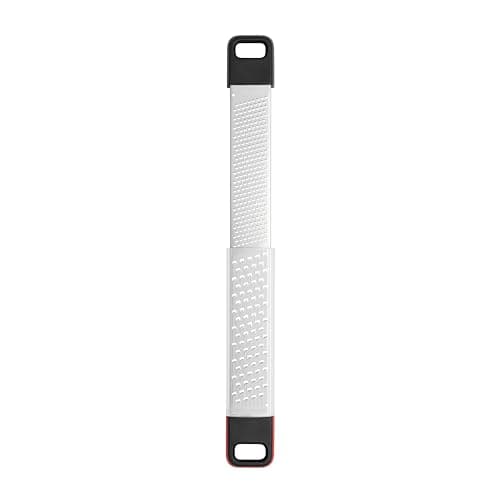
Buy the Cuisipro Surface Glide Dual Grater (Coarse & Fine) if you want one tool for ginger and soft cheese. The fine side handles ginger, zest, nutmeg and parmesan; the coarse side does soft cheese and vegetables. The sliding cover stays attached to the tool instead of getting lost, and the non-slip feet let it sit across a bowl, which is where the juice is saved. Two honest caveats: Surface Glide Technology is a brand name with nothing measurable behind it, and if you already own a box grater the coarse side duplicates something you have on a much smaller surface.
Buy the Microplane Classic Zester Graterif you want the same documented blade for less. The blade claim is identical to the Premium Classic — photo-etched, surgical grade, US-made — and the published difference is the handle: plain plastic instead of soft grip, which you notice on anything needing pressure. It also has no cover and no foot, so it is the least drawer-friendly tool here.
Buy the Zulay Kitchen Professional Cheese Grater & Zester— the budget pick — if you grate ginger occasionally and the price is the point. It publishes an actual steel grade (18/10) at a price where most listings only say stainless, it has a raised support frame for control and a hanging hole, and the warranty is a lifetime one. Accept two things: there is no blade cover, and the frame is built to be pressed on, which is a hint about how much force this blade wants compared with an etched Microplane.
The tools we did not rank, and why
A ceramic ginger plate. The traditional Japanese oroshiganeis a dish with raised ceramic or metal nubs and a moat around the edge to catch juice, and it is genuinely excellent at this one job. We do not rank one because there is not one in our catalog — and we do not write up products we cannot point a live listing at.
A box grater. Even the finest side of a box grater is coarse next to a rasp, and the geometry means you are pushing the ginger along the teeth rather than across the fibers. It will shred ginger. It will not give you pulp. The box graters are ranked on our box grater page for the jobs they are good at.
A rotary grater. A drum grater is built to hold a block and turn a crank, which suits hard cheese at the table and does not suit a knobbly piece of root at all. The case for one is on our rotary grater ranking.
A garlic press. Many presses claim ginger and most of them extrude juice and keep the fiber in the chamber, which is sometimes exactly what you want. If ginger juice rather than pulp is the goal, read our garlic press ranking. For a paste rather than either, the honest tool is a mortar, covered on our mortar for spices page.
Two practical notes that matter more than the tool
Do not peel it first. Young ginger has a thin skin that grates away with the flesh, and peeling costs you the most aromatic layer. Scrub it, cut the dry end off, and grate from the cut face.
Freeze it. A frozen piece of ginger grates more cleanly than a fresh one on any of these tools, because the fibers are stiff instead of flexible and the teeth cut them rather than pushing them aside. It also keeps for months. This is the single cheapest upgrade available to anyone reading this page.